If you have ever watched a blob of acrylic paint go from glossy to rubbery while you were still hunting for the right brush, nothing went wrong. The answer to how to keep acrylic paint from drying on the palette is one idea: replace the water the paint loses, as it loses it.
In practice that means a light mist, a cover, and small airtight containers for the leftovers. It takes about two minutes of setup and nothing you would not already own.
Table of Contents
- 1What You Need
- 2Step-by-Step
- 31. Set Up a Palette That Stays Moist
- 42. Mist the Paint Instead of Soaking It
- 53. Cover the Palette Between Color Changes
- 64. Store Each Color in a Sealed Container
- 75. Clean the Palette After the Session
- 8Quick Note for Kids’ Sessions
- 9Common Mistakes
- 10Frequently Asked Questions
- 11How do I stop acrylic paint from drying on a palette?
- 12Can I use plastic wrap to keep acrylic paint from drying?
- 13Should I keep acrylic paint in the water while painting?
- 14How do you revive acrylic paint that has started to dry?
- 15Can I wash a palette with dried acrylic paint?
- 16How long can leftover acrylic paint be stored?
- 17Quick Summary
What You Need
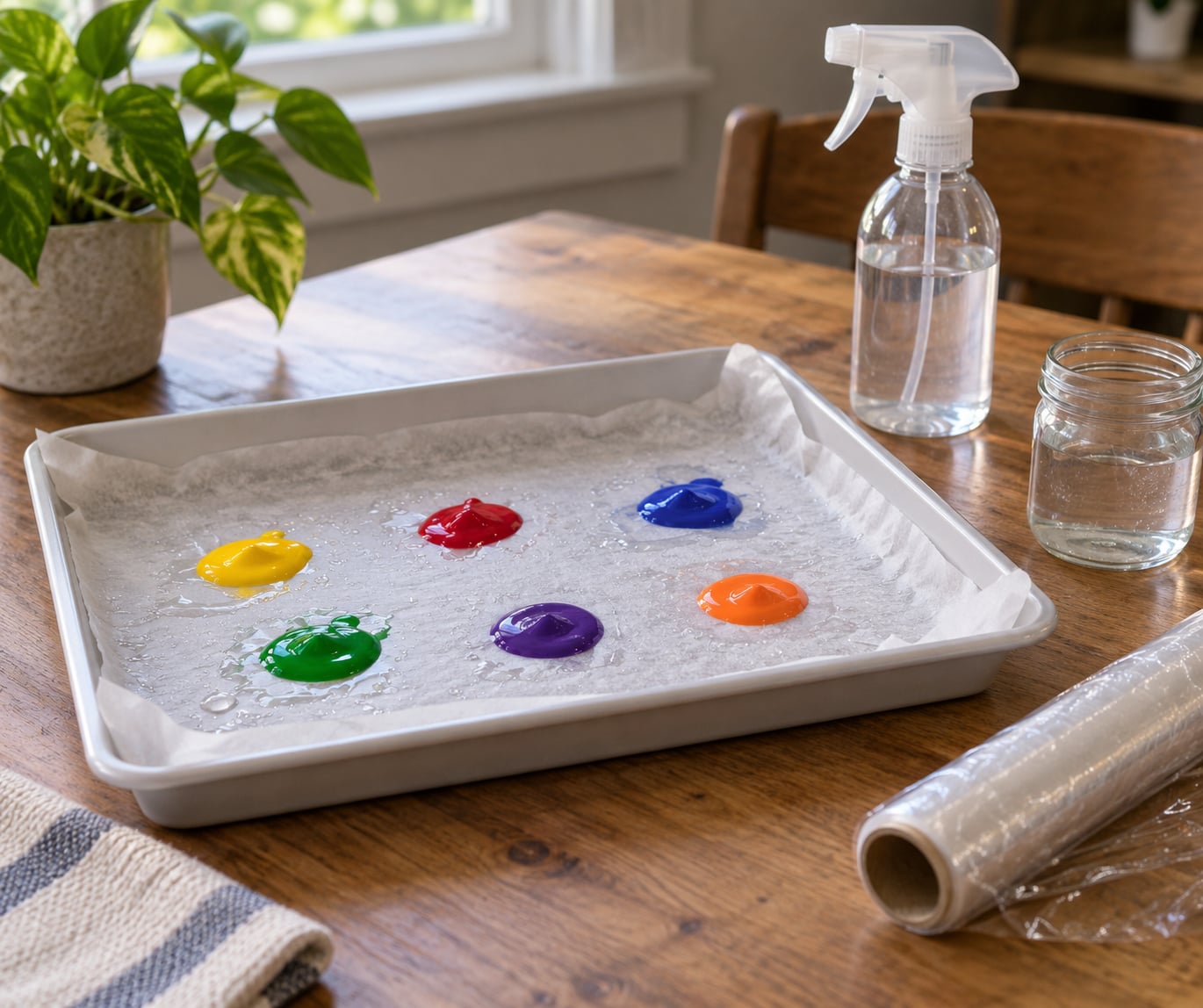
You need a shallow tray with a sealing lid, a damp absorbent layer, a non-porous surface on top, a spray bottle, and small lidded containers. Almost all of it is kitchen stock.
- A shallow tray or box with a lid that seals. A Tupperware-style container, a dumpling storage box, or a cardboard lid held down with plastic film all work. The lid matters more than the tray.
- An absorbent base layer. A sponge, a folded kitchen cloth, a reusable shammy towel, or several sheets of paper towel, dampened under the tap.
- A non-porous top surface. Parchment or wax paper, acrylic palette paper, or a sheet of clear plastic. A small ceramic tile also works well.
- A spray bottle or mister. Any clean bottle that gives a fine mist, filled with room-temperature water.
- Small lidded containers. Baby food jars, bead containers, or an ice cube tray with a cover, one per mixed color.
- A palette knife or stiff flat brush. For cutting through a skin and for scooping leftovers into containers.
- Paper towels and dish soap. For the clean-up at the end of the session.
- Optional: a slow-drying medium or acrylic retarder. Worth it for blending and outdoor work, not needed for a 30-minute craft.
Use a white cloth and a clear or white surface if you can, so kids see the true mixed color instead of a tint of the base layer.
Step-by-Step
Five steps, in order. Most short painting sessions need only the first three.
1. Set Up a Palette That Stays Moist
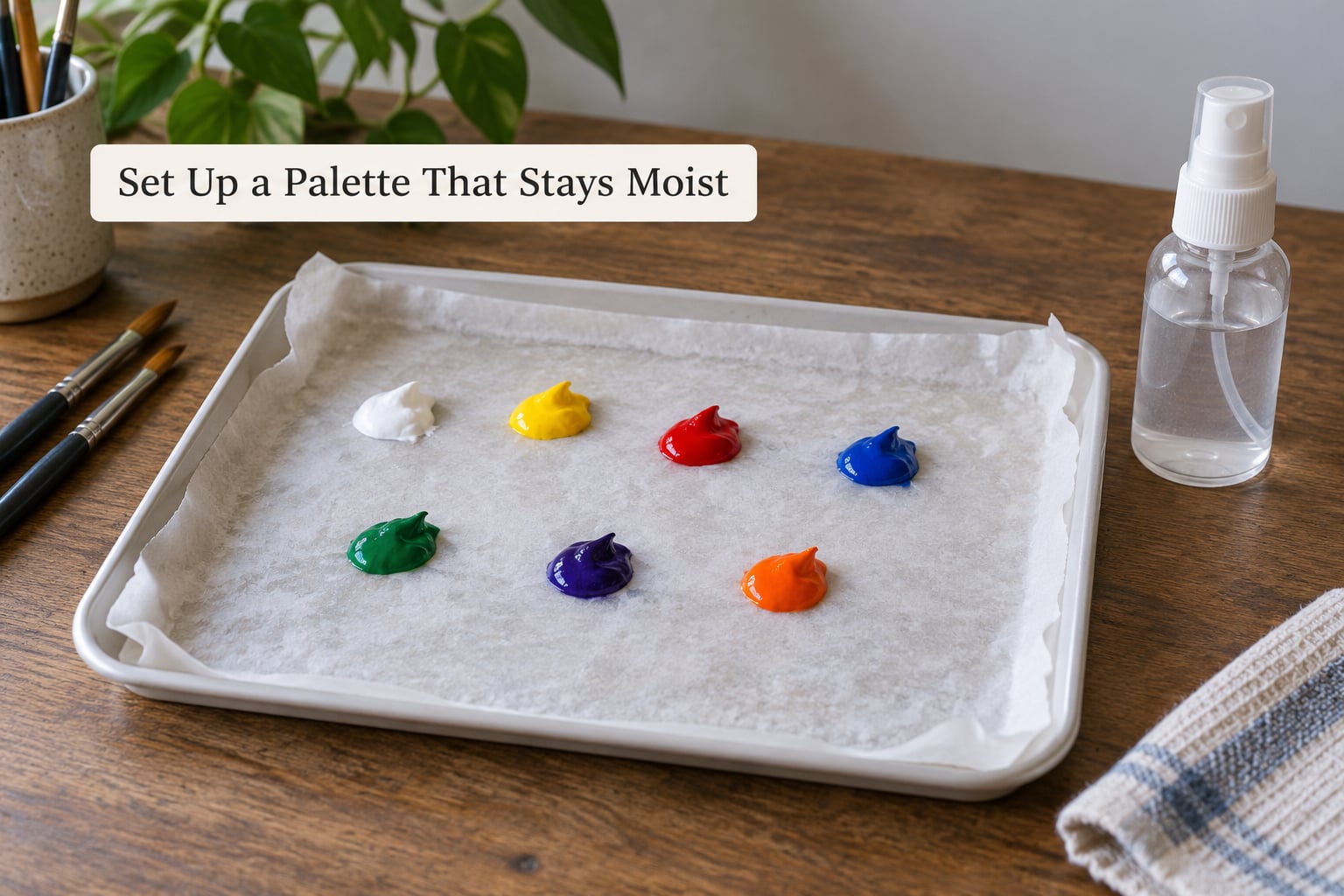
A damp layer underneath a non-porous surface keeps paint usable for days, because water moves slowly back up into the paint as the surface loses it.
Lay the damp cloth, sponge or paper towel in the tray until it is damp all the way through, then lay the parchment, palette paper or clear plastic on top.
How wet is right? Press a finger into the base layer. If it feels cool and slightly heavy but leaves no water on your fingertip, that is the level you want. Dripping is too wet, and dry-looking cloth is too dry.
Then squeeze out more paint than you think you will need, in puddles rather than pea-sized dots. A generous puddle keeps its own moisture in the middle; a small blob has almost no volume to hold on to it.
You can tell it is working when the paint stays glossy and mixes smoothly for several minutes after you squeeze it out.
2. Mist the Paint Instead of Soaking It
A fine mist replaces the water the surface has lost, and standing water is what ruins the mixes.
Hold the bottle about 20 to 30 cm above the palette and spray from a few angles until the paint surface goes from glossy to matte with a barely damp look. That matte-to-slightly-wet finish is the target.
If you own distilled water, use it. Tap water is fine for most people; the minerals only show up if you leave standing water sitting for days.
Tilt the palette so any mist runs toward the edges and down into the base layer instead of pooling in the middle. Miniature painters work this way deliberately, aiming into the corners to re-wet the sponge.
Stop as soon as colors start to creep into each other. That is the sign you have gone past damp and into thin, and the fix is to add more thick paint rather than more water.
3. Cover the Palette Between Color Changes
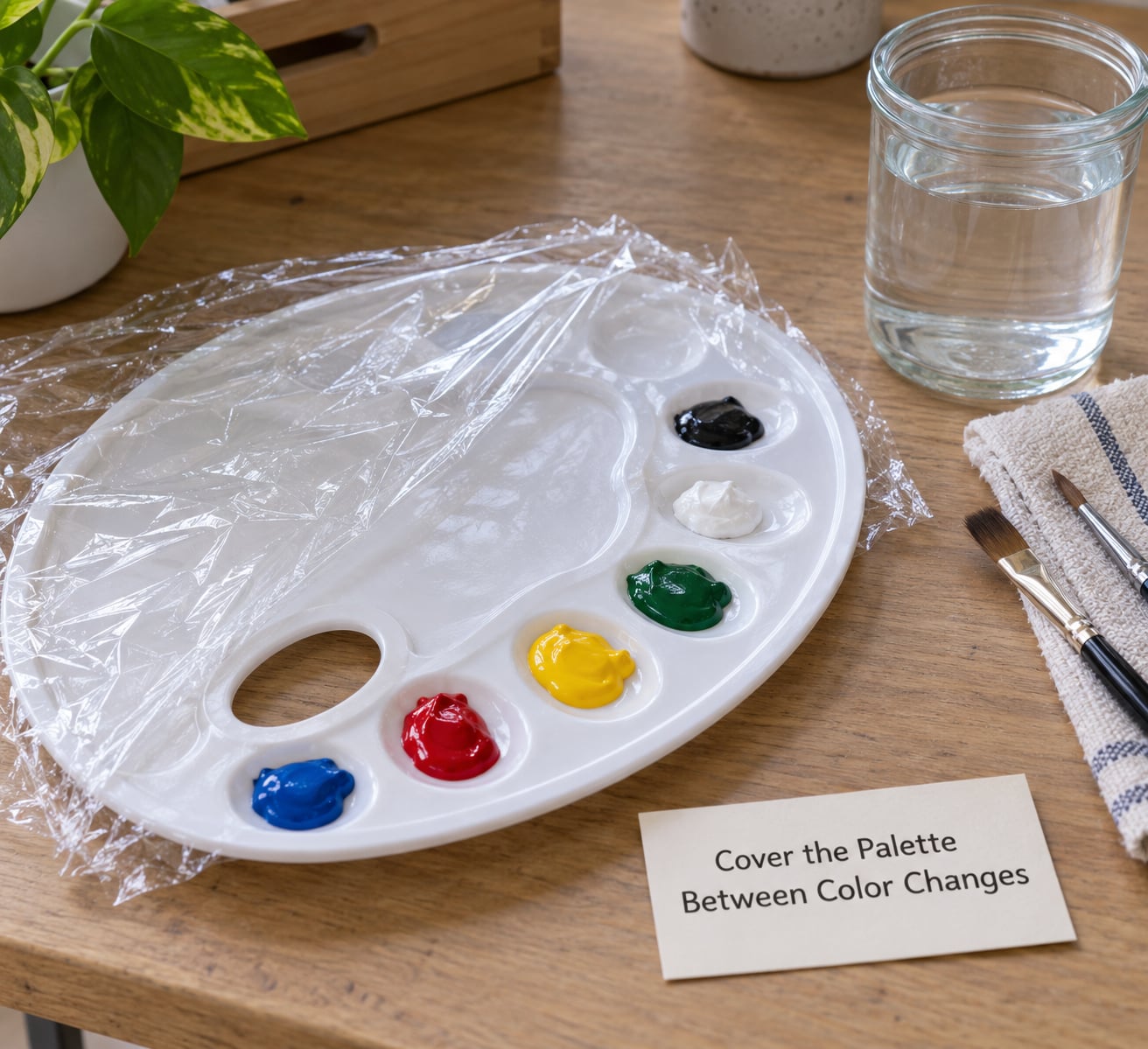
Put the lid on, or tent plastic wrap over the tray, any time the paint is not in front of you, because trapped humidity is the whole trick.
With a lid it is simple: press it down and leave it. With plastic wrap, hold the film at the tray edges so the center stays clear of the paint. A wet sheet of paper towel laid over the surface does the same job for a short break.
A large zip-lock bag pulled over a misted flat palette is the cheapest version of an airtight box, and painters in the r/ArtistLounge thread on this exact problem report paint still workable after a week or more that way.
The gap to avoid is the ten minutes your child spends choosing colors, filling the water cup or answering a question. Those are the minutes the paint dies.
4. Store Each Color in a Sealed Container
Scrape leftover paint into small airtight containers rather than leaving it as a puddle on the tray, and keep every color separate.
Label each container with the color and the date. Mixed colors stored together turn muddy, and a lid that does not actually close is the same as no lid at all.
Add water only when the paint needs rewetting: a drop or two, then a stir with a palette knife. More paint back in is usually the better move for a thin, separated mix.
Fridges work. The most upvoted answer in a long r/ArtistLounge thread was exactly this: airtight containers, refrigerated, never frozen. Freezing and thawing damages the binder, so let the paint come back to room temperature before you use it.
You can tell it is working when a fresh squeeze of paint onto the lid-free palette still looks glossy after ten minutes.
5. Clean the Palette After the Session
Wash acrylic while it is still soft, and scrape what has dried rather than soaking it.
Once the painting is finished, run a palette knife over the tray and tip the softened paint into the bin. Rinse the tray with warm water and dish soap until the acrylic releases, and wash brushes straight away, working soap through the bristles and leaving them in a jar rather than scraping them on the rim.
Disposable paper and palette paper go in the bin. A sponge or cloth that smells stale or shows fuzzy white growth goes in the bin too, because that is mold and it will return to the next tray.
Pour rinse water down the sink and run the tap for a few seconds. Soap and water on hands is enough, and brushes should never go near a child’s mouth.
Quick Note for Kids’ Sessions
A short craft session needs less than you think. Six small colors, a lid, and a spray bottle cover ninety minutes, and a second tray for rinsing brushes keeps the clean water clean.
Common Mistakes
The most common mistake is squeezing out too little paint, and it causes all the rest. Here are the six problems you will actually hit, with the fix for each.
- Squeezing out pea-sized blobs. Fix: put out roughly double what you think you need, in puddles. Volume is what holds water inside the paint.
- Adding too much water. Fix: stop misting, blot the surface with a paper towel, and squeeze fresh thick paint into the mix.
- Leaving colors open while you switch. Fix: cover every time, even for short breaks, and put the lid back on before you turn around.
- Dropping a dirty brush into a clean color. Fix: wipe the brush on a scrap first, and keep a second jar purely for rinsing so grit never travels back to the paint.
- Storing mixed colors together. Fix: one small container per mix, labeled, with the lid down as soon as you are done.
- Mold in the tray. Fix: change the base layer every few days, wash and fully dry the tray between projects, and leave some airflow when it is closed. Commenters on Will Kemp’s wet palette article report a few drops of white vinegar in the water layer, or a copper penny tucked under the sponge, both as community tips rather than tested methods.
One more thing that speeds drying without anyone noticing: radiators, air vents, fans and air conditioning. I moved my palette off a shelf under a vent before I understood why the paint kept going tacky, and the problem basically disappeared.
Frequently Asked Questions
How do I stop acrylic paint from drying on a palette?
Cover it, mist it, and put out more paint than you think you need. A shallow tray with a sealing lid, a damp sponge or cloth underneath and a sheet of parchment or clear plastic on top makes a wet palette: water moves up from the base while the lid traps humidity. For a short session, a spray bottle and a lid are enough. Prevention is far easier than reviving paint that has already skinned over.
Can I use plastic wrap to keep acrylic paint from drying?
Yes. Hold clear plastic wrap loosely over the palette and secure the edges so it traps humidity without touching the paint. Avoid pressing the film straight down onto the blobs, since a tight seal can stick and lift color off the surface. A large zip-lock bag pulled over a misted flat palette does the same job, and painters report that setup keeping paint workable for a week or more.
Should I keep acrylic paint in the water while painting?
No. Standing water under your paint thins it, lifts pigment and lets neighboring colors bleed into one puddle. A damp base layer works because water seeps up gradually to replace what the surface loses. If you use a spray bottle, aim for a fine mist and blot any beads that form. If colors start running, load less paint and stop misting for a minute.
How do you revive acrylic paint that has started to dry?
Press the skin down into the paint or lift it off with a palette knife, add a few drops of lukewarm water, and stir. Paint that is only tacky or skinned usually comes back. Fully hardened, rubbery acrylic cannot be revived, so scrape it out and squeeze fresh. If the paint has separated or gone thin, mix a little fresh thick color back in until the body returns.
Can I wash a palette with dried acrylic paint?
Yes, but scraping is faster than soaking. Dried acrylic lifts off plastic, glass and metal with a palette knife or a plastic scraper, and warm soapy water finishes the job. Fabric and paper layers usually need replacing. A sponge or cloth that smells stale or shows fuzzy white growth belongs in the bin rather than back in the tray, because that growth is mold, not paint.
How long can leftover acrylic paint be stored?
Sealed in an airtight container at room temperature, mixed acrylic usually stays workable for several months. Refrigerated in a sealed pot it keeps longer, but always refrigerate and never freeze, then let it warm up before use. On an open palette with only a lid over it, expect hours rather than days. Label every container with the color and the date.
Quick Summary
Mist the paint lightly until it looks matte and barely damp, cover the palette the moment you stop, and scrape leftovers into labeled airtight containers.
If those three habits are not enough, build the wet palette: a shallow lidded tray, a damp cloth or sponge underneath, and parchment or clear plastic on top. Put the lid on when you are not painting, and the palette will feed the paint water for days.