Learning how to get washable paint out of clothes is mostly about speed. Lift the wet paint off, rinse the fabric from the back with cool water, work a little laundry detergent into the mark, then wash the garment on its longest cycle and let it air dry. Paint becomes hard to remove the moment it dries and nearly impossible once heat sets it, so treat it before you do anything else.
Washable paint is not a magic stain eraser. The label means the paint is water-based and its binder is designed to break apart in an ordinary laundry wash, so it lifts out of most cotton if you flush it while wet. It does not mean the paint will come out of any fabric, in any color, after any amount of time.
Two details decide your method: what kind of paint it is, and how long it has been sitting there. The steps below cover fresh paint, dried paint, and the version that already went through the washer and dryer.
Table of Contents
- 1What You Need to Remove Washable Paint
- 2Step-by-Step: Getting Paint Out of Clothes
- 3How to Remove Fresh Washable Paint
- 4How to Remove Dried Washable Paint
- 5Which Paint Remover Is Safe for Each Fabric?
- 6Common Mistakes
- 7Frequently Asked Questions
- 8Does Dawn dish soap remove paint from clothes?
- 9Does vinegar remove paint from clothing?
- 10How do you get washable paint out of clothes that have been washed and dried?
- 11Will rubbing alcohol remove fabric paint?
- 12Can old paint stains be removed from clothes?
- 13What is the best stain remover for paint on clothes?
- 14Conclusion
What You Need to Remove Washable Paint
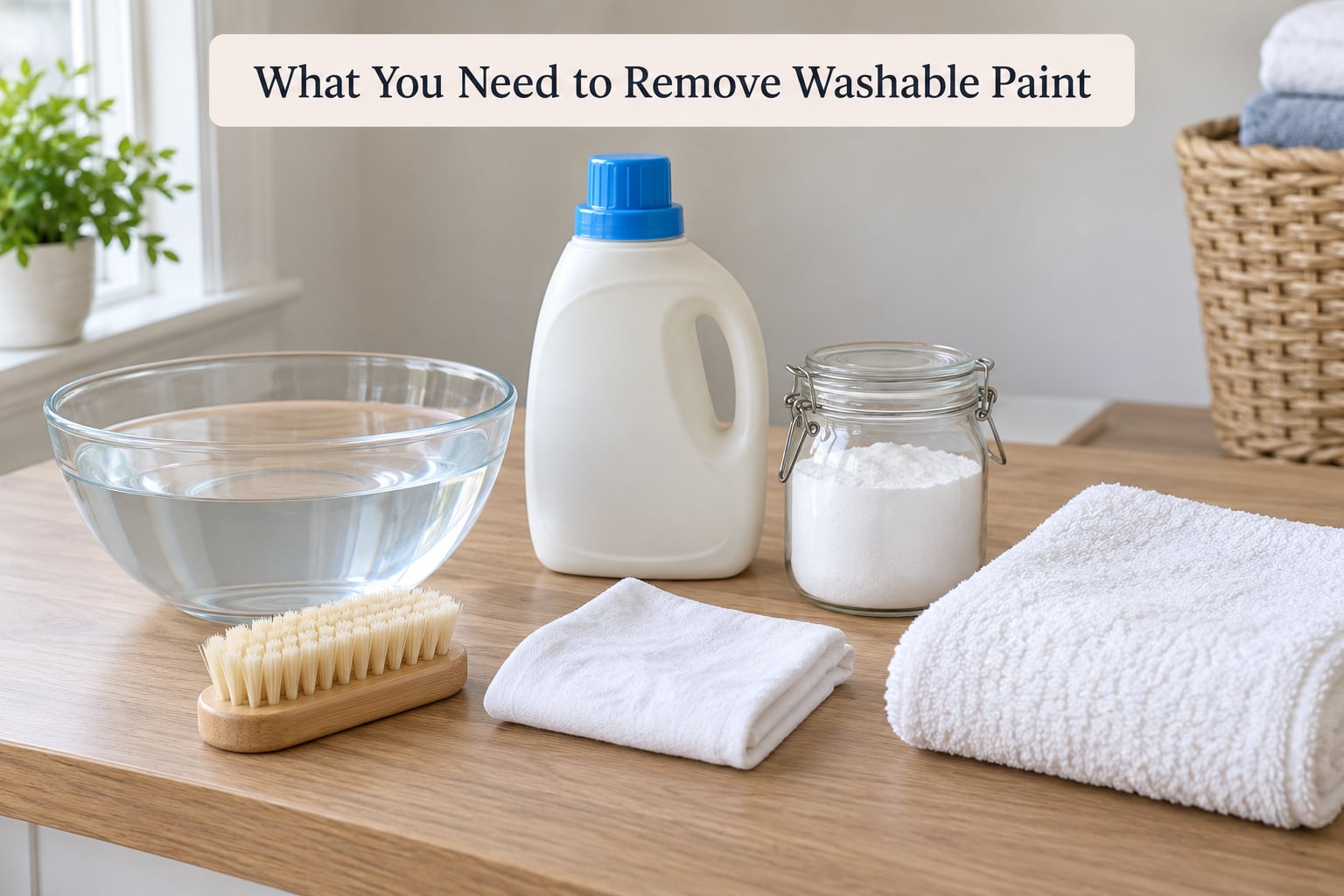
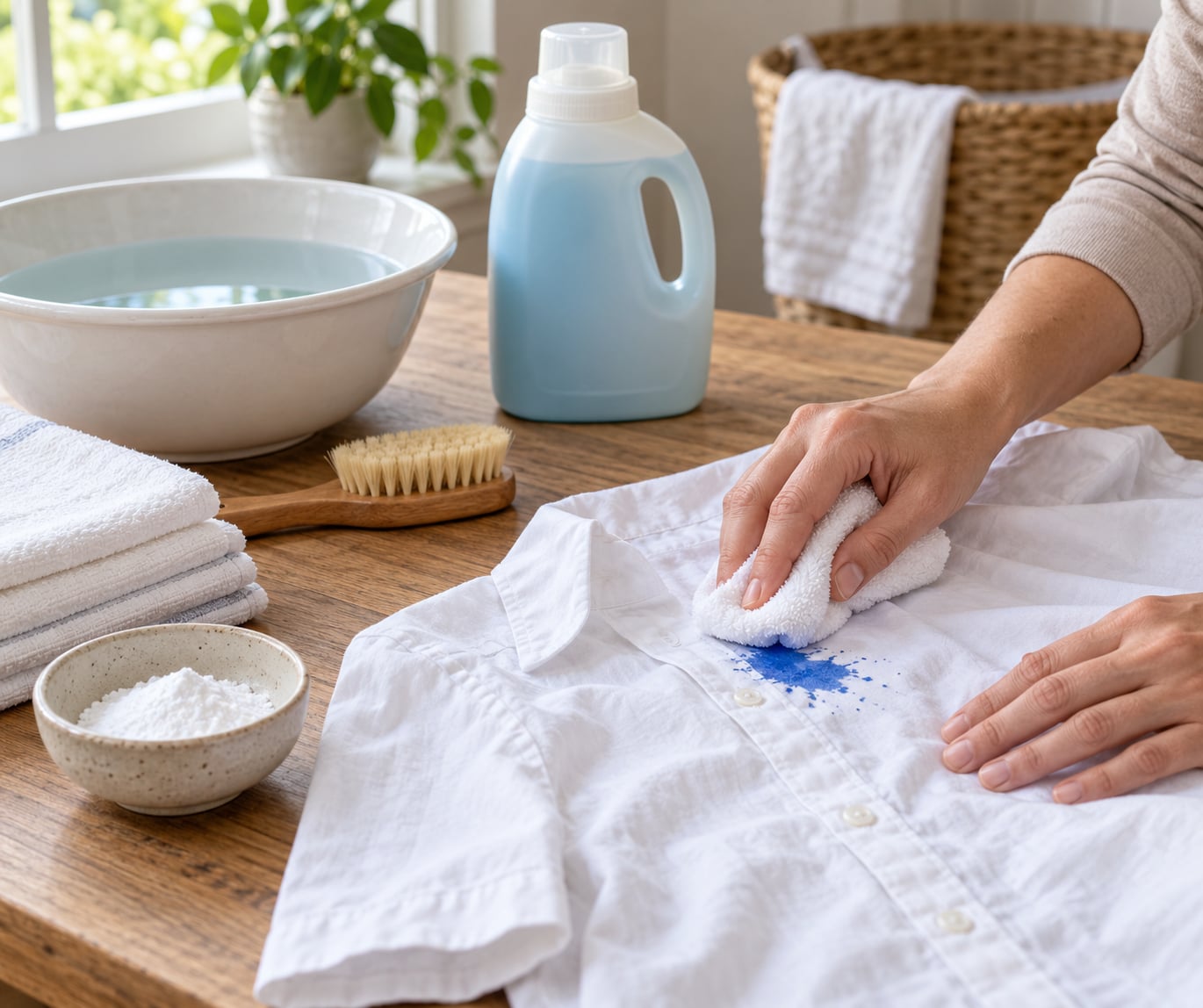
Gather these before you start, and put a towel down under your work area. Everything you need is already in most kitchens and laundry rooms.
- A bowl of cool water for rinsing and soaking.
- Laundry detergent as the main pretreat.
- Dish soap for lifting fresh paint before it soaks in.
- A soft-bristled brush or old toothbrush for agitation.
- White cloths or paper towels for blotting, plus a clean towel for the table.
- Optional: baking soda, white vinegar, hydrogen peroxide, an oxygen bleach such as OxiClean, borax, washing soda, and rubbing alcohol.
Before anything else, check the care label. If the garment says dry clean only, stop and read the dry-cleaning row in the fabric table below. Then test any product you plan to use on an inside seam or hem where the fabric is hidden, and give it a few minutes to react.
Step-by-Step: Getting Paint Out of Clothes
How to Remove Fresh Washable Paint
Fresh paint is the easiest case by far, and you should be able to see it leave the fabric as you work.
- Flip the garment inside out. This puts the stained side facing down into the water, so the paint travels away from the surface of the fabric instead of deeper into it.
- Lift the surface paint. Hold the fabric flat and gently scrape off thick blobs with the edge of a card or spoon. Do not dig into the weave.
- Rinse from the back. Run cool water through the stain from the reverse side for a couple of minutes. Use a controlled stream rather than a soaking flood, because too much water spreads a wet stain outward.
- Blot, never rub. Lay a white cloth over the front and press down gently. When the cloth picks up color, move to a clean section and keep pressing.
- Pretreat. Work a small amount of liquid laundry detergent or dish soap directly into the remaining mark and leave it for ten to fifteen minutes. If the color has faded, cool water is the safer choice.
- Wash and inspect. Wash on the longest cycle the fabric allows with detergent, then air dry. Machine dry only once no trace of color remains.
You know it worked when the wet cloth comes away clean and the fabric smells like nothing but detergent.
How to Remove Dried Washable Paint
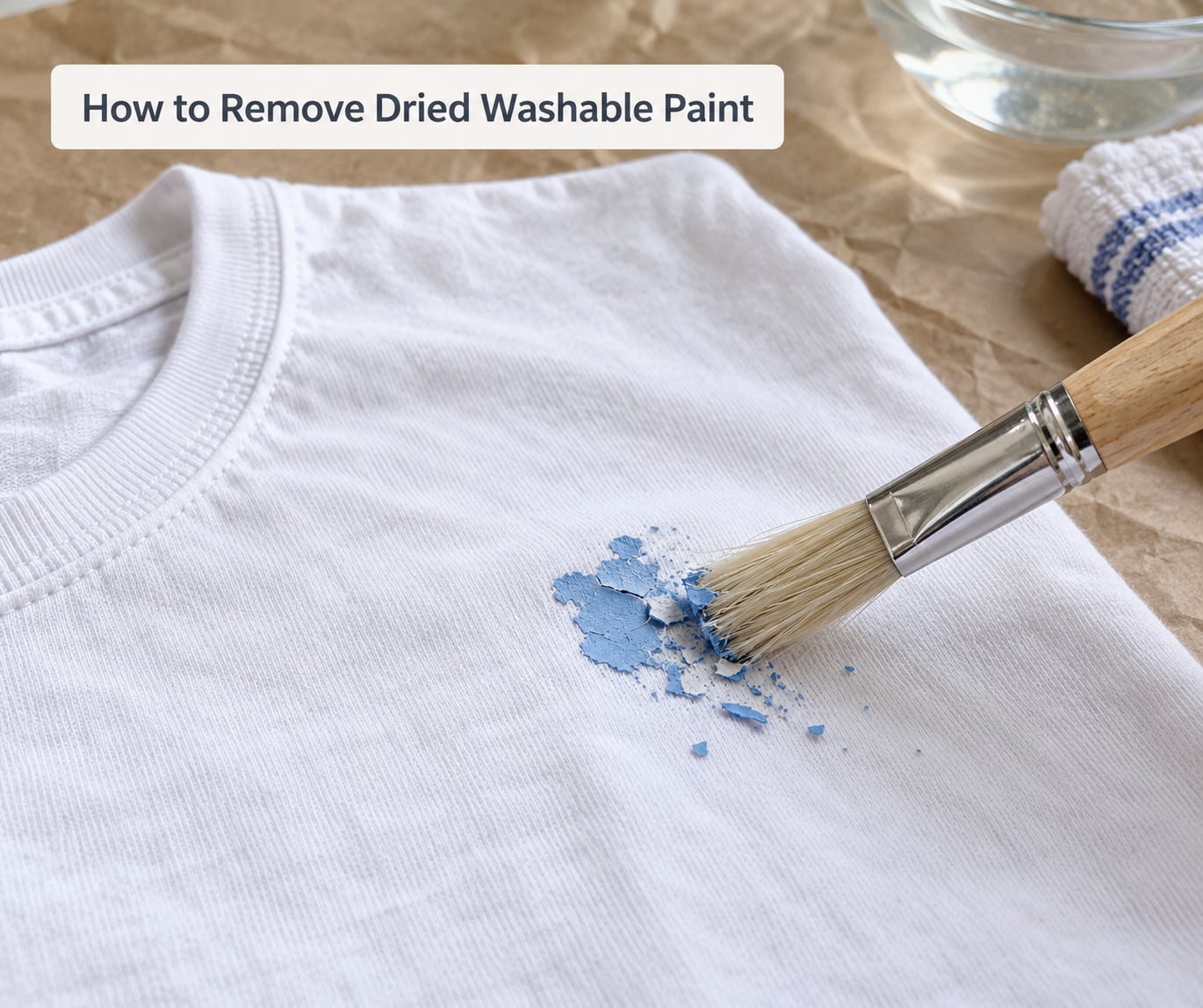
Dried water-based paint forms a film, so the job is to break that film down before you try to wash it out.
- Scrape gently. With the garment dry, hold it over a towel and lift away flakes and chunks with a dull knife or card. Brush off the loose crumbs.
- Soften the residue. Soak the area in cool water with a squirt of detergent for fifteen to thirty minutes. The film should start to loosen.
- Agitate lightly. Use a soft toothbrush in short, light strokes. Press firmly enough to move the film, never hard enough to fray the fibers.
- Try a longer soak. For stubborn marks, soak the garment in a borax or washing soda solution for four hours or overnight. This is often the step that finally shifts stubborn blue and dark pigment, which detergent alone leaves behind.
- Use rubbing alcohol only if the fabric allows it. Dab it on with a cotton pad, blot, and repeat in small sections. Standard 91% isopropyl alcohol will lift white paint off colored pants in most cases, as long as you blot rather than scrub.
- Wash and air dry. Launder as usual, then inspect before any heat.
Patience matters more than pressure here. Three gentle rounds beat one aggressive scrub, and scrubbing hard pushes pigment deeper into the fibers.
Which Paint Remover Is Safe for Each Fabric?
The fabric decides what you can safely use, and solvents are where damage happens. Check the care label first, every time.
| Fabric | What works | What to avoid |
|---|---|---|
| Cotton and cotton blends | Detergent, dish soap, borax or washing soda soak, oxygen bleach on whites | Very hot water before the stain is gone |
| Denim | Detergent pretreat, soft brush, rubbing alcohol for residue | Machine drying with any color left |
| Synthetics and performance fabric | Cool water, mild detergent, a light alcohol dab on a tested spot | Acetone, nail polish remover, chlorine bleach, heat |
| Wool | Cool water, wool-safe detergent, blot only | Rubbing alcohol, agitation, hot water, machine drying |
| Acetate and triacetate | Cool water and gentle blotting only | Acetone and all solvents, which dissolve the fiber |
| Delicates and dry-clean-only | Blotting, then a professional cleaner | Soaking, solvents, and any home solvent method |
Two warnings apply everywhere. Never mix vinegar, ammonia, or window cleaner with chlorine bleach, and hold oxygen bleach off colored fabric, since it can lift the paint along with the dye.
Common Mistakes
Letting the garment dry first, then tackling it. Drying is what makes paint permanent. The fix is preventive: rinse during craft time, not after bedtime.
Using hot water early. Heat sets a stain and can also set a stain you were about to remove. Use cool or warm water until the mark is gone, then move up in temperature if you like.
Scrubbing too hard. Friction drives pigment deeper and damages fibers. Agitate with a soft brush in light strokes instead.
Reaching for chlorine bleach without reading the label. It fades colors, weakens synthetics, and cannot be neutralized once it reacts with vinegar or ammonia. Try oxygen bleach on whites only.
Putting the garment in the dryer while a trace of color remains. The dryer sets whatever is left, and the stain usually comes out lighter and permanent. Air dry on a rack, inspect under good light, and only then use the dryer.
Giving up after one round. Stains lift in stages. Pretreat, soak, launder, air dry, and repeat before deciding a garment is lost.
For next time, check the care label before craft hour, use a smock or apron, and pick washable over acrylic. One habit slows staining before it starts: add a small spoonful of dish soap directly into the washable paint in the tray.
Frequently Asked Questions
Does Dawn dish soap remove paint from clothes?
Yes. Dish soap is one of the most reliable first steps for washable paint because it is a surfactant, meaning it slips under the wet paint film and lifts it from the fiber. Apply it to the stain, leave it for ten to fifteen minutes, then rinse from the back of the fabric and launder as usual. Dish soap works on nearly every fabric when followed by a warm wash, as long as some of the paint is still wet. It will not lift fully dried paint on its own.
Does vinegar remove paint from clothing?
Vinegar is a mild helper rather than a remover on its own. A solution of one part white vinegar to three parts cool water works as a soak after detergent pretreatment, and the mild acid helps loosen residue that detergent has already softened. It is not strong enough to dissolve a dried paint film. Never combine vinegar with chlorine bleach or ammonia, because the mixture releases toxic gas.
How do you get washable paint out of clothes that have been washed and dried?
Run three escalating rounds. Round one: soak the garment in cool water with detergent for an hour, then scrub lightly with a soft brush. Round two: soak it in borax or washing soda for four hours or overnight, which is what lifts stubborn blue and dark pigment. Round three: dab remaining residue with rubbing alcohol, blot, and launder. Air dry and inspect between rounds, and never dry on heat until the color is gone.
Will rubbing alcohol remove fabric paint?
It works well on dried paint when the fabric tolerates it, because the alcohol dissolves the polymer binder holding the pigment to the fiber. Standard 91% isopropyl alcohol removes white paint from colored pants in most cases without fading or piling. Test on a hidden seam first, work in small sections, and blot rather than scrub. Avoid it on wool, acetate, and triacetate, which it can damage or dissolve.
Can old paint stains be removed from clothes?
Sometimes, with realistic expectations. Paint that went through a hot dryer is partially heat-set, so you are usually reducing a stain rather than erasing it. Dried water-based paint on cotton can often be improved a lot with a borax or washing soda soak, repeated pretreatments, and alcohol on the residue. Oil-based paint and dried latex are far harder, and blue and dark pigments are the worst offenders. Dry-clean-only garments belong with a professional cleaner.
What is the best stain remover for paint on clothes?
There is no single winner, because the fabric and the age of the stain decide. For fresh washable paint, dish soap or liquid laundry detergent works best. For dried paint, a borax or washing soda soak gives the most reliable lift, followed by rubbing alcohol on the residue for fabrics that tolerate it. Oxygen bleach such as OxiClean helps on white cotton but can discolor colors, so test it first and keep it off synthetics and wool.
Conclusion
The first action is always the same: treat the paint while it is wet. Lift the surface blob, rinse from the back of the fabric with cool water, work detergent into what is left, and wash the garment on its longest cycle. Once paint has dried, move to gentle scraping, a borax or washing soda soak, and alcohol on the residue only for fabrics that can take it, repeating the treatment before each wash. Check the care label, test every product on a hidden seam, and keep the garment out of the dryer until no color remains. 2026