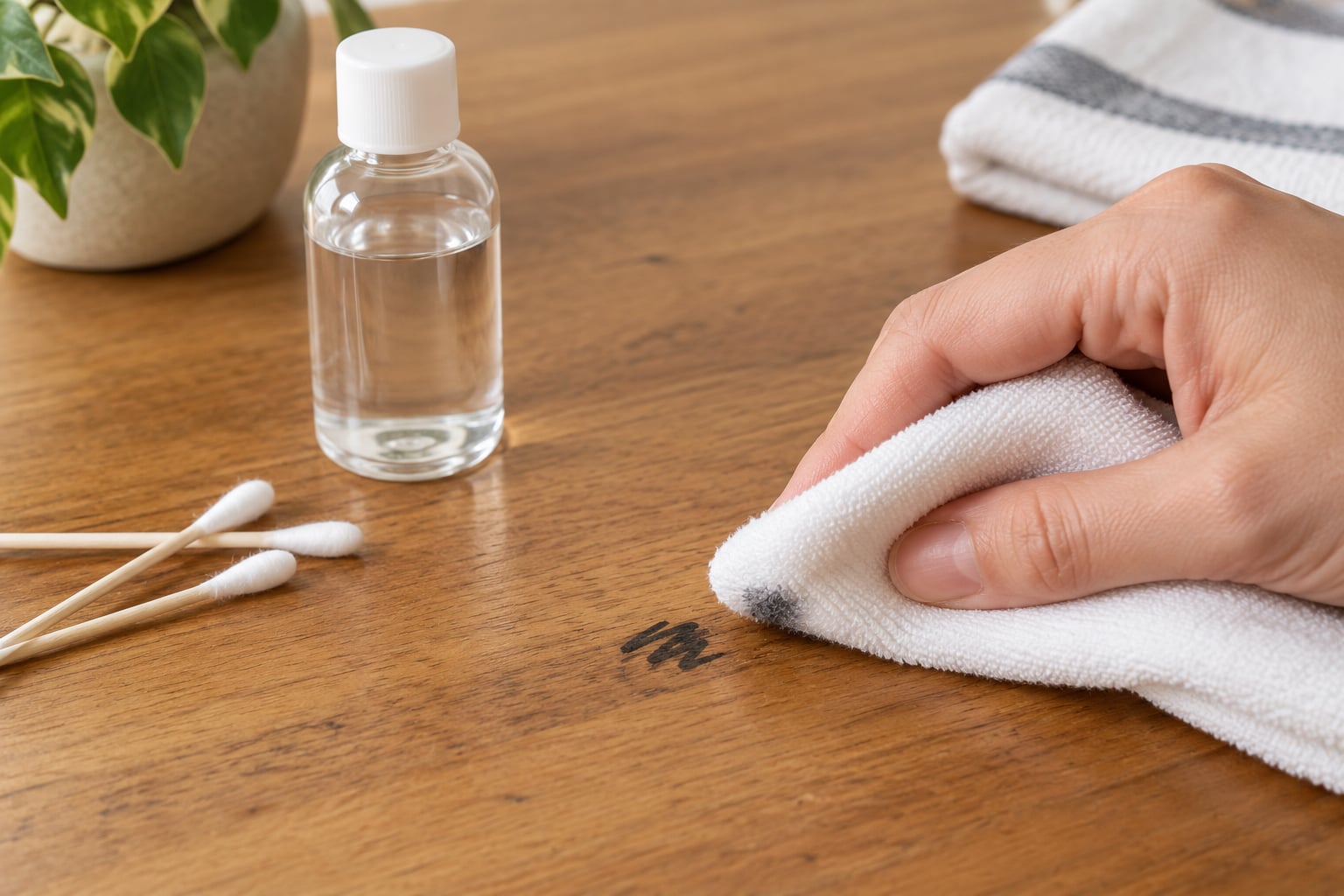
To remove marker from a table, dab the mark with 70% isopropyl alcohol on a cloth, work from the outside of the stain inward, and never scrub. White non-gel toothpaste or hand sanitizer works when alcohol is not available. Two things decide the method: what kind of marker it is and what the tabletop is made of.
The whole job takes five minutes if you catch the ink early. Dried or soaked-in marker is a different problem and takes longer, because the dye has already bonded into the surface. Most ruined finishes happen because someone scrubbed hard, used 91% alcohol on paint, or reached for a magic eraser first.
Table of Contents
- 1What You Need
- 2How to Remove Marker from a Table: Step-by-Step
- 3Identify the Surface and Marker Type
- 4Test the Cleaner on a Hidden Area
- 5Lift the Stain Gently
- 6Remove Remaining Marker from the Surface
- 7Clean and Dry the Table
- 8Common Mistakes
- 9Frequently Asked Questions
- 10Can a magic eraser remove permanent marker?
- 11Can vinegar remove permanent marker?
- 12How do I get permanent marker off a countertop?
- 13How do I remove permanent marker off a chalkboard?
- 14Does rubbing alcohol remove permanent marker from wood without damaging the finish?
- 15How do I get an old, absorbed marker stain out of wood?
- 16Conclusion
What You Need
Gather everything before you touch the stain. A stain you have to chase around the table while looking for a cloth is a stain that sits longer and sets deeper.
- A surface-appropriate cleaner. 70% isopropyl alcohol is the safe default for finished wood, laminate, glass, plastic and metal. White non-gel toothpaste is the gentler fallback.
- Microfiber cloths or soft washcloths. Have two: one for the cleaner, one clean for wiping residue.
- Cotton swabs and cotton balls. These reach grooves, edges and seams where a cloth cannot.
- A soft-bristled brush. An old toothbrush works. It gets into grain lines and the small scratches that hold ink.
- Gloves, and ventilation. Alcohol smell is strong in a closed room, and the fumes bother some kids and adults.
- A small hidden test area. Under the table lip, inside a drawer, or on the back of a leg. Test before you treat.
The cleaner depends on the surface. Glass, stainless steel and plastic tolerate alcohol well. Finished wood usually does, but only after a test. Painted surfaces and waxed or lacquered finishes are the sensitive ones, and MDF and unfinished wood are the most fragile of all.
How to Remove Marker from a Table: Step-by-Step
Work in this order and stop as soon as the ink lifts. Going straight to the strongest cleaner is how people end up with a clean spot surrounded by a damaged finish.
Identify the Surface and Marker Type
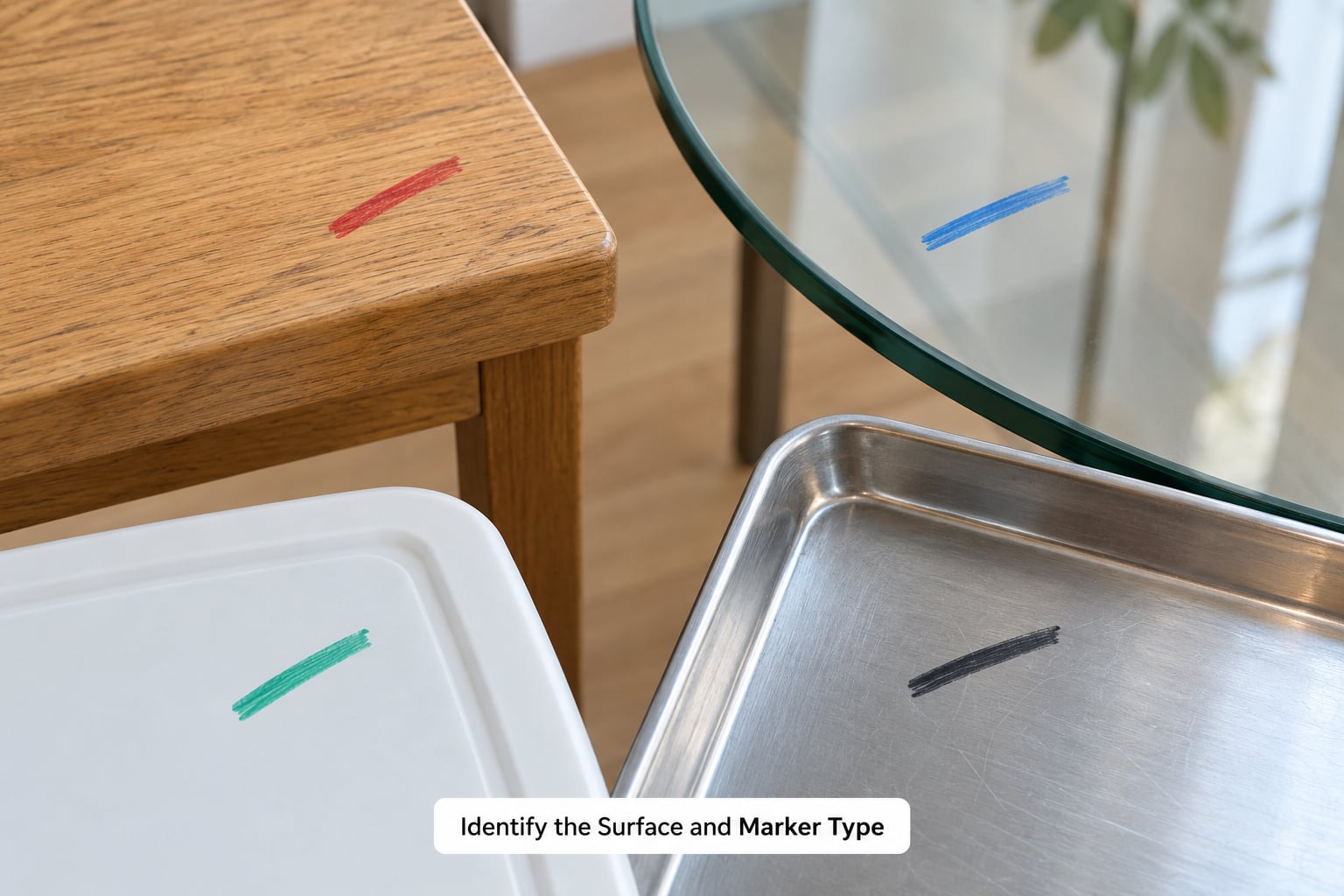
Look at the sheen. A surface with a visible wood grain under a clear coat is finished wood. A perfectly uniform plastic skin with no grain is laminate or melamine, common on desks and kitchen tables. Flat matte color with brush marks is painted MDF. Raw wood drinks water instantly and has no sheen at all.
Then identify the marker. Washable and dry-erase markers come off with a damp cloth and mild soap. Permanent markers use a dye suspended in a solvent and sealed with a resin, which is why they bond so hard. Indelible and bingo markers are oil-based and are the toughest. Food and grease-proof markers used in restaurants are also oil-based and resist almost everything short of a real solvent.
One clue beats the label: a fresh mark still feels slightly slick or transfers to a tissue. That means the ink has not fully bonded yet, and you have a short window before it does.
| Surface | First choice | Second choice | Main risk |
|---|---|---|---|
| Finished wood | 70% isopropyl alcohol | White toothpaste | 91% alcohol can strip varnish or lacquer |
| Laminate or melamine | 70% isopropyl alcohol | Melamine foam | Very little, but test a hidden spot |
| Painted or lacquered wood | White toothpaste | 70% alcohol, patch by patch | Alcohol lifts paint and dulls gloss |
| Glass or metal | 70% isopropyl alcohol | Melamine foam | None worth worrying about |
| Plastic | 70% isopropyl alcohol | Magic Eraser | Melamine scratches matte plastic |
| Unfinished or MDF | Damp cloth, then accept it | Light sanding as a last resort | Ink bleeds deeper with every wet pass |
Test the Cleaner on a Hidden Area
Put a small drop of alcohol on a cotton swab and dab it under the table edge. Wait two minutes, then look at the spot in good light. The surface should look exactly as it did before.
If it looks dull, patchy or lighter, stop and switch to toothpaste. If the mark is on paint, be more cautious still. The answer that comes up most often on a painted door with an old Sharpie mark on it is worth repeating: 70% isopropyl lifts fresh Sharpie, while 90% or 91% takes the paint off with it.
That difference is the single most useful thing to know about alcohol on furniture. The 70% solution has enough water to lift the ink without stripping the film, and the higher concentration strips faster and more thoroughly, which is the problem.
Lift the Stain Gently
Put the cleaner on the cloth, never on the table. A soaked cloth lets you control exactly where the liquid sits and how long it stays there. A wet puddle on a wood table is how liquid soaks into a grain line and carries ink deeper.
Dab from the outside of the mark toward the center. Working inward keeps the ink from getting pushed out into clean wood, which is what creates that smeared, blurry patch people end up with.
On wood, wipe with the grain and never against it. Let the alcohol sit for 30 to 60 seconds before you add more pressure, since dwell time does more work than force. For ink caught in a groove or the seam where the tabletop meets an edge, switch to a cotton swab and work along the line rather than across it.
Change the cloth face often. A cloth that has absorbed ink will re-deposit it as soon as you press down, and that is another way a small mark turns into a big one.
Remove Remaining Marker from the Surface
When alcohol lifts most of the ink but a shadow remains, mix a paste of white non-gel toothpaste and a little baking soda. The baking soda adds gentle abrasion and the toothpaste holds it. Dab the paste on with a cloth, leave it a minute, then wipe with a barely damp cloth. Skip this on glass, high-gloss lacquer and matte plastic, where the abrasive dulls the surface.
On a finished, non-porous surface, the dry-erase trick still has a place. Draw over the permanent mark with a dry-erase marker, let it sit ten seconds, then wipe once. The wetter ink re-dissolves the dried dye so it lifts in a single pass. On porous or unfinished wood it does the opposite. It feeds more liquid into the surface and the mark gets bigger, which is a well-documented failure.
Melamine foam, sold as a magic eraser, is genuinely useful on laminate, glass and coated plastic. Skip it on polished or lacquered wood, where it routinely leaves a hazy dull patch. Avoid acetone and nail polish remover, scouring pads, and anything that scrapes. Those strip varnish, dissolve plastic and take paint with them.
Clean and Dry the Table
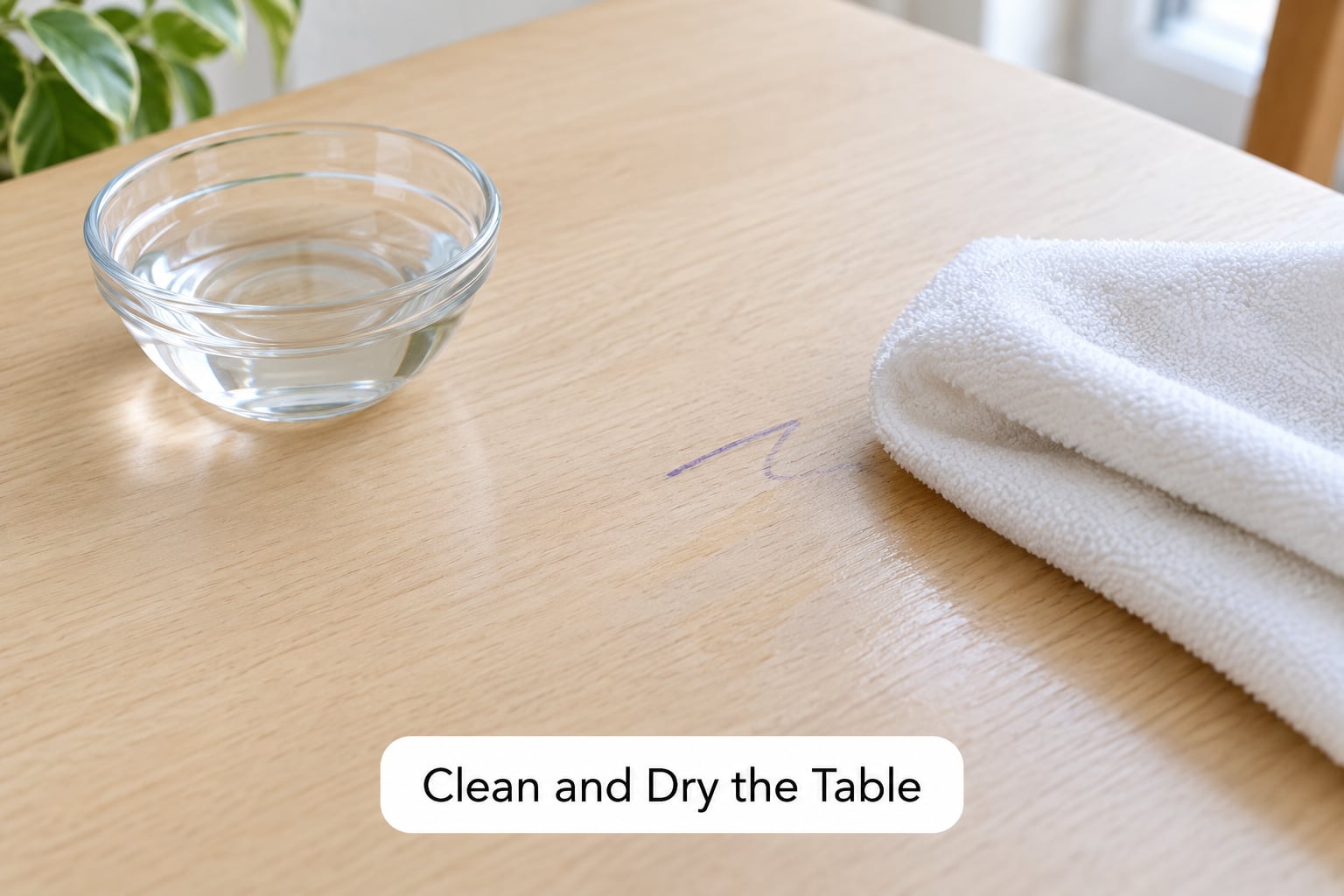
Wipe the area with a cloth barely damp with plain water, then with a dry cloth. Damp is the goal. A wet pass leaves rings and can raise wood grain, which is how a small ink spot turns into a pale patch that is more noticeable than the original mark.
Let the surface dry fully before putting anything back on it, then check it in daylight from an angle. Ink residue often shows as a shadow that disappears when you look straight down. If a shadow remains, repeat with a fresh swab rather than going heavier, because most of the ink is already gone by then.
Finish with a furniture care product only if the manufacturer recommends one for that surface. If the table is valuable or the finish is original, a second round of 70% alcohol is a better plan than a polish that changes the sheen.
Common Mistakes
Most failed attempts come down to one of five things. Each has a simple fix.
Scrubbing hard. Friction spreads the dye into a wider, blurrier mark. Fix: dab, and let the alcohol sit instead of pushing.
Pouring cleaner straight onto the table. Liquid soaks into grain lines and seams. Fix: keep the cleaner on the cloth where you control it.
Using 91% alcohol on paint or a glossy finish. It takes the finish with the ink. Fix: stay at 70%, or switch to toothpaste.
Skipping the hidden test. Fix: two minutes under the table edge costs far less than a refinishing job.
Soaking the surface, or using bleach. Both raise wood grain and discolor the finish permanently. Fix: repeated light passes, never a puddle.
Two remedies come up constantly and consistently fail. Vinegar has no solvent action on marker dye, so it does nothing except spread moisture into the surface. Dry erasers work on a whiteboard and on some laminated desks, but on wood they rub the dye deeper. One parent had already tried a magic eraser, rubbing alcohol, marker-over-marker, a dry eraser and vinegar on a toddler’s scribble on a white desk, and every attempt made it worse. That is a common pattern, and it is why people searching this end up sanding or living with the mark.
For the kids’ table, the gentlest option is white toothpaste and a barely damp cloth. No fumes, nothing to ingest, and it works well enough on any surface a child can reach.
To stop it happening again, put a washable placemat or a clear protective pad over the area kids use, and seal unfinished or MDF surfaces with a water-based topcoat so the wood stops absorbing ink in the first place. Keep permanent markers off the table and give drawing projects a sheet of paper taped down over the surface.
Frequently Asked Questions
Can a magic eraser remove permanent marker?
Sometimes, and it depends entirely on the surface. On laminate, glass and coated plastic it lifts most permanent marker with a few firm strokes. On polished, lacquered or varnished wood it usually just dulls the finish and leaves a hazy patch that is harder to fix than the original stain. Test a hidden spot first, and treat it as a non-wood-only tool.
Can vinegar remove permanent marker?
No. Vinegar is one of the most widely tried and most widely failed home remedies for permanent marker. It is an acid, and permanent marker dye is held in a resin binder that vinegar does not dissolve. The only effect it usually has is to dampen the surface, which can spread ink further into wood grain and make the mark look worse than before you started.
How do I get permanent marker off a countertop?
On laminate, quartz or sealed stone, dab 70% isopropyl alcohol onto a cloth, hold it on the mark for one to two minutes, then wipe and rinse with a damp cloth. On natural stone, sealer and grout, skip alcohol and use a melamine foam pad instead. Repeat once rather than scrubbing, and check an inconspicuous corner first.
How do I remove permanent marker off a chalkboard?
Draw directly over the permanent lines with a dry-erase marker, leave it for about ten seconds, then wipe once with a dry cloth. The wetter ink loosens the dried permanent dye so both come off together. Toothpaste is a good backup on an unglazed slate board. On a whiteboard, a dry eraser alone handles dry-erase, and alcohol handles anything permanent.
Does rubbing alcohol remove permanent marker from wood without damaging the finish?
On finished wood, 70% isopropyl alcohol usually lifts permanent marker without touching varnish, lacquer or polyurethane, provided you dab and never scrub. Higher concentrations at 90 or 91 percent are the risk: they remove the ink and the finish together. Unfinished, waxed and MDF surfaces are far more fragile, so use white toothpaste there and expect a limited result.
How do I get an old, absorbed marker stain out of wood?
If the ink has soaked into raw or unfinished wood, the honest answer is that most of it stays there. A damp cloth lifts the surface dye, and toothpaste with baking soda takes off a little more, but each wet pass can push pigment deeper into the grain. The realistic options are refinishing that area or accepting the mark, and covering it with a table pad rather than fighting it further.
Conclusion
To remove marker from a table, start with the least aggressive option that fits your surface: 70% isopropyl alcohol dabbed onto a cloth for finished wood, laminate, glass, plastic and metal, or white non-gel toothpaste for anything painted, waxed or kid-covered.
Test first, work from the outside of the mark inward, and let the cleaner sit instead of scrubbing. If the finish dulls or changes color, stop and switch methods rather than pushing harder. For valuable furniture or an oil-based or indelible mark, a manufacturer-approved cleaner is worth the extra step, and for ink already soaked into raw wood, covering the spot is often the better decision than another round of solvent.