To clean acrylic paint brushes, wipe off the wet paint, work cool or lukewarm water through the bristles, add a small amount of mild dish soap, swish until the water runs clear, then rinse, reshape the point with your fingers and dry the brush flat. It takes about five minutes and no special equipment.
The reason speed matters is the paint itself. Acrylic is a water-based polymer emulsion, so while it is still wet it dissolves in water and soap. Once it cures it behaves like hard plastic, and cured acrylic glues the bristles together, blocks the tip and slowly attacks the glue inside the ferrule, the metal band that clamps the bristles to the handle.
I have ruined brushes by leaving them standing in a rinse cup for twenty minutes while I answered the door. I have also saved a rock-hard filbert by soaking it in isopropyl alcohol overnight. The difference was never the brush, it was whether the paint got a chance to cure in the bristles.
Table of Contents
- 1What You Need
- 2Step-by-Step: How to Clean Acrylic Paint Brushes
- 31. Remove Excess Paint While It Is Still Wet
- 42. Rinse the Bristles With Cool or Lukewarm Water
- 53. Wash With Mild Soap and a Brush-Safe Motion
- 6How to clean acrylic paint brushes with dried paint on them
- 74. Remove Paint From the Ferrule and Handle
- 85. Rinse, Reshape, and Dry the Brushes Properly
- 9Common Mistakes
- 10Using hot or boiling water on a wet brush
- 11Cleaning in the palm of your hand
- 12Leaving brushes standing in water during a break
- 13Scrubbing hard to remove a stubborn spot
- 14Drying bristles-up in a cup
- 15Pouring paint water down the sink
- 16Frequently Asked Questions
- 17Can you use Dawn dish soap to clean acrylic paint brushes?
- 18How do I get hardened acrylic paint off my brush?
- 19Can you wash acrylic paint brushes in the sink?
- 20What liquid is used to remove acrylic paint from brushes?
- 21How long should I soak a dried acrylic brush?
- 22How do you clean acrylic paint brushes between colors?
- 23Conclusion
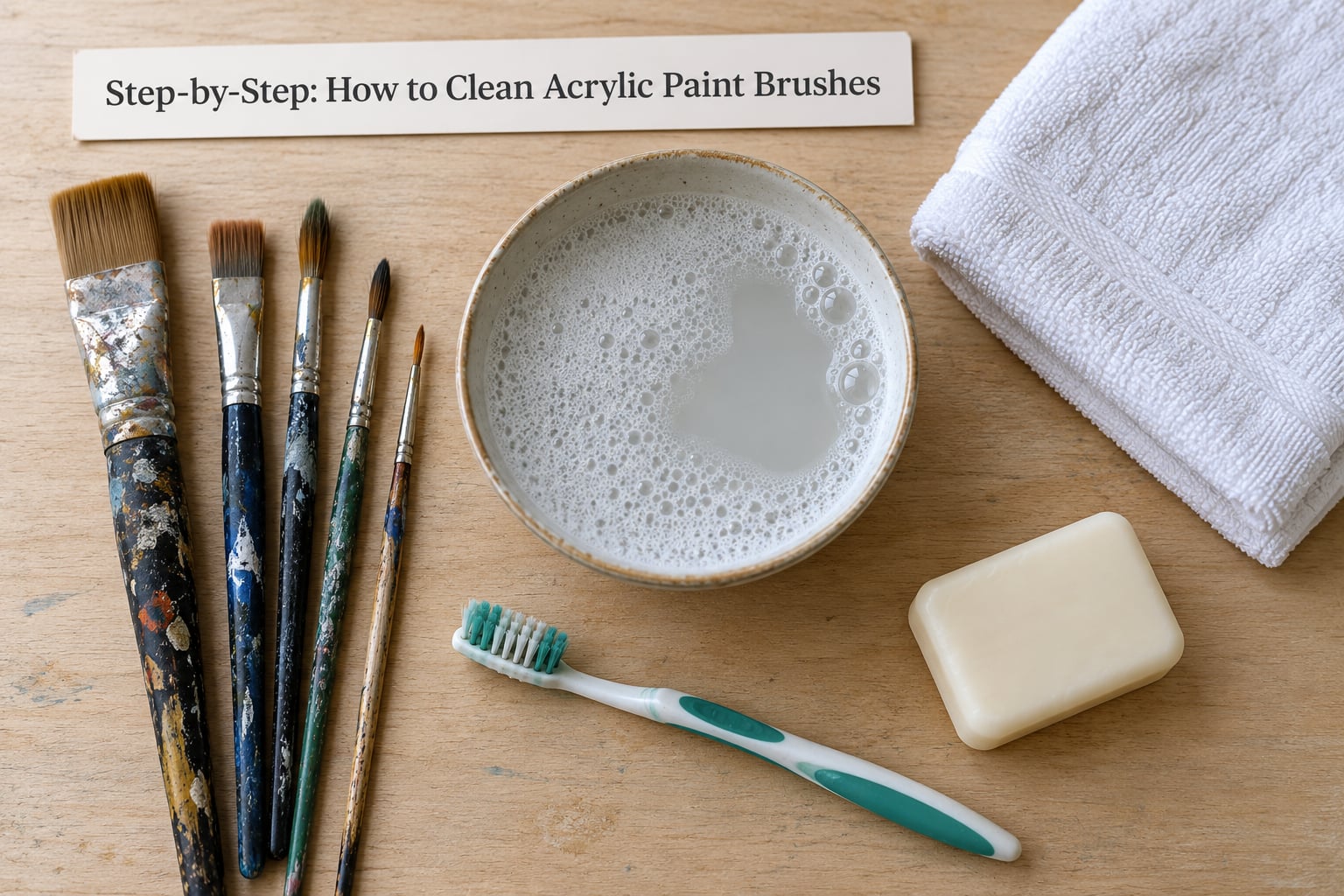
What You Need
You do not need a dedicated studio sink. Everything below costs less than a single detail brush and most of it is already in your house.
- Two bowls or small buckets. One for clean rinse water, one for dirty water, so you do not swirl paint back through the bristles. Rotate them as they fill.
- Mild dish soap or an artist soap bar. A plain, unscented dish soap works. So does a dedicated brush soap, which also conditions the bristles as it cleans.
- An old toothbrush or a brush comb. Either one pushes paint out of the base of the bristles where soap alone never reaches.
- A paper towel and a clean absorbent towel. The paper towel for wiping, the towel for shaping the bristles and catching drips.
- Isopropyl rubbing alcohol and distilled vinegar. Not for every wash. Only for the two jobs soap cannot do, loosening cured paint and killing bacteria in a soak.
If you are working at a kitchen table with no tap nearby, this list is enough. The routine in the next section works in a bowl on a towel, and I have run it on a tray beside a camping chair with no trouble at all.
Step-by-Step: How to Clean Acrylic Paint Brushes
1. Remove Excess Paint While It Is Still Wet
Scrape the brush against the edge of your palette or the rim of the paint jar so the bulk of the paint falls off in one piece. Then run a paper towel down the bristles from the ferrule toward the tip, always in that direction.
Never push paint back up into the ferrule and never pinch the bristles between your fingers to squeeze the paint out. Both force pigment into the part of the brush you cannot see and cannot reach later.
2. Rinse the Bristles With Cool or Lukewarm Water
Hold the handle under the tap and work water into the bristles with a slow twisting motion. Do not aim a hard stream at the ferrule, and keep the metal band itself out of the water as much as you can.
Here is where sources disagree, so let us settle it. Some guides say warm water, others insist on cold. For acrylic, use cool or lukewarm. Heat moves the polymer forward faster than you can rinse it, which means the last of the paint sets inside the ferrule instead of washing out. Cool water is slower to start but it actually finishes the job.
Run the water until it comes through the bristles clear. If the first bowl of water is cloudy with paint, dump it and use fresh water. Re-rinsing in grey water just pushes pigment back in.
3. Wash With Mild Soap and a Brush-Safe Motion
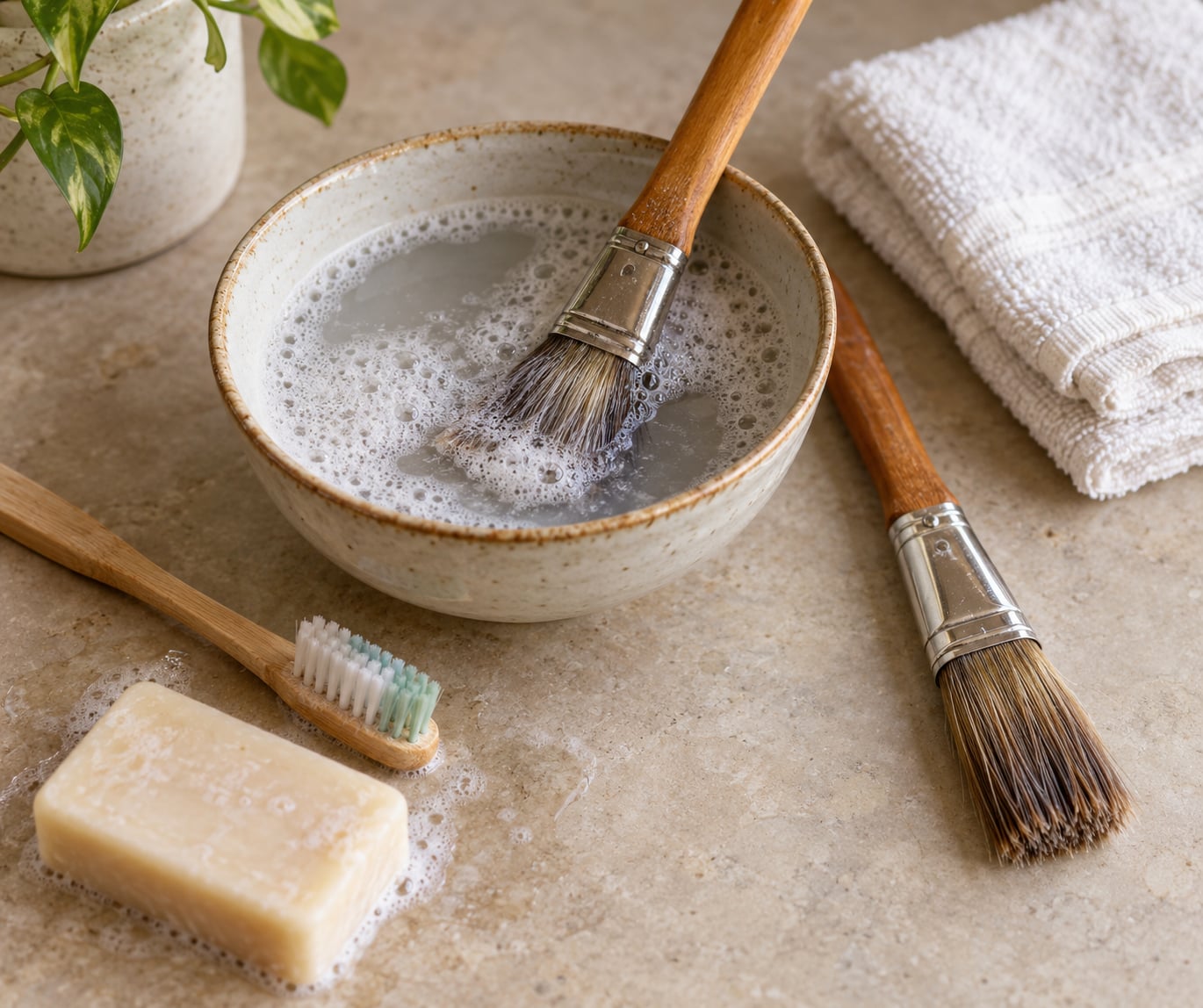
Put a drop of dish soap into your palm or into a small bowl of water and dip the brush in. Swish it between your fingers, gently, working from the ferrule out to the tip. You are after a soft lather in the base of the bristles and clear water at the tip.
Wash from the ferrule outward every time. Working paint back toward the handle is the single most common way acrylic ends up cemented inside the brush, and once it is in there it is effectively gone.
For a mark that will not budge, work an old toothbrush through the bristles. Brush downward, from the ferrule to the tip, with light pressure. You are combing paint out, not scrubbing the brush like a grill pan. If bristles start coming loose in your hand, stop. Some losses are unavoidable when paint has already dried on the brush, but scrubbing is how you turn a salvageable brush into a bristle shedder.
Keep rinsing and swishing until the soapy water runs clear and the water coming out of the tip matches the water going in. That is your signal that the paint is out, not almost out.
How to clean acrylic paint brushes with dried paint on them
First decide whether the brush is worth saving. If the bristles still feel flexible at the base when you press them sideways, it is worth reviving. If the whole tip is one solid wedge that does not flex at all, expect to lose the point of the brush even in a successful soak, but the handle and ferrule will usually survive for stippling and texture work.
Then pick your liquid based on how long the paint has been dry.
- Dry for a few hours, or sitting overnight: plain dish soap and hot-but-not-boiling water will usually shift it in 15 to 30 minutes.
- Hard as a rock for days: cover the bristles with isopropyl rubbing alcohol in a small jar or cup, work them gently with your fingers, and leave it for 90 minutes to several hours, flexing the bristles every half hour. Paint that stays stiff needs more time, not more pressure.
- Stuck inside the ferrule only: a short soak in isopropyl alcohol or warm vinegar gets into the crimp where a toothbrush cannot.
Whatever you use, keep the handle mostly dry. A bare wood handle that sits in liquid for hours swells, cracks around the ferrule and loosens the whole brush.
4. Remove Paint From the Ferrule and Handle
Turn the brush over and wipe the metal ferrule with a damp cloth or a damp toothbrush. Paint that sits on the ferrule dries there first and then glues the whole head to the handle.
A quick swipe of alcohol on the ferrule takes off anything the water missed. Rinse the handle with a damp cloth and leave it to air dry rather than standing it in water. That is the whole ferrule job, and it takes about fifteen seconds.
5. Rinse, Reshape, and Dry the Brushes Properly
Give the brush a final rinse in clean, cool water. Then squeeze out the water gently, working from the ferrule down again, without twisting the bristles.
Reshape while the brush is still damp. Pull the bristles back into the taper or point with your fingers, and run a brush comb or the edge of a paper towel from the ferrule to the tip to smooth the surface. A brush shaped while drying keeps that shape; a brush left alone dries wherever it happens to land, usually splayed.
Lay the brush flat on a clean towel, bristles in their natural curve, in a place with airflow. Never dry it bristles-up in a jar, where the water drains straight into the ferrule and the bristles collapse into the rim. Some artists loop the handle over a jar rim with the bristles hanging down and that works too, as long as the bristles are not pressed against anything wet.
For a full classroom set, the trick is airflow rather than individual perfection. Line the brushes up flat on a rack, spaced so nothing touches, and leave them overnight. They should feel dry to the touch by morning.
Common Mistakes
Almost every ruined acrylic brush comes down to one of these six, and all six are easy to avoid.
Using hot or boiling water on a wet brush
Warm water is fine for a dried brush because there is nothing left to set. On wet acrylic it just cooks the paint into the bristles faster. Cool or lukewarm for the normal wash, hot only when you are reviving a brush with no wet paint left in it.
Cleaning in the palm of your hand
It feels efficient and it is the worst option. Pigment absorbs straight into wet skin, and you are putting paint-covered hands on the place you press your face. Swish the brush in a bowl instead, and wash your hands afterwards.
Leaving brushes standing in water during a break
Water wicks into the ferrule through the bristles, softens the glue and loosens the crimp. Ten minutes is harmless. An hour is a gamble, and overnight usually wins nothing. Rinse, wash, reshape and dry before you step away, or put the brush in a sealed container with a dab of paint on the bristles if you genuinely need a short break.
Scrubbing hard to remove a stubborn spot
Old dried paint locks bristle to bristle. Forcing them apart tears them out. Use a toothbrush with light pressure, or a longer soak in alcohol. Expect to lose a few bristles on a badly dried brush; expect to lose none on a clean wash.
Drying bristles-up in a cup
The ferrule holds water, the water sits at the base of the bristles, and the brush dries stiff and splayed in a shape nobody asked for. Dry flat with airflow instead.
Pouring paint water down the sink
This one has nothing to do with brush condition and everything to do with your plumbing and your water. Acrylic rinses carry pigment and the film-forming binder, and that combination can coat pipes and drains over time. Let the solids settle in the dirty-water bowl, pour off the clear water, scrape the pigment into the bin, and wash the bowl with soapy water. Never send acrylic paint water down a storm drain or into a garden.
Frequently Asked Questions
Can you use Dawn dish soap to clean acrylic paint brushes?
Yes. Any plain, unscented dish soap works on acrylic because the paint is water-based. Add a drop to a bowl of cool water and swish the bristles until the water runs clear, rinsing with clean water as you go. Skip anything with bleach, solvents or heavy fragrance, and use a dedicated brush soap if you want the bristles conditioned as well as clean.
How do I get hardened acrylic paint off my brush?
Soak the bristles in isopropyl rubbing alcohol, fully covered but with the handle kept as dry as you can manage. Flex the bristles with your fingers every half hour and give it 90 minutes to several hours, then work any remaining paint out with a toothbrush and rinse in cool water. Alcohol keeps working as it soaks, so long soaks are more useful than scrubbing.
Can you wash acrylic paint brushes in the sink?
Avoid it. Acrylic rinse water carries pigment plus a binder that can build up in pipes, so let the solids settle, pour off the clear water, scrape the pigment into the bin and wash the bowl with soapy water. Use the same routine for rinse water if you have a bathroom sink that drains to a septic tank, where almost nothing oil-based or latex-based should ever go.
What liquid is used to remove acrylic paint from brushes?
Cool or lukewarm water plus mild dish soap handles any brush that has not fully cured. For cured paint, isopropyl rubbing alcohol is the strongest of the household options and distilled vinegar is a gentler alternative for a short soak. Commercial brush cleaner and preserver is the best choice if you paint often and want the bristles conditioned while they wash.
How long should I soak a dried acrylic brush?
A brush with paint a few hours old usually releases in 15 to 30 minutes of warm water and soap. A brush that is fully hardened wants 90 minutes to a few hours in rubbing alcohol, and longer soaks keep working rather than hurting. Keep the handle out of the liquid, and check the bristles every half hour so you can stop the moment the paint loosens.
How do you clean acrylic paint brushes between colors?
Wipe the brush on a paper towel, swish it in a bowl of clean water until the water runs clear, and dry it thoroughly on a towel before it touches the next colour. A brush comb helps separate stiff bristles from the previous colour. Many artists keep two brushes for a long session and swap rather than cleaning between every colour.
Conclusion
Wipe, rinse in cool water, wash with mild soap, rinse clean, reshape and dry flat. That is the whole job, and doing it in the five minutes after your last stroke is the difference between a brush that lasts years and one that goes stiff in a cup overnight.
Save the alcohol and the vinegar for a brush you already let dry out, not for your normal wash. Start with clean water and soap every time, and most brushes never need rescuing at all.