Paint brushes splay out because the hairs stop holding their point or edge and fan apart, and the usual reason is paint drying and hardening right where the bristles enter the metal band at the base. That band is called the ferrule. Once dried paint builds up inside it, the hairs are physically pushed outward from underneath. Overloading the brush, scrubbing it too hard, drying it standing up, and plain old age finish the damage.
The good news is that most splayed brushes are fixable, at least partly. Here is what is happening to the brush, how to tell a care problem from a faulty one, and what to change so it does not happen again.
Table of Contents
- 1What Does It Mean When a Paint Brush Splays Out?
- 2Why Do Paint Brushes Splay Out?
- 3Natural Bristle and Synthetic Bristle Differences
- 4Why do my paint brush bristles separate?
- 5Common Causes of Splayed or Split Bristles
- 6How to Reshape a Splayed Paint Brush
- 7How to Prevent Paint Brushes from Splaying
- 8When to Replace a Splayed Paint Brush
- 9Frequently Asked Questions
- 10What does it mean when a paintbrush splits?
- 11How do I reshape my paint brush?
- 12How to fix bent paint brush bristles?
- 13How to soften the bristles on a paint brush?
- 14How do I stop my paint brush from showing brush streaks?
- 15How to stop paintbrush from shedding?
- 16Conclusion: Start by Reshaping and Changing Your Care Routine
What Does It Mean When a Paint Brush Splays Out?
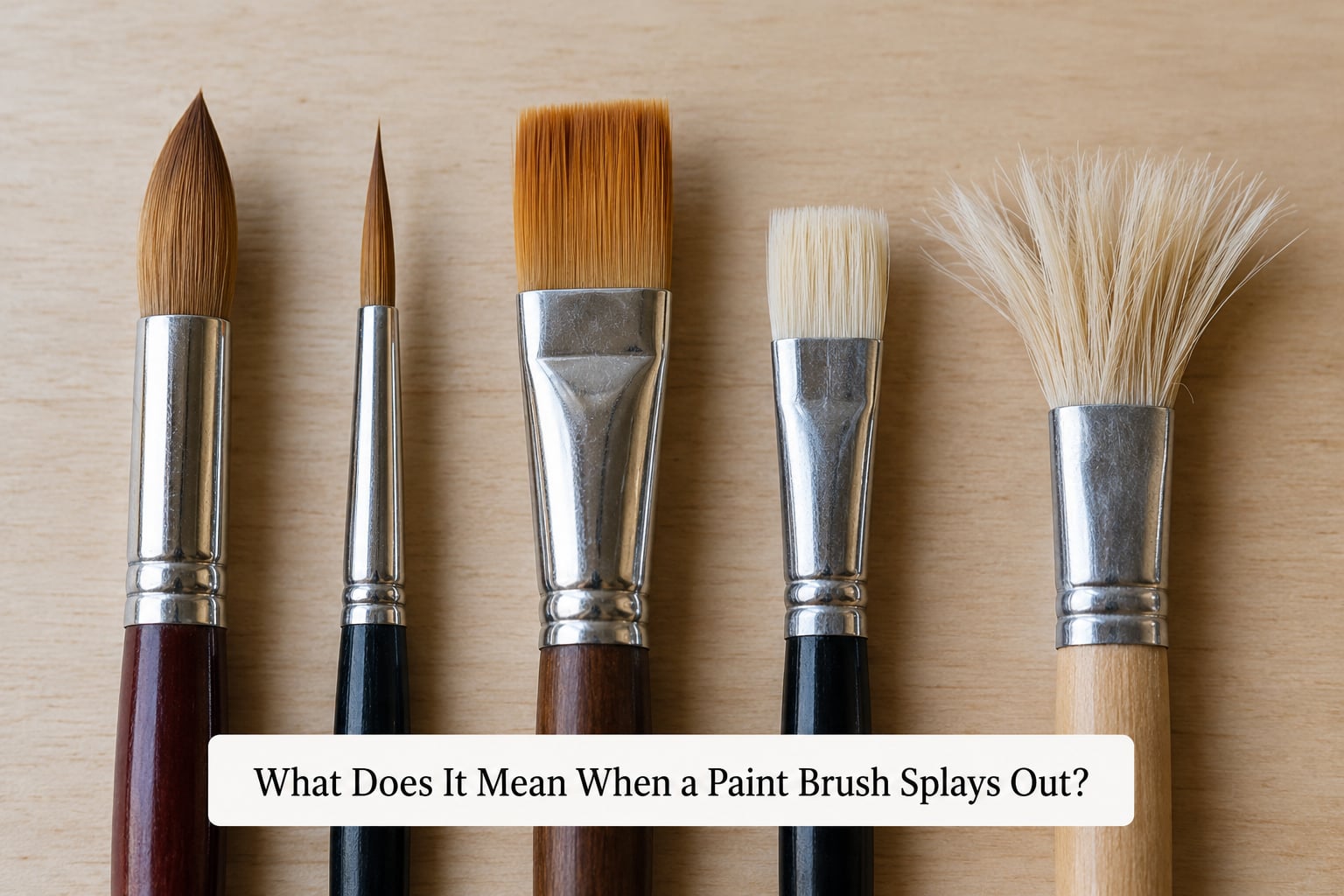
Splaying is the word for bristles that have lost their shape. A round brush that used to come to a neat point now looks like a little fork or a pitchfork. A flat brush that used to have a crisp straight edge has a wavy, fuzzy one.
It is worth separating four words people mix up. Splaying is the whole tip fanning open. Splitting is one or two hairs or a small group peeling away from the rest, usually from the ferrule upward. Fraying means the ends of the hairs themselves are fuzzy or broken rather than arranged. Shedding is hairs coming out and falling into your painting.
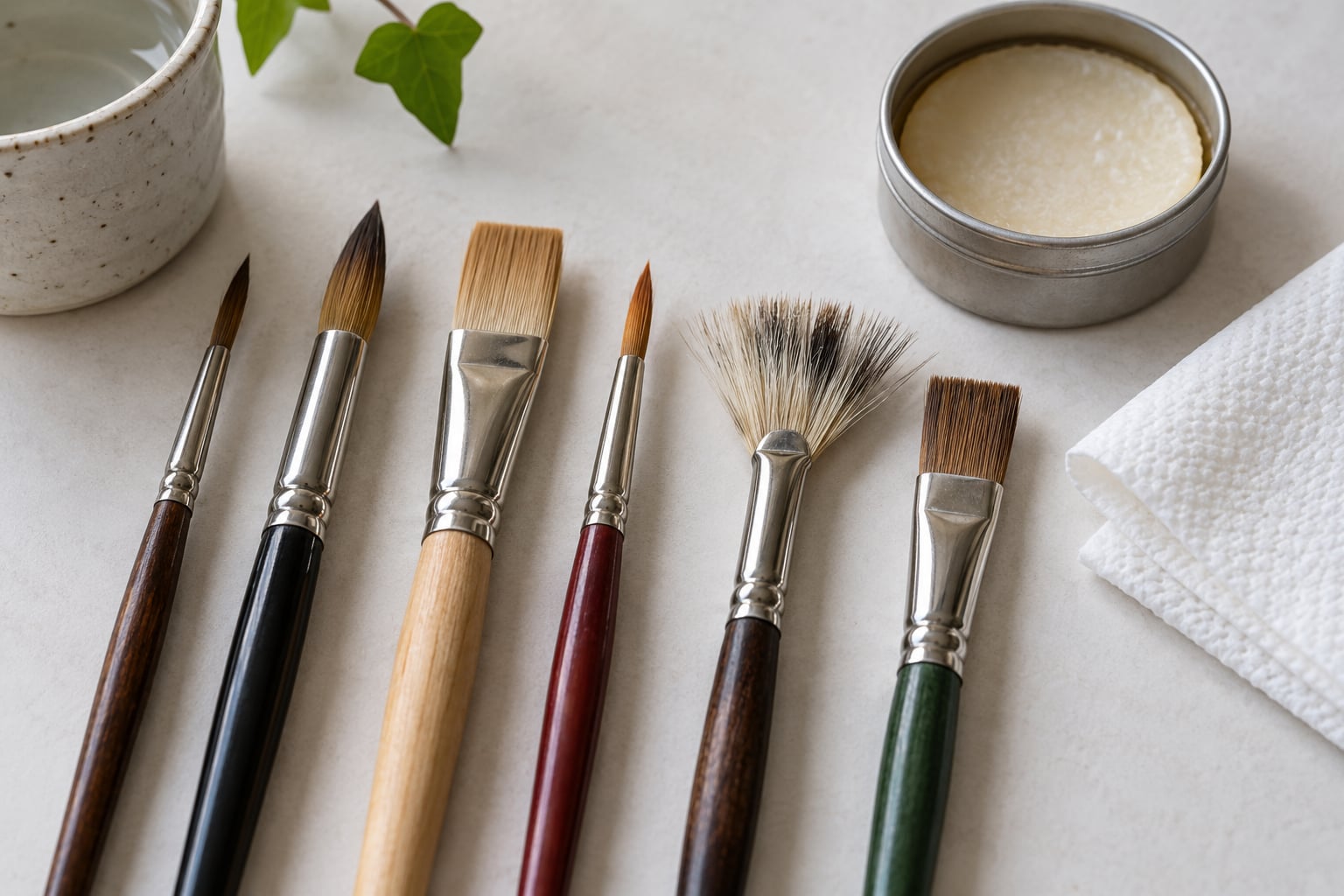
The ferrule is the crimped metal sleeve that grips the hairs and glues them in place. The handle, or hilt, is what you hold. Nearly every cause of splaying starts at the ferrule, which is why it keeps coming up in this conversation.
Why it matters: a brush that will not hold a point cannot paint a fine line, and a brush with a fuzzy edge drags instead of flowing. The result is streaks, hard lines, and blotchy texture that shows up in finished work long after the brush is put down.
Why Do Paint Brushes Splay Out?
Short answer: repeated bending, friction, water, heat and time loosen the hairs from each other. Natural hair brushes cling together partly because of microscopic scales along each hair and natural oils that make them behave like your own hair. Scrub those away, or let water and detergent sit on them too long, and the hairs stop cooperating.
There is also a purely mechanical story. Each stroke bends the hairs over. Bristles take a set from that, like a wire bent into a curve. A brush used for broad scrubbing strokes every session develops a curve no amount of conditioning will fully undo. That is normal wear, and the fix is partly reshaping and partly adjusting your technique.
Natural Bristle and Synthetic Bristle Differences
Natural hair, whether hog bristle, squirrel, mongoose or sable, holds paint differently and reacts more strongly to what you do to it. Hog bristle is stiff, has visible flags along each hair, and is happy being scrubbed hard. Squirrel and sable are fine and springy, and they punish you for boiling water or harsh solvents.
Synthetic brushes are solid polymer filament, smooth and uniform with no scales or natural oils to lose. They shrug off hot water, dish soap and scrubbing, and they do not need conditioning. What they cannot do is remember a fine point the way quality sable does, so a cheap synthetic round brush that splayed badly often will not come back to a needle point no matter how you treat it.
That difference matters for repair. Hot water that a nylon brush tolerates will set a natural hair brush. A wire comb is fine on synthetic and will tear sable.
Why do my paint brush bristles separate?
When a few hairs pull away from the rest, it is nearly always what is happening at the base. Dried paint or medium inside the ferrule glues some hairs together while forcing others outward, so the tip splits into a few uneven groups. Trimming the strays at the tip with scissors will not help, because the damage is at the bottom. Clean the ferrule first, then reshape.
Common Causes of Splayed or Split Bristles
Here are the ones that come up again and again, in rough order of how often they show up.
- Paint dried inside the ferrule. The hairs enter the metal sleeve in a tight bunch. Paint that dries there forms a wedge and spreads them from the inside. It is also the hardest problem to reverse, because the residue sits under the crimp where you cannot reach it.
- Standing the brush upright to dry. Any water or dirty wash water left in the bristles runs back down into the ferrule and dries there. Laying the brush flat or hanging it bristles-down avoids this completely.
- Overloading the brush. Dunking the whole length of the bristles into the paint pot pushes pigment straight into the ferrule. Load the bottom third to half instead and wipe the sides on the rim of the pot.
- Leaving a brush unwashed between colours and sessions. A brush set down mid-project starts curing, and the first few strokes after that are permanently bent.
- Too much water in the bristles. Excess water carries pigment particles up between the hairs where they lodge and dry.
- Scrubbing too hard against the ferrule. A brush that is worked against the metal to get it clean instead of combed wears the hairs at exactly the point they enter the sleeve.
- Heat and solvents that are wrong for the hair. Boiling water on natural hair damages it permanently. So does the wrong solvent, and so does leaving a brush sitting in used thinner.
- Drying air, heat, and age. Long stretches in a hot dry room dry out natural hair, and the hairs become brittle and lose their spring. Storage crammed into a bag that crushes the tips does the rest.
Two more explanations get missed. Some brushes pitchfork within two or three uses no matter how carefully they are treated, which points to a faulty batch rather than anything you did. And a brand new brush shedding hairs right away often means soap is still sitting inside the bristles from the factory or the first wash, not that it is a bad brush.
| What you see | Likely cause | What to do |
|---|---|---|
| Fanned or forked tip, hairs still springy | Shape lost from repeated bending | Reshape with hot water and a paper towel wrap |
| Stiff wedge of paint at the base, tips stuck | Paint dried in the ferrule | Soak in the right solvent, comb, rinse, reshape |
| Stiff, clumpy, no movement at all | Acrylic or gouache dried in the mass | Long soak, then a conditioner or linseed oil for oil brushes |
| Few groups of hairs peeling away from the tip | Residue gluing hairs together at the base | Ferrule clean first, then reshape |
| Few stray hairs standing up around the edge | Loose hairs or leftover soap inside the bristles | Rinse longer, pluck strays with tweezers near the ferrule |
| Hairs coming out into the paint | Over-cleaning or stiff bristles from solvents | Stop scrubbing, rinse, condition, replace if it continues |
| Chalky white crust at the base | Mineral deposits from hard water | Soak in warm soapy water, rinse, dry flat |
| Streaky, line-leaving strokes | Splayed or fuzzy tip, no clean edge | Reshape, or step down to a smaller brush |
How to Reshape a Splayed Paint Brush
Wash the brush first. Reshaping over dried paint just seals the damage in place. Use warm water and a little brush soap or mild dish soap, work it through the bristles from the ferrule out to the tips, and comb the hair with your fingers or a fine wire comb until the paint releases.
Rinse until the water runs clear, and check that no grey or oily film is coming out of the ferrule. If water runs milky or the bristles feel slimy, keep going. That film is trapped paint and it is the single thing most worth removing.
Then use the method that matches your brush.
Synthetic brushes. Dip the bristles in almost boiling water for about 30 seconds. The heat softens the polymer and the tips go limp. Pinch and roll them back into the shape you want, working along the length with a comb, then rinse in cold water to set it. Dry flat, bristles hanging over the edge of the bench.
Natural hair brushes. No boiling water. Warm water only, and a few minutes of soaking for a stiff brush, or a brief dip for a brush that is simply out of shape. Comb gently with a wire comb, never tug. Roll the brush on a flat surface with a little pressure to bring the hairs into a curve that matches its original profile.
Both types finish the same way. Squeeze out the water, wrap the bristles in a paper towel or toilet paper cone, or slip a small piece of plastic wrap over the tip, and leave it for at least 12 hours. The wrap holds the shape while the hairs dry and set.
There is a grease method too, and it appears in a lot of forum threads. Work a small amount of Vaseline into the bristles, comb them into shape, and leave it overnight. It works best on dry natural hair that has lost its spring. Rinse it out thoroughly afterwards, and keep Vaseline away from any surface you intend to paint, including canvas.
Know when to stop. A brush whose hairs are permanently bent in a hook, split all the way to the crimp, or shedding as you comb has lost something reshaping cannot return. You can still trim it to a shorter length and use it for broader work, but it will not paint a fine line again.
How to Prevent Paint Brushes from Splaying
- Clean brushes while the paint is still wet. A minute of rinsing now saves an hour of soaking later.
- Load only the bottom third to half of the bristles, and wipe the ferrule on the rim of the pot each time.
- Dry flat or bristles-down. Never stand a brush up in a jar, and never cap a damp brush tightly.
- Match the brush to the job. A soft round meant for glazing should not be scrubbing a textured surface.
- Use the right cleaner: soap and warm water for acrylic and watercolor, brush soap or the matching oil for oil paint, and isopropyl alcohol only on synthetic.
- Comb and reshape after every wash, not just when the tip looks tired.
- Condition natural hair with a brush conditioner or a drop of linseed oil once it is clean and nearly dry.
- Keep brushes in a roll, a guard, or upright in a jar, rather than loose in a drawer or satchel.
When to Replace a Splayed Paint Brush
Minor splay is not a reason to throw a brush away. A brush that is a little fuzzy, or that has lost a few hairs, still lays down paint perfectly well for most work, and reshaping will improve it. Fix it and carry on.
Replace it when the hairs are permanently bent, when it is shedding with every stroke, when the split runs back to the crimp, or when it was stiff and hard before you ever touched it. Ferrule paint that will not come out after a long soak is the practical end of the line, since it is sealed under the crimp and holds the hairs apart forever.
One case is not a care problem at all. If a whole batch of the same brush starts fanning within a few uses, the bristles were probably crimped or glued badly. Stop fighting it, set those aside, and use something else.
Frequently Asked Questions
What does it mean when a paintbrush splits?
A split brush has a few hairs or a small group peeling away from the rest of the tip, and it usually happens because paint dried and hardened inside the ferrule where the bristles are gripped. The dried paint glues some hairs together and pushes others outward, so the tip divides into uneven groups. Trimming the strays off the end will not fix it, because the damage is at the base. Clean the ferrule, then reshape.
How do I reshape my paint brush?
Wash it first with warm water and brush soap, comb the paint out from the ferrule outward, and rinse until the water runs clear. For synthetic bristles, a 30 second dip in almost boiling water softens them, then comb, reshape and rinse in cold water to set. Natural hair brushes take warm water only, never boiling. Finish by wrapping the tip in a paper towel cone or plastic wrap for at least 12 hours.
How to fix bent paint brush bristles?
Bent bristles that still have their spring can almost always be coaxed back. Comb them straight, roll the brush on a flat surface with light pressure to restore its curve, then wrap the tip in paper towel or plastic wrap and let it dry for at least 12 hours so the new shape sets. If the hairs have a permanent hook in them or the bend runs all the way back to the crimp, no amount of reshaping will straighten them.
How to soften the bristles on a paint brush?
Stiffness usually means paint has dried inside the brush and glued the hairs together. Soak the bristles in the cleaner that matches your paint: warm soapy water for acrylic and gouache, or brush soap or the matching oil for oil paint. Work the cleaner down into the ferrule with your fingers and comb gently. Long soaks help far more than scrubbing, which only wears the hairs further.
How do I stop my paint brush from showing brush streaks?
Streaks and hard lines usually mean the tip has no clean edge, because the bristles are splayed, fuzzy or worn. Reshape the brush and the marks will tighten up, but if the hairs are permanently bent or shedding, use a smaller brush for line work. Loading too much paint and dragging the brush across a dry surface both exaggerate the problem, so wipe the ferrule on the pot rim and keep each stroke wet.
How to stop paintbrush from shedding?
A small amount of hair loss when you first use a new brush is normal, and a brush that loses a few hairs now and then is usually fine. Shedding that continues with every stroke means the hairs are being worn out from over-scrubbing, stiff bristles from the wrong solvent, or an age problem. Wash more gently, rinse longer, and condition natural hair after cleaning. Persistent shedding means the brush has reached the end of its useful life.
Conclusion: Start by Reshaping and Changing Your Care Routine
Start by washing the brush properly and reshaping it, because paint trapped in the ferrule is behind most splaying and it is the part worth fixing first. Then change two habits: load only the bottom third to half of the bristles, and dry every brush flat or bristles-down instead of standing it up. Those two changes stop the majority of brushes from ever needing the repair.