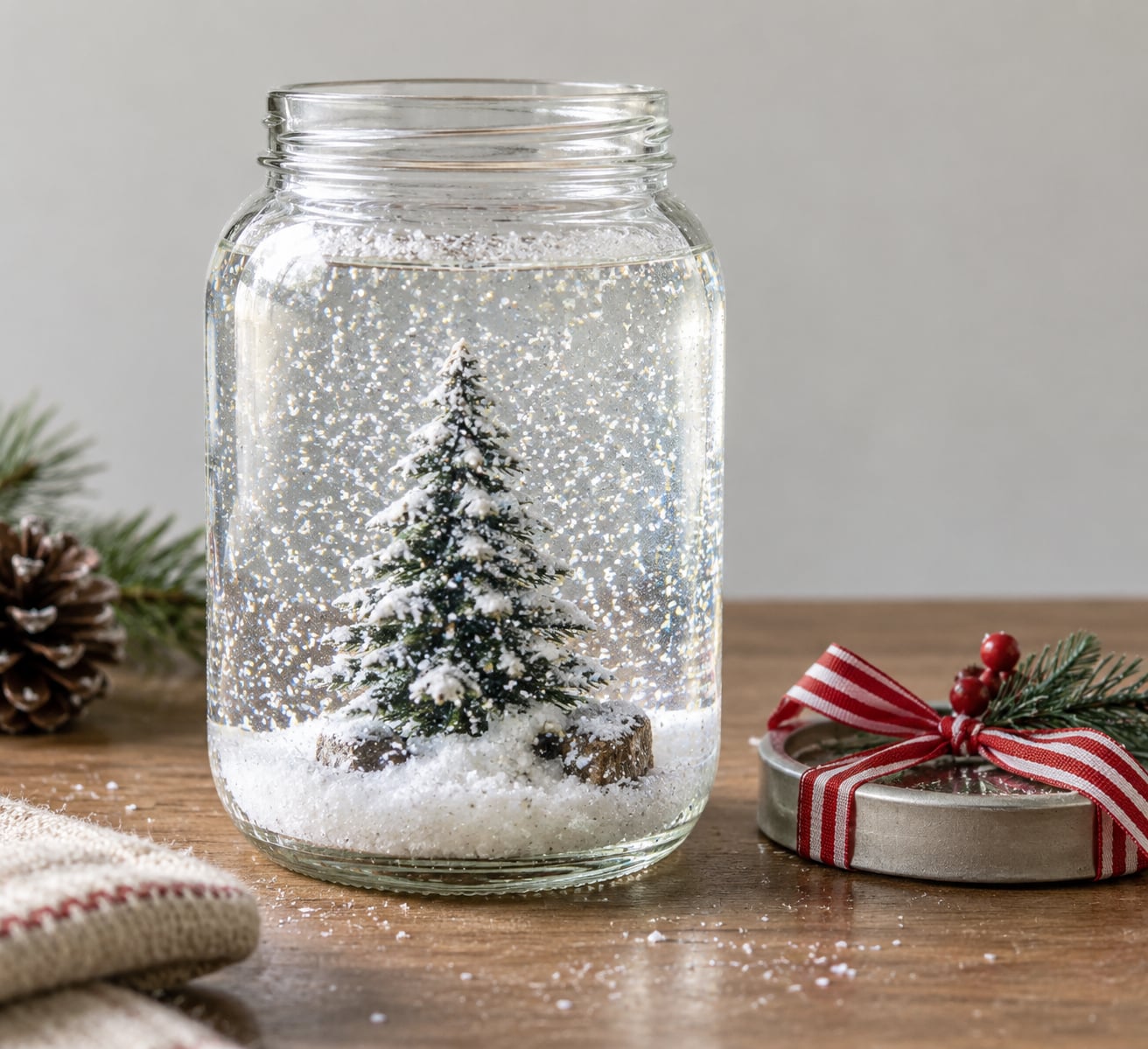
A snow globe in a jar is four things: a small winter scene glued inside the lid, clear water, a spoonful of glycerin and some glitter. Shake it and the glitter drifts back down like real snow. The whole build takes about 30 minutes of active time, plus roughly an hour for the glue to cure, and it works with jars you probably already have in the cupboard.
Here is how to make a snow globe in a jar that actually seals, with the quantities written down instead of left to guesswork. The trick is the glue placement: the figurine goes on the inside of the lid, never on the jar itself, so nothing blocks the threads.
Table of Contents
- 1What You Need
- 2Step-by-Step
- 3Prepare the Jar and Winter Scene
- 4Add Water, Snow and Sealer
- 5Shake and Display the Snow Globe in a Jar
- 6Common Mistakes
- 7Frequently Asked Questions
- 8What kind of liquid do you put in a homemade snow globe?
- 9What kind of jar is needed for a snow globe?
- 10How much glycerin do you put in a snow globe?
- 11Can I make a DIY snow globe without glycerin?
- 12How do you keep glitter from clumping in a snow globe?
- 13Why are snow globes not allowed in carry-on luggage?
- 14Conclusion
What You Need
This list makes one snow globe. Everything is available at a craft shop or supermarket, and nothing on it is hard to find.
- Clear glass jar with a screw-on lid — a mason jar, pickle jar, candy jar or spice jar all work. You need a metal or glass ring that tightens over the mouth, and smooth sides you can see through.
- Waterproof epoxy — E6000-style craft epoxy is the strongest option for a part that stays underwater. Waterproof craft glue works for younger kids.
- A small winter scene — a mini tree, a figurine, a snowman, an animal, or a house. Plastic and ceramic are both fine.
- Distilled water — plain tap water works in the short term but carries minerals that turn the liquid cloudy over a few weeks.
- Vegetable glycerin — this is the ingredient that slows the fall. One teaspoon is plenty for a small jar.
- Tinsel glitter or craft snow — chunky tinsel glitter reads better as snow than fine glitter, which turns into a dense layer at the bottom.
- Fine sandpaper, a paper towel and a spoon — for cleaning the lid and getting glitter in.
Two things are optional but worth knowing. A drop of glycerin only works if the jar is clean; residue from the jar factory is one reason some glazes turn milky. And if you cannot get glycerin, clear school glue, light corn syrup or baby oil all thicken the liquid enough to make the snow drift.
Step-by-Step
Prepare the Jar and Winter Scene
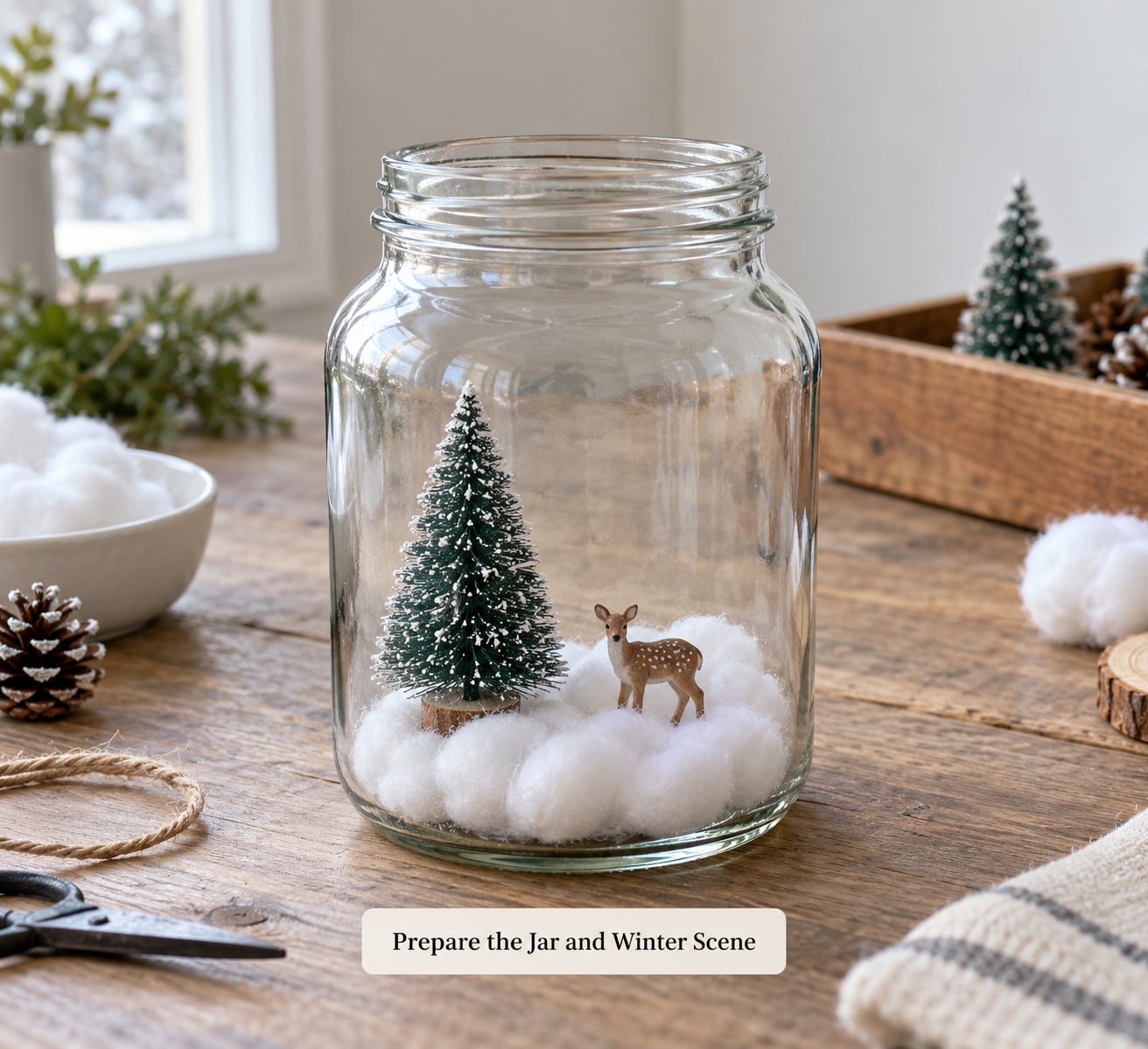
Wash the jar with dish soap, rinse it well and dry it completely. Water sitting under the threads is how a globe starts leaking later, so give the lid a wipe too.
Rub the inside of the lid with fine sandpaper in small circles. That scuffs the shiny coating so the epoxy has something to grip, and it is the single step most people skip and then wonder why the tree fell off after a month.
Check your scene against the jar before you glue anything. Set it inside and put the lid on loosely: if it touches the underside of the lid or sticks up past the threads, trim it down. A wire pick works for a plastic tree, and small clippers handle a thicker trunk.
Two checks before glue. If the tree is dyed, soak it overnight in plain water so the colour does not bleed into your snow globe later. And skip figurines with metal parts, staples or wires — those rust inside the water and turn everything yellow-brown within weeks.
Once it fits, set it upright in the middle of the jar’s base and nudge it until it sits centred. A scene that touches the glass wall looks lopsided the moment you turn the globe over.
Add Water, Snow and Sealer
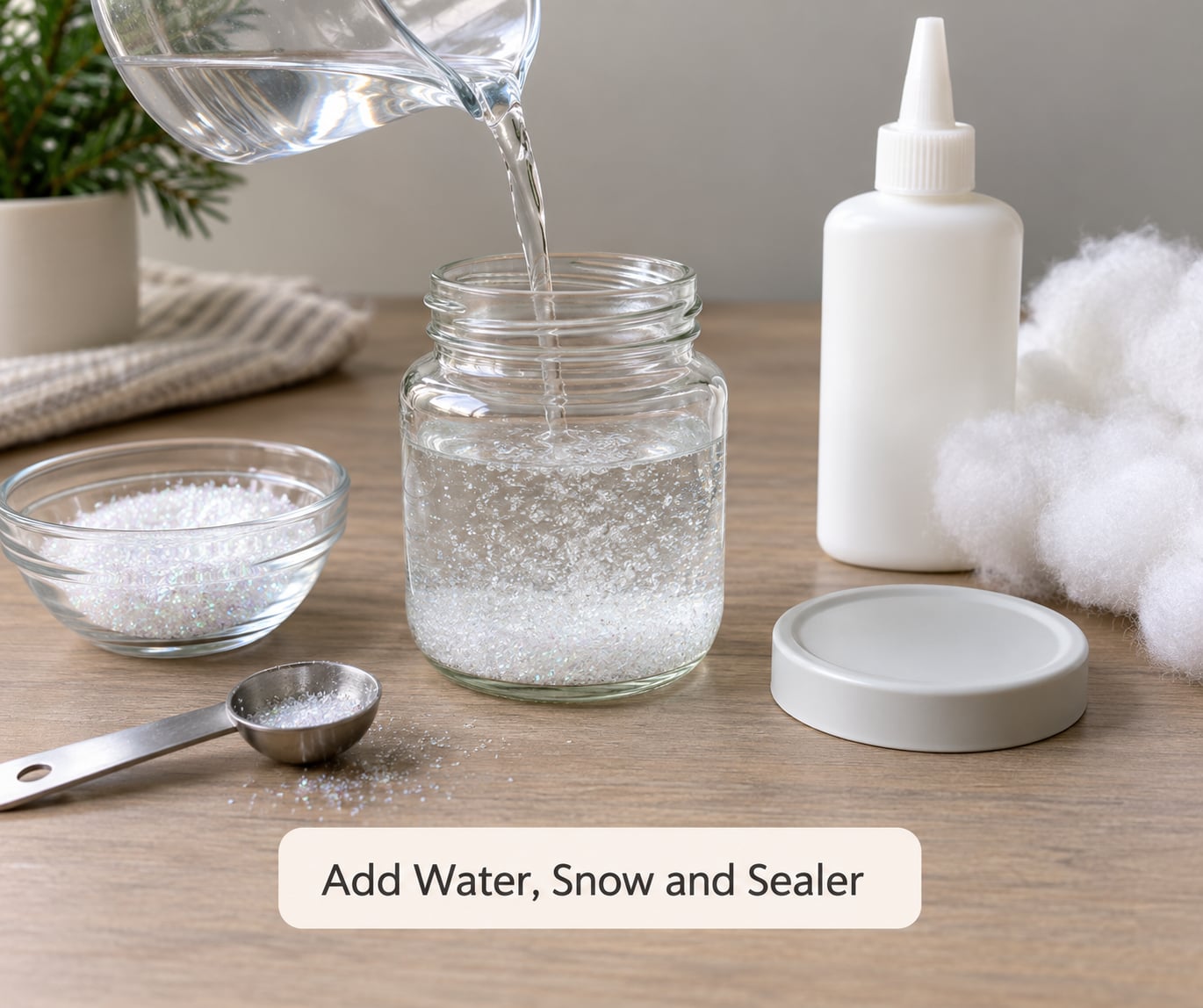
Squirt a pea-sized bead of epoxy onto the inside of the lid, press the base of your scene into it and hold it in place for 30 seconds. Then set it upside down on a flat surface and let it cure. E6000 grips in about five minutes but wants around an hour to fully set, and rushing it is the usual reason a tree floats loose.
Take the glycerin quantities from jar size rather than a vague “a few drops”:
- Small jar, up to about 8 oz (a spice jar or small mason jar): 1 teaspoon glycerin
- Pint or 16 oz mason jar: 1 to 2 teaspoons glycerin
- Quart or 32 oz jar: 2 tablespoons glycerin
The rule is roughly one teaspoon per 8 ounces of liquid. Add it a drop at a time and stop when the water looks slightly thick — going past that point turns the liquid syrupy and the glitter stops moving properly.
Fill the jar with distilled water to about one inch below the rim. That headroom matters: when you screw the lid on and invert the jar, the water level rises toward the seam. Add your glycerin, stir gently with a spoon so it mixes through, then drop in a spoonful of tinsel glitter or craft snow.
Do not run a hot glue gun around the jar mouth or across the threads. Hot glue sets hard enough to create gaps under the screw ring, and the globe leaks at the seal no matter how tightly you tighten it. All of your sealing should happen under the ring, or with epoxy on the inside of the lid only.
Screw the decorated lid on and tighten it firmly, then flip the jar over in one smooth motion. Keep the level surface clear — this is the moment a wobbly one goes.
Shake and Display the Snow Globe in a Jar
Give it a few hours before the first real shake so the seal can settle. Turn it upside down again and hold a paper towel under the seam: if it is dry, the seal is holding.
Now shake it. One firm shake is enough. The glitter should suspend, drift down over a few seconds and settle into a loose layer on the base, rather than slamming to the bottom in half a second.
If the snow drops too fast, add glycerin a drop at a time by opening the lid and topping up the liquid. If it moves in thick clumps, the glitter is too fine or there is too much of it — a teaspoon of heavier tinsel glitter gives a cleaner drift than a heavy pour of fine glitter.
If the scene sits lopsided after the flip, it was off-centre in the jar base. That is a build-stage problem, so pull the lid, re-glue the scene dead centre and reseal.
Common Mistakes
It leaks from the seam. Almost always caused by glue on the jar mouth or threads. If it has only just leaked, dry everything and reseal with epoxy applied under the ring. If glue is already set in the threads, take a thin screwdriver to the channel and clear it, then reseal.
The water goes cloudy or yellow. Three causes: tap water minerals, dye bleeding from a cheap tree, or rust from a metal part on the figurine. Distilled water stops the first. Pre-soaking the tree overnight stops the second. Anything with a staple or wire in it will rust eventually, so skip it or seal it with clear spray sealant.
The glitter clumps into a solid layer. Fine glitter and too much of it are the usual reason. Use chunky tinsel glitter, cut the quantity roughly in half, stir the liquid gently before sealing rather than shaking the jar dry, and make sure there is enough glycerin to keep the particles apart.
The tree floats or tips over. The adhesive let go. Scrape the old epoxy off the lid, sand the spot again and reattach, this time waiting the full cure time. A dab of epoxy under the base of the trunk helps more than glue around it.
The snow falls too fast to look like snow. Not enough glycerin. Plain water will always drop the glitter in a couple of seconds. Add glycerin a drop at a time and retest — this is the one variable that changes the whole effect, so resist adding a lot at once.
There is no falling effect at all. You may have too much glycerin. When the liquid is genuinely thick, glitter hangs in place and barely drifts. Dilute back toward plain water.
One note for anyone making these with kids: an adult should handle the epoxy and the sanding, and keep sharp wire picks and clippers out of reach. E6000 bonds skin in seconds and will glue your fingers to the table if you get it on them, and small figurines are a choking risk for younger children. For under-fives, swap epoxy for waterproof craft glue, skip the wire trees, and use a large figurine that cannot fit inside a mouth.
Frequently Asked Questions
What kind of liquid do you put in a homemade snow globe?
Distilled water with a small amount of glycerin is the standard mix. The glycerin thickens the liquid so glitter particles hang in it and drift down slowly instead of dropping straight to the bottom. Plain water works, but the snow falls in about two seconds. Too much glycerin has the same result in reverse: the liquid turns syrupy and the glitter stops moving. Start at roughly one teaspoon per 8 ounces of water.
What kind of jar is needed for a snow globe?
Any clear glass jar with a smooth-sided body and a screw-on metal or glass ring will work. Mason jars, pickle jars, candy jars, Nutella jars and spice jars all make good globes, which makes this a good upcycling project. Avoid textured glass and narrow jars, since you need to see the scene clearly and fit the figurine through the mouth without scraping it.
How much glycerin do you put in a snow globe?
Roughly one teaspoon for a jar up to 8 ounces, one to two teaspoons for a pint or 16 oz jar, and two tablespoons for a quart. That works out to about one teaspoon per 8 ounces of liquid. Add it a drop at a time rather than pouring the whole amount in, because too much glycerin turns the liquid thick and cloudy and the glitter stops drifting.
Can I make a DIY snow globe without glycerin?
Yes. Clear school glue, light corn syrup, baby oil, mineral oil and clear cooking oil all thicken water enough to slow the glitter down. Corn syrup gives the most natural drift but can make the liquid hazy over time. Baby oil keeps things clear but a little runnier. Use whichever you already have, and reduce the quantity by about half compared with glycerin.
How do you keep glitter from clumping in a snow globe?
Switch to chunky tinsel glitter rather than fine glitter, and cut the quantity roughly in half. Then add glycerin a drop at a time until the liquid is slightly thicker than water, which keeps the particles suspended instead of letting them pack together. Stir the glitter into the liquid with a spoon before you seal the lid rather than shaking it in dry, and use distilled water so fine sediment is not part of the problem.
Why are snow globes not allowed in carry-on luggage?
A snow globe is a sealed liquid, and cabin pressure changes at altitude can push on that seal hard enough to make it leak or crack in the hold. Airport security rules generally restrict them in carry-on bags for that reason, which is why shop-bought snow globes are usually packed in checked luggage. A homemade jar globe is treated the same way as any other container of water.
Conclusion
Start with a jar, a small scene and the one ingredient people miss: glycerin. Glue the scene to the inside of the lid, sand that spot first, let it cure for the full hour, then fill with distilled water and add glycerin a drop at a time until the glitter drifts the way you want.
This craft scales with the maker. A four-year-old can do a large figurine with craft glue and a spoonful of glitter, while an older kid or an adult with epoxy can build a full scene with several figures and a decorated lid. Either way, keep the scene small, the seal clean and the glitter restrained, then add decoration once the first globe works the way you like it.