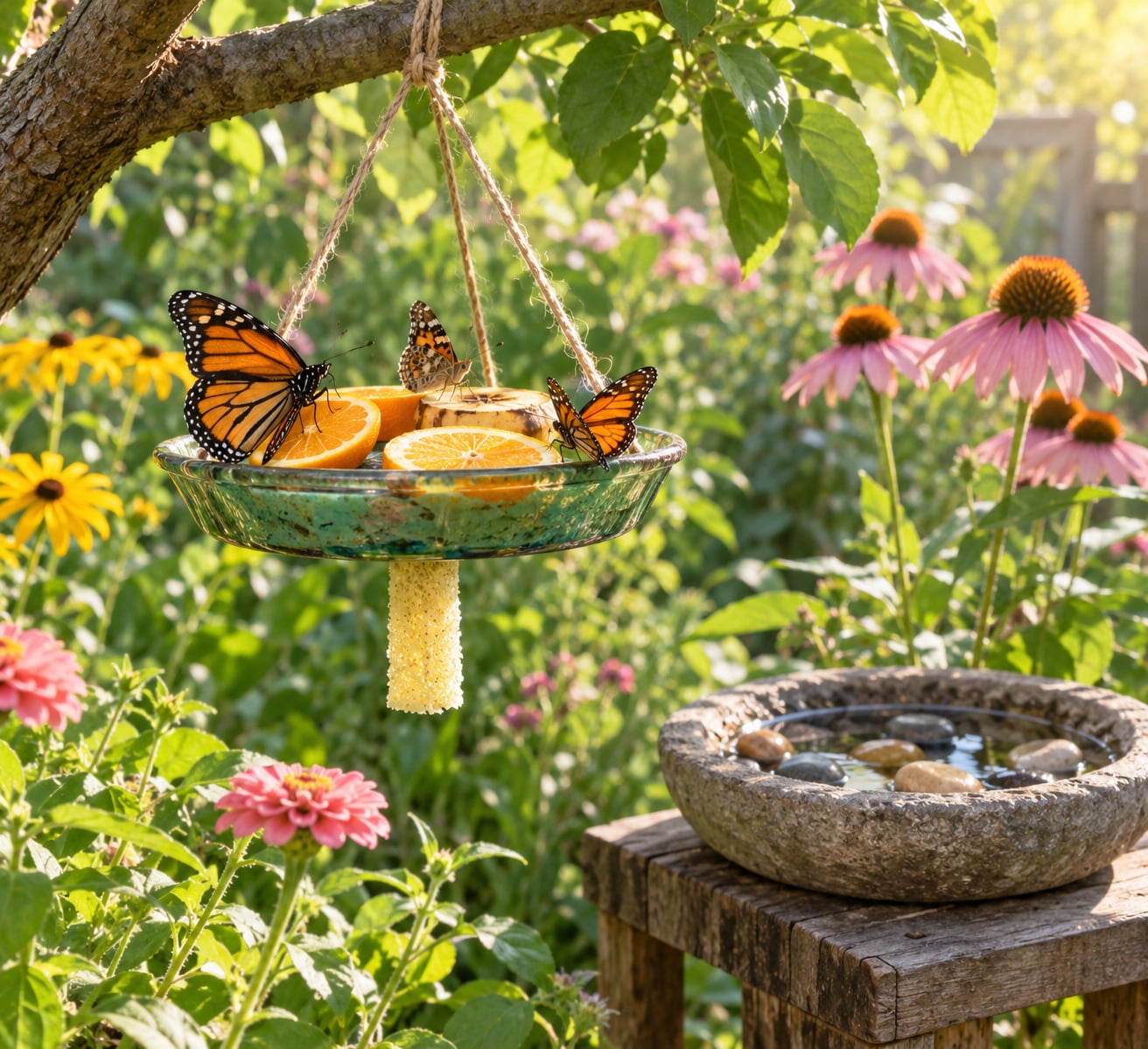
If you want to know how to make a butterfly feeder for kids, the whole project takes about half an hour and costs almost nothing. You turn a shallow dish or a cut plastic bottle into a feeding station that adult butterflies land on for a sip of sugar water or a piece of ripe fruit.
The design matters more than the parts. Butterflies feed through a long, tube-like mouthpart, so a wide, shallow surface with a wick pointing downward gives them somewhere safe to refuel without drowning. I have one on a garden hook next to the buddleia, and it gets used most mornings in July and August.
A fair warning first: a feeder is optional. A garden with nectar flowers across three seasons will do more than any dish you hang up. Build the feeder because it is a good afternoon project and a fine excuse to stand still and count butterflies, not because the butterflies need you.
Table of Contents
- 1What You Need
- 2Simple substitutions that still work
- 3Step-by-Step
- 4Common Mistakes
- 5The food goes bad before they arrive
- 6Too much sugar, or the wrong sweetener
- 7The water is deep or the wick points up
- 8Mould appears in or on the feeder
- 9Ants take over
- 10Nothing comes for days
- 11The feeder is left out at the wrong time
- 12Frequently Asked Questions
- 13What food should I put in a butterfly feeder for kids?
- 14Where should I place a butterfly feeder in the garden?
- 15How often should I replace the food and water?
- 16Can I make a butterfly feeder from a plastic bottle?
- 17Will butterflies actually come to a homemade feeder?
- 18Is it safe for young children to make and handle the feeder?
- 19Conclusion
What You Need
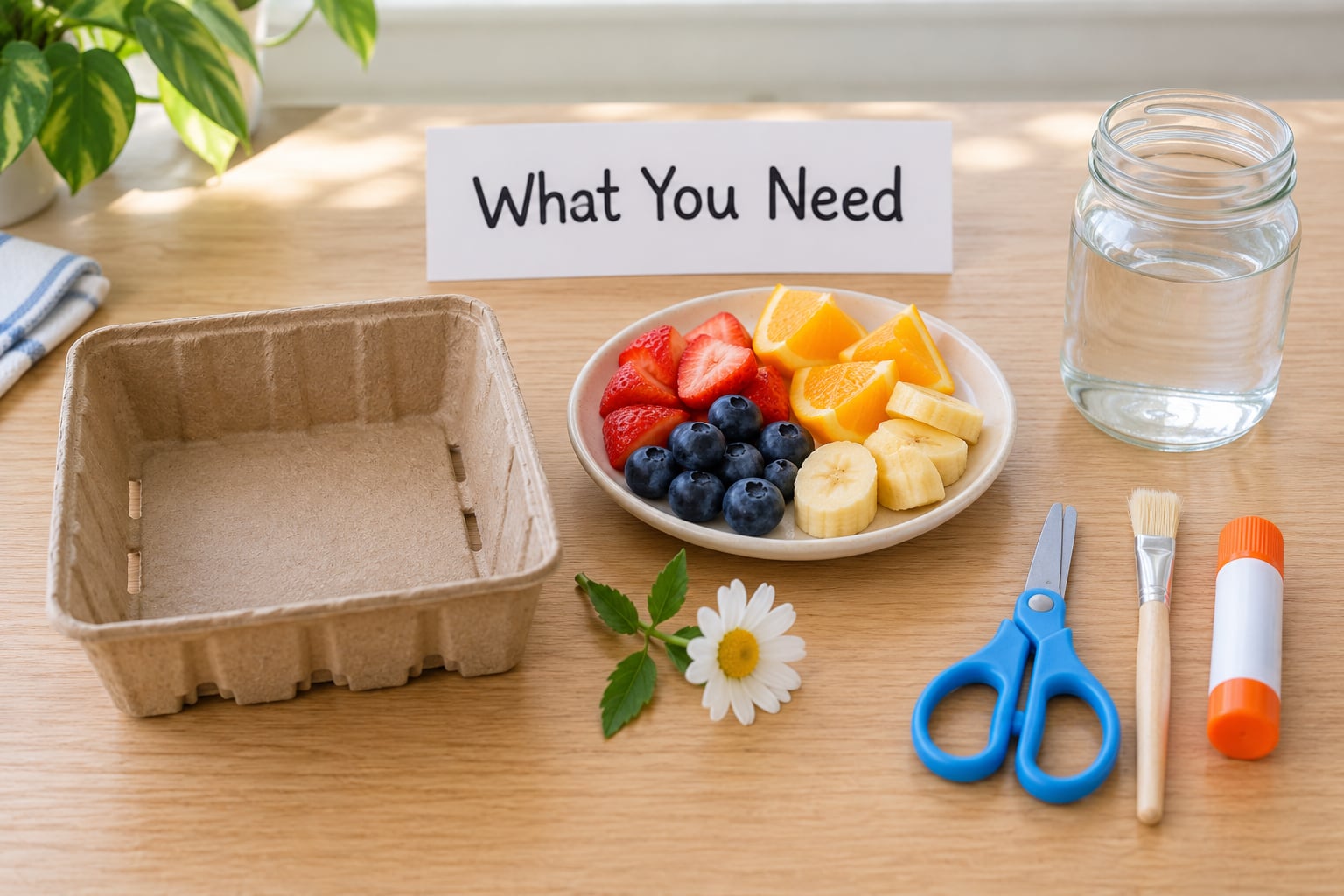
You almost certainly have these already. The list is deliberately short so a four-year-old can help sort the pieces onto the table.
- A shallow dish or lid — a plastic plate, a jar lid, a yogurt pot lid, or the base of a cut plastic bottle.
- A small sponge piece — a kitchen sponge or a scourer pad cut to thumb size.
- Strong thread or string — about 18 inches, or enough to reach the branch you plan to hang from.
- Sugar and warm water — one part sugar to nine parts water for nectar. Do not use honey.
- Ripe fruit — orange slices, banana, melon or overripe apple, as the wasp-free option.
- Non-toxic paints or coloured paper — for decorating the outside only.
- Child-safe scissors and a blunt-ended nail, if the design needs holes.
Simple substitutions that still work
No jar lid? A plastic takeaway lid does the job. No sponge? A rolled-up cotton wool ball wedged through a hole and pointing down gives the same slow-release surface. If you have no tree branch to hang from, stand the dish on a small table or an upturned pot beside your flowers instead — placement still works, it just looks less decorative.
Step-by-Step
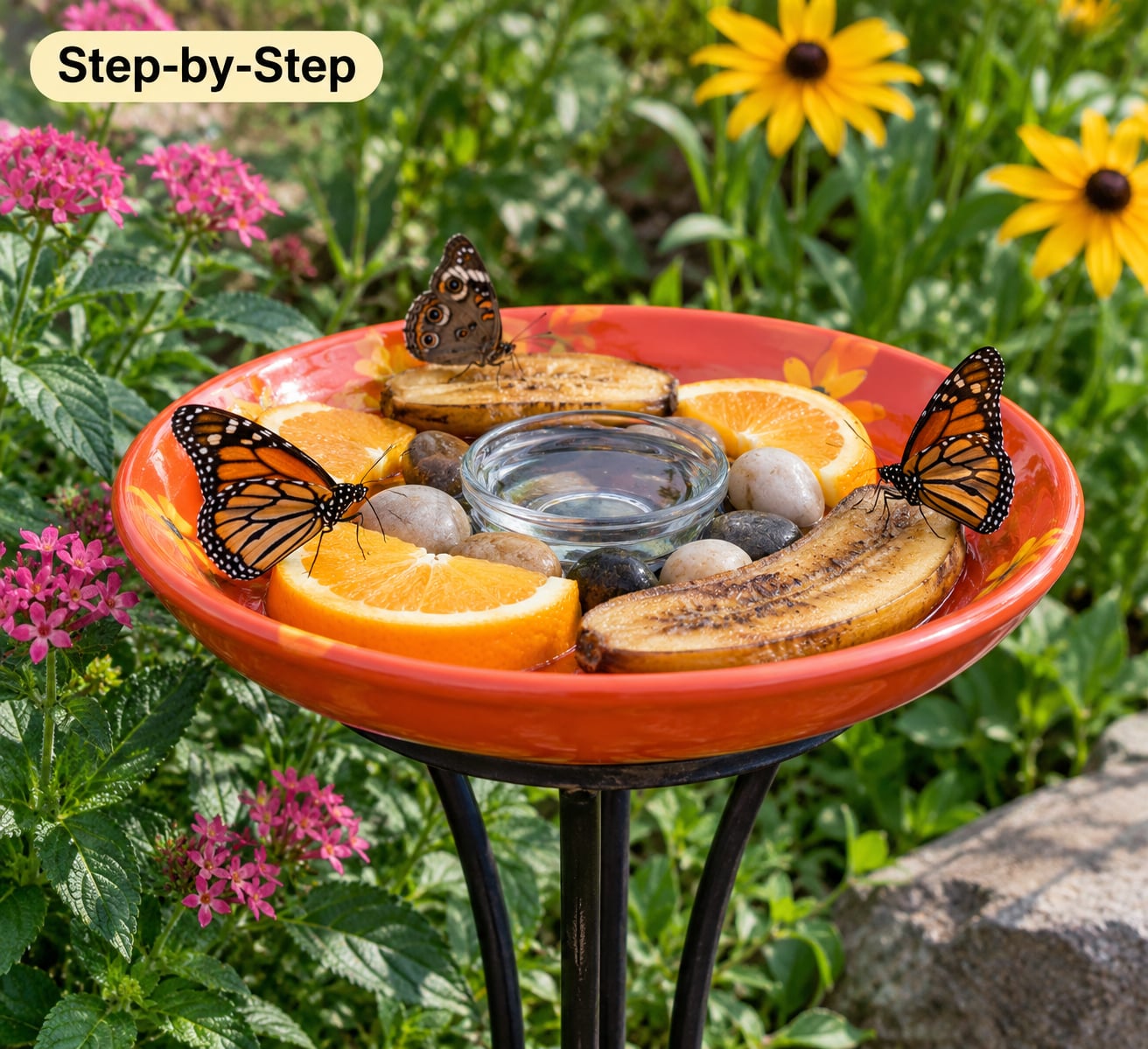
Set out everything on one tray first. It saves the ten minutes of hunting for string that usually happens halfway through.
- Make the base. Choose a dish at least 4 inches wide with a rim. Turn it over so it sits flat and stable.
- Mark the wick hole. Draw a small cross in the centre. An adult makes this hole with a blunt nail and a hammer, or with a heated skewer, while the child watches and decorates.
- Fit the sponge. Push the sponge piece through so about half sits above the base and half below, then pull it until the top points downward at a slight angle. A downward-facing wick is the single most important build detail — a flat one stays soggy and grows mould.
- Mix the nectar. Warm one part sugar with nine parts water, stir until dissolved, then let it cool completely. Honey, fizzy drinks and undiluted juice all do harm.
- Add the food. Soak the sponge with cooled nectar and set the dish in the sun, or skip nectar entirely and arrange orange slices, melon and banana on the plate instead.
- Add water. If you offer water, pour a film no deeper than a few millimetres into a separate dish with flat pebbles in it. Butterflies do not handle deep water well.
- Decorate. Paint the outside rim with non-toxic paint or wrap it in coloured paper. Keep all decoration off the eating surface.
- Hang it. Thread the string through the rim at two opposite points, tie it, and hang the feeder roughly 3 to 5 feet off the ground in a sunny, sheltered spot near flowering plants.
- Check it is usable. Press the sponge lightly. It should be damp, not dripping, and it should never sit in a puddle.
That last check is worth the minute it takes. A feeder that holds standing water is the fastest route to a mouldy dish and no visitors at all.
Common Mistakes
The food goes bad before they arrive
Rotting fruit attracts wasps and beetles rather than butterflies. Replace fruit every two to three days in warm weather, and every day if it is above about 25°C. Take everything out and clean the dish rather than topping up.
Too much sugar, or the wrong sweetener
A strong sugar solution can kill a butterfly rather than feed it. One part sugar to nine parts water is the standard, and honey should never be used because it carries spores that are harmful to native bees and butterflies.
The water is deep or the wick points up
Butterflies cannot swim and cannot draw liquid through a mouthpart that faces upward. Keep water to a film over pebbles, and always point the sponge down so the surface stays damp but not submerged.
Mould appears in or on the feeder
This is the complaint I hear most often. Mould is nearly always a sign that the sponge never dried out between refills. Scrub the whole feeder with hot water and a little washing-up liquid, rinse thoroughly, and let it dry completely before you refill it. If mould keeps returning, replace the sponge.
Ants take over
Ants colonise feeders and deter butterflies. Keep the feeder away from the ground, clean crumbs off the rim each time you check it, and hang an ant mote above the feeder on the same branch. It clears the ants without touching the nectar.
Nothing comes for days
Often nothing does. Butterflies may ignore a feeder for a week, or permanently, and that is a normal outcome rather than a failure. Placement beats design here: move the feeder to a sunnier, more sheltered spot near nectar flowers, and expect visitors between mid-morning and mid-afternoon when the sun has warmed them enough to fly.
The feeder is left out at the wrong time
Put it out when your garden flowers are opening, and take it in at the end of the season. A feeder standing in a flowerless garden through winter attracts nothing but wasps.
Frequently Asked Questions
What food should I put in a butterfly feeder for kids?
Use either diluted sugar water or ripe fruit. Mix one part sugar with nine parts warm water, stir until dissolved, cool it fully, then soak a sponge wick so it stays damp without dripping. Fruit feeders use orange slices, banana, melon or overripe apple laid on the plate. Never use honey, which harms native pollinators, and skip fizzy drinks or juice.
Where should I place a butterfly feeder in the garden?
Hang it 3 to 5 feet off the ground in warm sun with shelter from wind, and close to flowers that are actually blooming. Avoid deep shade, exposed spots and anywhere near wasp nests. Hang it before breakfast and check it in the middle of the day, since butterflies fly mostly between about mid-morning and mid-afternoon once the sun has warmed their wings.
How often should I replace the food and water?
Change the fruit every two to three days in mild weather and every day in hot weather, because rotting fruit brings wasps and beetles. Refresh the sugar water whenever the sponge starts to look dry or dusty. Wash the dish with hot water and a little washing-up liquid between refills and let it dry fully so mould does not take hold.
Can I make a butterfly feeder from a plastic bottle?
Yes, and it is one of the simplest versions. Cut the base off a clean plastic bottle, punch a small hole in the centre, push a sponge piece through with the top facing downward, and soak it in one-to-nine sugar water. It makes a compact feeder that is easy to hang from a branch and quick for small hands to assemble.
Will butterflies actually come to a homemade feeder?
Sometimes, and plenty of feeders stay empty all season. A feeder helps adults topping up energy during hot, dry spells or when few flowers are open, but placement matters more than design. A garden with nectar plants flowering from spring to autumn will bring more butterflies than any feeder. Treat a quiet feeder as normal rather than as a failed project.
Is it safe for young children to make and handle the feeder?
It is, with an adult nearby. An adult should handle the scissors, the hole punching and any hammer work, and hang the feeder well away from swings and climbing frames. Choose non-toxic paints and keep all decoration off the eating surface. Children from about age three can sort, mix, decorate and stir; younger ones should keep clear of the cutting and hanging steps.
Conclusion
Start with the feeder: a shallow dish, a sponge wick pointing down, one part sugar to nine parts water, hung in sun beside your flowers. Then spend the real effort in the beds next to it, adding nectar plants that flower in succession from spring into autumn. Check the feeder every morning or two, and let a quiet dish be a quiet dish.