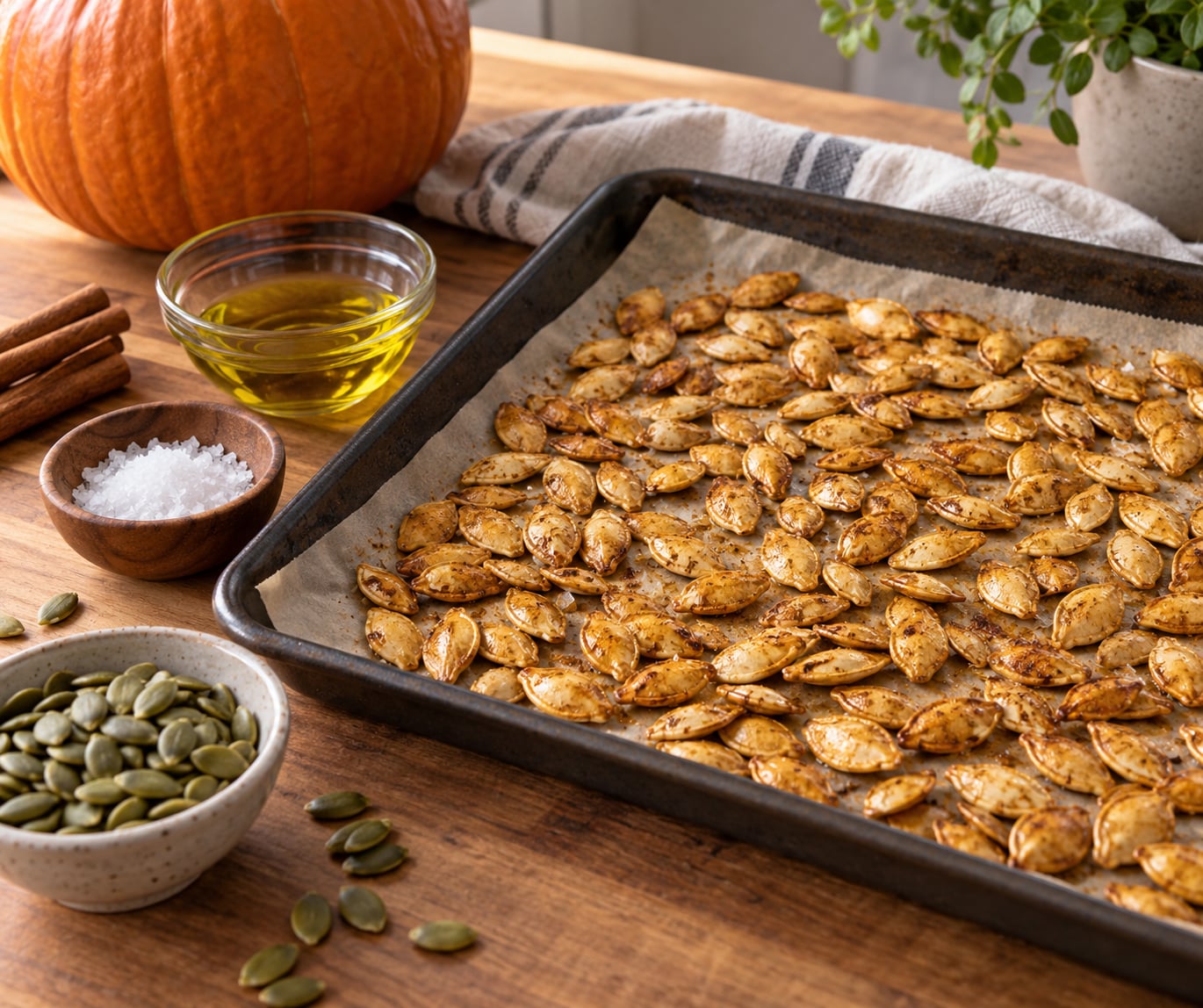
Roasting pumpkin seeds with kids takes about 50 minutes from a fresh pumpkin to a bowl of crisp pepitas, and only about 10 of those minutes need a child. The method is a dry roast at 300°F (150°C) to drive off moisture, then a second stretch with olive oil and salt to brown and crunch. It is one of my favourite autumn kitchen activities because the messy part, pulling stringy pulp off seeds, keeps small hands busy for free.
What follows is the plain method plus the part most recipes skip: what a two, four or seven year old can actually do at each stage, and what has to stay with the adult.
Table of Contents
- 1What You Need
- 2Ingredients
- 3Equipment
- 4Kid jobs and adult jobs
- 5Step-by-Step: How to Roast Pumpkin Seeds with Kids
- 61. Heat the oven and line the tray
- 72. Scoop and separate
- 83. Rinse and dry
- 94. Dry-roast for 30 minutes
- 105. Add oil and seasoning
- 116. Roast again for 15 to 20 minutes
- 127. Check and cool
- 13Kid jobs by age while roasting pumpkin seeds with kids
- 14Common Mistakes
- 15Seeds burn before they crisp
- 16Seeds stay chewy or soft
- 17Seeds stick to the tray
- 18Everyone salted them by accident
- 19The kids turn their noses up
- 20Frequently Asked Questions
- 21What temperature should pumpkin seeds be roasted at for kids?
- 22How long does it take to roast pumpkin seeds in the oven?
- 23Can children add the oil and seasoning themselves?
- 24Should I rinse pumpkin seeds before roasting them?
- 25How do I know the pumpkin seeds are done?
- 26How should roasted pumpkin seeds be stored?
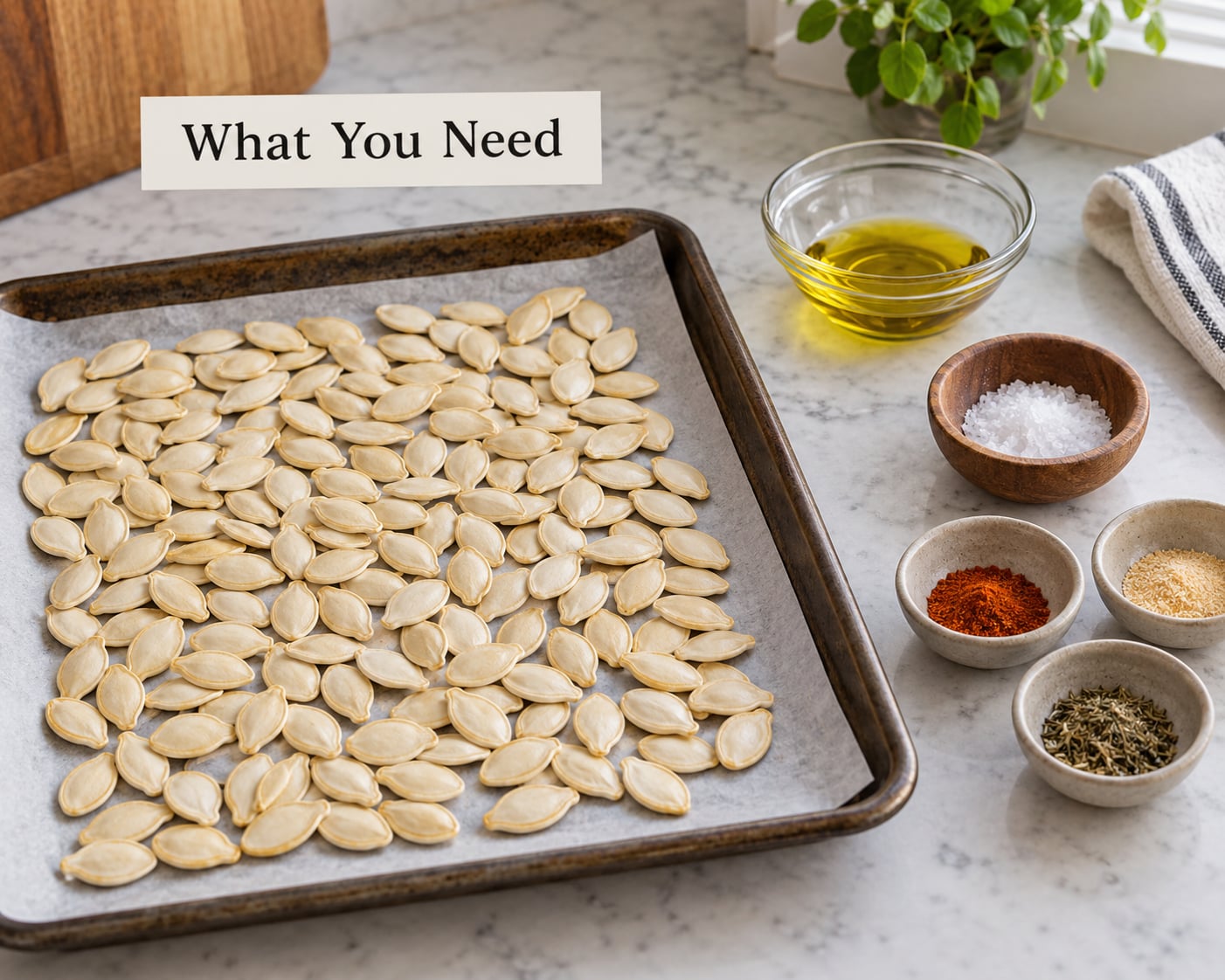
What You Need
Ingredients
- Pumpkin seeds, either shelled pepitas or seeds still in the shell, about 2 cups
- 1 to 2 tablespoons olive oil
- Flaky sea salt, start with half a teaspoon
- Optional flavorings: pumpkin pie spice, cinnamon, garlic powder, smoked paprika or a little maple syrup
Shelled pepitas roast faster and crunch sooner, which matters with a short attention span. Seeds in the shell taste nuttier and take roughly ten minutes longer, and the shells give a toddler something to spit out safely.
Equipment
A rimmed baking sheet, parchment paper or a silicone mat, a large bowl, a colander, a clean tea towel, oven mitts, and one small spoon per child. A pastry brush is nice but not needed, a drizzle straight from the bottle works fine.
Kid jobs and adult jobs
Adult only: cutting the pumpkin, handling the hot oven and the tray, and measuring the salt. Child jobs: scooping, sorting, rinsing, counting, shaking the bowl of seeds and sprinkling a measured amount of seasoning from a small spoon. Put the salt in a tiny pinch bowl so nobody empties the canister by accident. That over-salting is the single most common way this activity goes wrong.
Allergen note: pumpkin seeds are a tree nut and seed allergen in the United States, and they are frequently processed alongside peanuts and tree nuts. Check the label if anyone at the table has an allergy, and keep pumpkin seeds away from kids who eat them in handfuls. Whole seeds and pepitas are a choking risk for toddlers under three, so serve those shelled and ground or buttered onto toast instead.
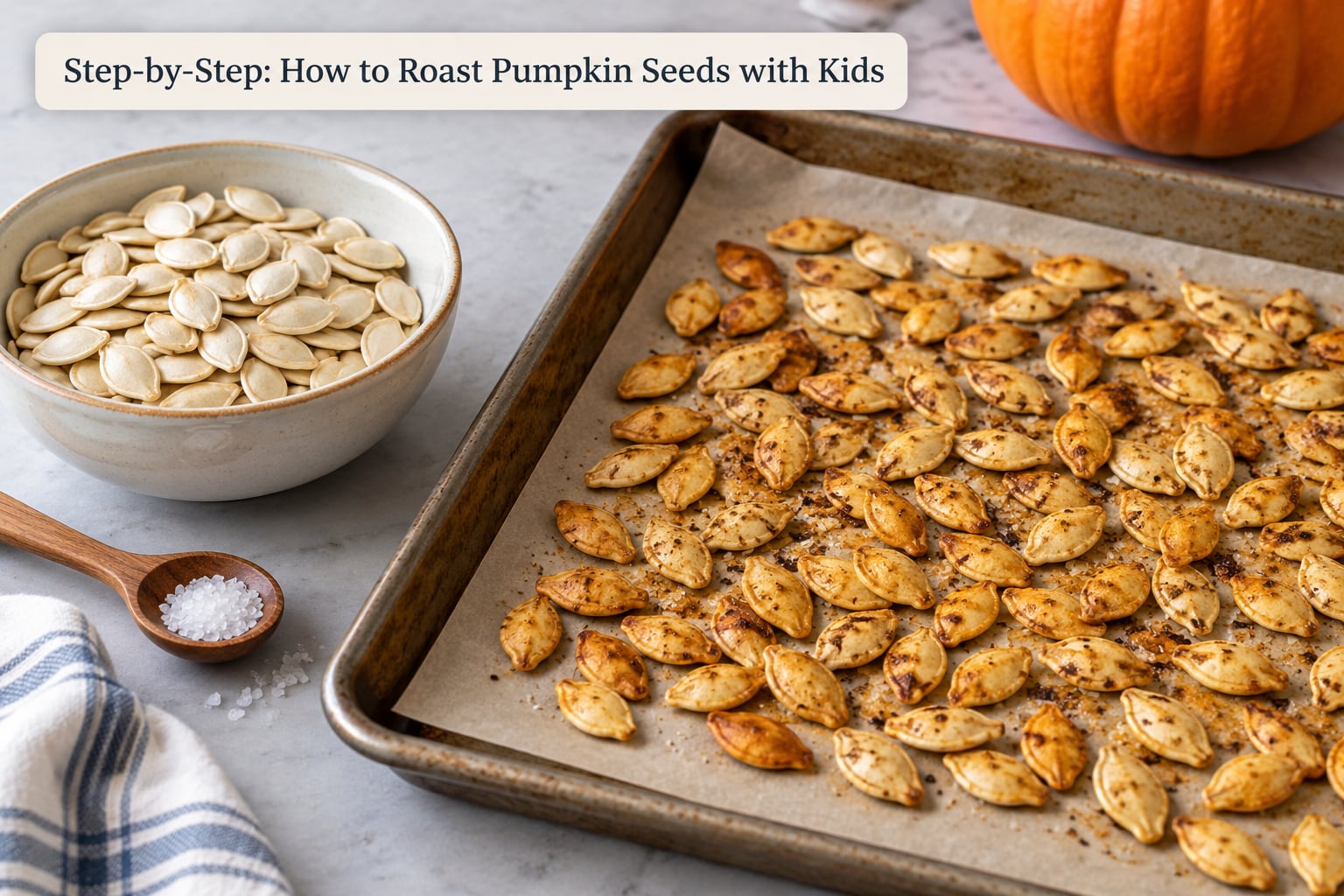
Step-by-Step: How to Roast Pumpkin Seeds with Kids
1. Heat the oven and line the tray
Set the oven to 300°F (150°C), or 275°F (135°C) for convection. Line a rimmed baking sheet with parchment and preheat for 10 minutes while you prepare the seeds. A hot tray is what stops the seeds steaming in their own moisture.
2. Scoop and separate
Cut the top off the pumpkin, or halve it and scoop with a spoon. Pull the seeds free of the stringy pulp and drop them into a large bowl. Expect a fair amount of orange goop on everyone’s hands. Children who dislike sticky textures often refuse this stage, so warn them it is the messy bit and let them scrub up afterwards rather than skipping it.
3. Rinse and dry
Rinse the seeds in a colander, swish off the remaining pulp and spread them on a clean tea towel. Pat them dry. Drying properly matters more than any other step here, because surface water turns to steam in the oven and you get chewy seeds instead of crisp ones.
4. Dry-roast for 30 minutes
Spread the seeds in one thin layer with your fingers so none of them touch. They must not overlap, or they steam each other and cook unevenly. Roast for 30 minutes at 300°F with no oil and no salt yet. This stage is doing the quiet work: it removes moisture so the seeds can crisp later.
5. Add oil and seasoning
Take the tray out carefully, using oven mitts, and let it sit for two minutes. Drizzle over the olive oil, sprinkle with salt and any flavoring, then toss everything with your hands or a spoon so every seed is coated.
6. Roast again for 15 to 20 minutes
Return the tray to the oven and roast for another 15 to 20 minutes, stirring once at the halfway point. Stirring is what catches the seeds sitting at the edges before the ones in the middle. Watch them closely now, because from golden they go dark fast.
7. Check and cool
Done seeds are golden brown, dry-looking and audible when you shake the tray, like a light rain on paper. Pull them out slightly early if you are unsure, since they crisp further as they cool. Spread them on the tray and let them cool completely in the kitchen, at least 20 minutes. Room temperature only, and never in the fridge, because condensation softens them.
Kid jobs by age while roasting pumpkin seeds with kids
Split the work by age so nobody is standing around. The youngest helpers get a job they can finish on their own, and every hot or sharp task stays with you.
- 2 to 3 years: count seeds into the bowl one at a time, sort pulp from seed, carry a small bowl of seeds to the counter. You keep the knife, the oven, whole seeds at snack time and any handful-eating.
- 4 to 6 years: scoop pulp out with a melon baller, rinse in the colander, spread the single layer, sprinkle a measured pinch of salt, shake the cooled tray. You handle cutting the pumpkin, the hot tray, and measuring the oil and spice.
- 7 and up: peel and cut the pumpkin, measure and mix the oil and seasonings, set a timer, judge doneness by colour and sound. The oven itself, and anything involving a blade near a seated child, is still yours.
Common Mistakes
Seeds burn before they crisp
Too high a temperature is usually the culprit. Above 350°F (175°C) the outside browns long before the moisture inside has gone, so you get a bitter, dark shell with a soft middle. Stay at 300°F, or drop to 275°F if your oven runs hot, and pull the tray a minute early the second time round.
Seeds stay chewy or soft
They were damp, or they were crowded. Seeds need to be bone dry before they hit the oven and spaced so air moves underneath them. If a batch turns out soft anyway, ten more minutes in the oven fixes it, and if they have already cooled, five minutes at 350°F brings the crunch back.
Seeds stick to the tray
Parchment paper solves most of it. Without it, a light coat of oil on the sheet before the seeds go down stops the shells welding themselves to the metal, which happens most often with in-shell seeds. If they still stick in patches, the sugar from residual pulp is the reason, so scrub the seeds harder before drying.
Everyone salted them by accident
Do not add more salt. Toss with a teaspoon of olive oil and spread them out to cool; the salt will taste milder once it is dispersed. Next time hand out the salt in a pinch bowl and count the shakes together, which turns it into a game instead of a race.
The kids turn their noses up
Plenty of children reject the first batch, and it is usually the crunch, not the flavor. The fix is a sweet route: skip the salt, add a teaspoon of cinnamon and one of maple syrup with the oil before the second roast, and serve them warm rather than cold. Or cut the roast time by ten minutes so the centers stay a little soft. If your child rejects the texture outright, blend the cooled seeds into a buttery spread or mix them into a no-bake oat bite, where the crunch disappears entirely.
Frequently Asked Questions
What temperature should pumpkin seeds be roasted at for kids?
Roast at 300°F (150°C), or 275°F (135°C) if your oven runs hot or uses convection. Anything above 350°F (175°C) browns the outside of the seed before the moisture inside has escaped, which is what gives you bitter shells and soft centers. The lower temperature takes a little longer but produces an even, gentle crunch.
How long does it take to roast pumpkin seeds in the oven?
Allow 45 to 50 minutes from a fresh pumpkin to a bowl of crisp seeds. That breaks down as 10 minutes preheating, 30 minutes dry-roasting with no oil to drive off moisture, then 15 to 20 minutes after the oil, salt and seasoning go on. Shelled pepitas finish faster than seeds still in their shells.
Can children add the oil and seasoning themselves?
Yes, from about age four, as long as an adult measures the oil first and hands over a small pinch bowl for the salt rather than the canister. Kids genuinely enjoy this step and it is a good chance to practise measuring and counting. Under four, let them pour pre-measured seasoning into their own small bowl instead of the tray.
Should I rinse pumpkin seeds before roasting them?
Yes, rinse them and pull off as much of the stringy pulp as you can, then pat them thoroughly dry. Residual pulp adds sugar, which is why some seeds burn or weld to the tray, and any water left on the surface turns to steam and leaves the seeds chewy. A clean towel and a couple of minutes of firm pressing is enough drying.
How do I know the pumpkin seeds are done?
Listen and look rather than time alone. Done seeds are golden brown, look dry rather than glossy, and make a light rattling sound when you shake the tray. Taste one with permission, letting it cool first, and it should be hard and crunchy with no soft or chewy center. Pull them a minute early if you are unsure, since they firm up as they cool.
How should roasted pumpkin seeds be stored?
Cool them completely on the baking sheet first, then store them in an airtight container at room temperature, away from the stove. They stay crisp for about a week. For longer storage, freeze them in a sealed bag and let them come to room temperature in the closed container before opening, so condensation does not form on the seeds.
Start with the one thing that decides whether this works: get the seeds properly dry and spread them in a single layer before the oven goes on. Everything after that is seasoning and waiting, and the waiting is where your children can sort and count while you keep an eye on the tray. Do the first batch sweet if you are unsure about your eaters, and expect the leftovers to disappear faster than you planned.