White vinegar is the fastest way to get slime out of carpet: the acid loosens the glue holding the slime to the fibers, and a spoon lifts the bulk without pushing it deeper. Most blobs come up in about 20 minutes with things you already have in the kitchen. The only real difficulty is the patience to let each step dry before the next one.
Knowing how to get slime out of carpet comes down to two habits: lift before you dissolve, and blot instead of scrubbing. The mistake almost everyone makes is rubbing. The second they scrub, they spread a small blob into a patch three times its size, and then the dye settles into the pile.
Table of Contents
- 1What You Need
- 2Step-by-Step: How to Get Slime Out of Carpet
- 31. Dry and Lift Fresh Slime
- 42. Scrape Away Residue
- 53. Blot the Sticky Area
- 64. Treat with Mild Dish Soap Solution
- 75. Finish with an Enzyme Cleaner or Carpet Extraction
- 8Common Mistakes
- 9Preventing the next one
- 10Frequently Asked Questions
- 11Will vinegar remove slime from carpet?
- 12How do I remove slime from carpet while it is still wet?
- 13Can baking soda remove dried slime from carpet?
- 14What is the safest way to clean slime from wool carpet?
- 15How long does carpet take to dry after removing slime?
- 16What should I do if slime remains after cleaning?
- 17Conclusion
What You Need
Everything below is a pantry or cleaning-caddy item. You do not need a specialty slime remover, and honestly the expensive aerosol carpet cleaners are the weakest option here, not the best.
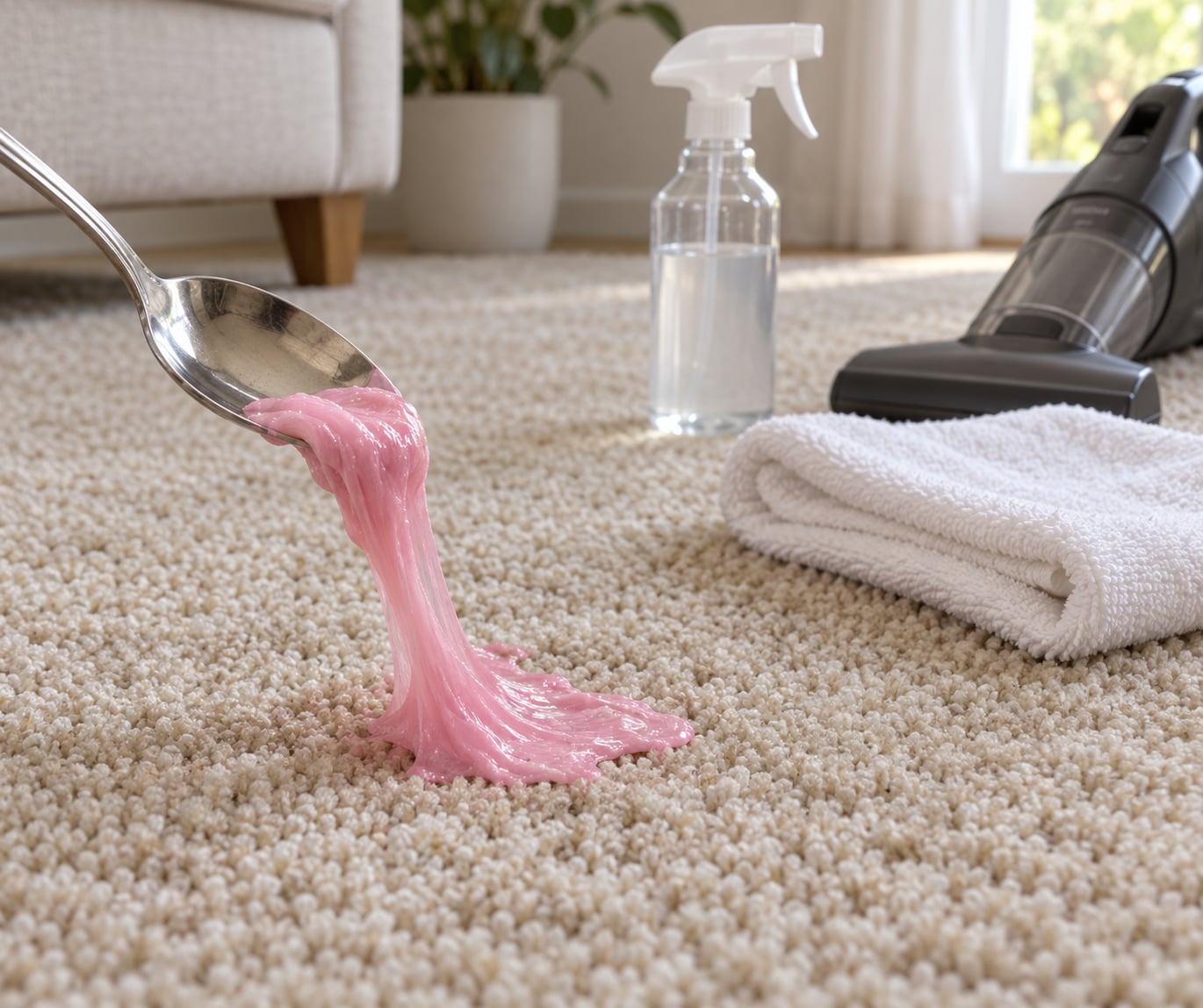
- A spoon or dull butter knife for lifting bulk slime without touching the pile.
- Clean white cloths or paper towels, plus a couple of sacrificial ones. White lets you see how much residue is still coming off.
- A spray bottle with lukewarm water, or with a vinegar solution for glue-heavy slime.
- White distilled vinegar. One part vinegar to two parts cool water is the standard mix.
- Mild dish soap for the greasy film slime leaves behind.
- Baking soda for odor and for catching moisture after blotting.
- A vacuum with an upholstery attachment.
- Paper towels and a bowl if you want to keep everything contained rather than spreading it.
- Optional: ice cubes in a sealed bag, a nylon brush or old toothbrush, and a carpet-safe enzyme cleaner for older stains.
Fiber type changes what is safe. Wool, jute, sisal, silk blends and other natural fibers can dye-bleed or felt when water sits on them, so keep the damp cloth barely damp and work in small sections. Nylon, polyester and polypropylene are more forgiving, and a loop pile carpet holds slime on top where a solution can reach it. Deep cut pile is the hardest case, because the slime sinks past where a cloth touches.
Skip bleach, ammonia, oven cleaner, and any solvent-based spot remover. Skip hot water too. Heat sets dye, and it can shrink or distort natural fibers.
Step-by-Step: How to Get Slime Out of Carpet
1. Dry and Lift Fresh Slime
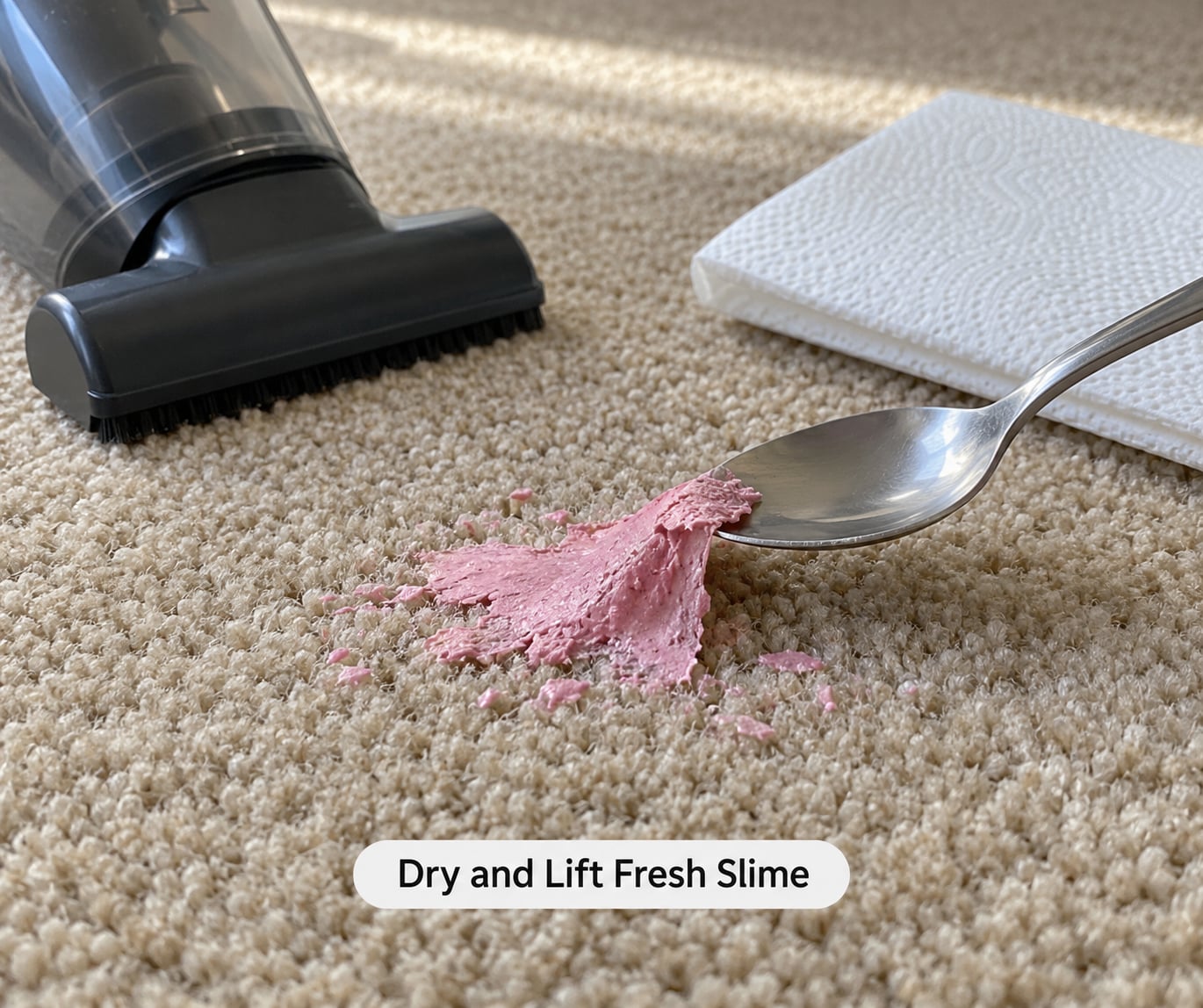
Do not wet a fresh blob. Set a paper towel on top and press straight down to soak up the liquid, then lift the bulk with the edge of a spoon, scooping toward the center so nothing smears outward.
If the slime is still sticky and grabbing the towel, put ice cubes in a sealed plastic bag and hold it on the spot for a minute or two. Cold firms the slime up so it behaves like a solid and comes away in one piece. You know this stage worked when the spoon comes up clean and the carpet feels dry to the touch rather than tacky.
2. Scrape Away Residue
Once the bulk is gone, dried crumbs remain in the pile. Take a dull butter knife or the rounded end of the spoon and hold it at a low angle, almost flat to the surface, and work from the outside of the residue toward the middle in short light strokes.
Pressure is what frays fibers, not the tool. Lift as you scrape rather than pushing the crumbs forward, and vacuum as you go so the pieces do not get trodden back into the carpet. Skip the razor blade idea that circulates on cleaning forums. A blade only makes sense on a hard, flat surface like a stair nose; on pile it cuts loop fibers and leaves a bald patch that does not grow back.
3. Blot the Sticky Area
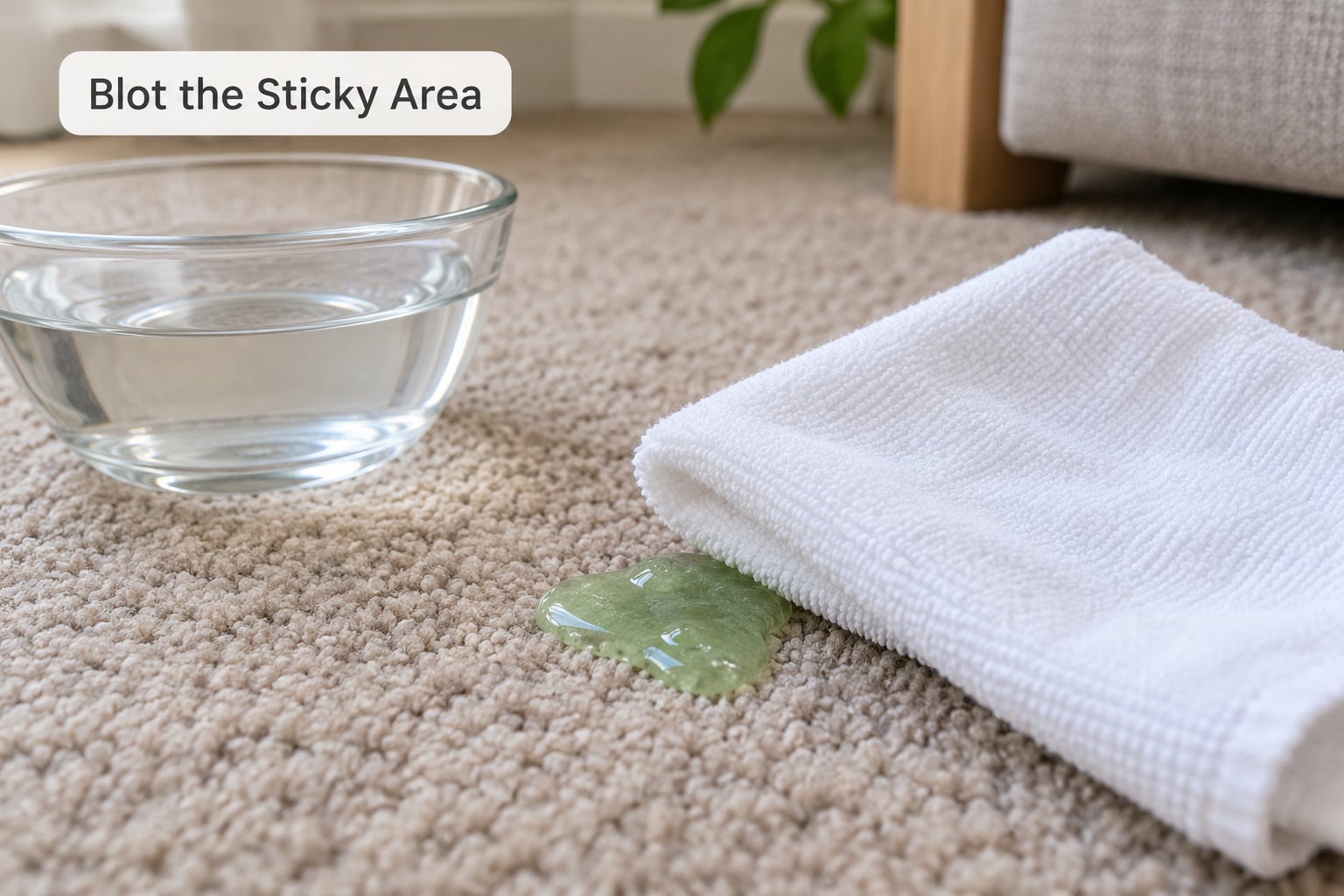
Dampen a clean white cloth with lukewarm water until it is damp, not dripping, and blot the tacky area. Blotting means pressing and lifting, not moving in circles. Every few presses, move to a fresh section of cloth or a new towel.
Repeat until the cloth comes away clean. This stage is slow on purpose, and each pass picks up a little more of the glue film. Before you treat the whole area, test the damp cloth on a hidden corner first, press it for a minute, and check whether the color or texture changed at all.
4. Treat with Mild Dish Soap Solution
Mix two teaspoons of mild dish soap into about two cups of lukewarm water in your spray bottle. Spray the damp area lightly so the solution sits in the pile, not pools underneath it, then blot with a clean cloth.
Give it three to five minutes of dwell time before blotting again. Slime carries oils from the borax and the coloring, and those come out with soap rather than with water alone. You will see the residue creep onto the cloth as a thin film. Keep blotting, changing cloths often, until nothing transfers.
Do not soak the carpet. A saturated spot is slow to dry, and trapped moisture under the padding can smell for weeks. And never combine dish soap with vinegar, bleach, ammonia, or a commercial cleaner. Some mixtures give off gas, and none of them remove slime better than using one product at a time.
5. Finish with an Enzyme Cleaner or Carpet Extraction
If a sticky film survives the soap passes, that is where an enzyme cleaner earns its keep. Enzyme cleaners break down organic residue rather than suspending it, which matters once slime has bonded to the backing. Patch test in a hidden corner, apply according to the label, and give it the dwell time the label specifies, usually five to ten minutes.
Blot with a dry towel to draw out moisture, then spread a thin layer of baking soda over the spot and leave it overnight. The soda absorbs what is left and takes the smell with it. Vacuum it up once the carpet is fully dry, which is why airflow matters. A fan on the spot speeds drying and stops you judging a stain while the fibers are still wet and dark.
Stop and call a professional carpet cleaner if the slime reached the backing or ran under a baseboard register and dried there, if the spot is larger than a dinner plate after two full attempts, or if the carpet is wool, antique, or already heavily worn. Pros have hot water extraction that pulls residue out of the pile instead of through it, and they can tell you whether the backing itself needs replacing.
Common Mistakes
Rubbing the spot. This is the big one. Rubbing drives slime and dye into the pile and spreads it. Fix: press and lift with a damp cloth, changing sections constantly.
Using hot water. It feels like it should help a greasy stain, but heat sets dye and can distort natural fibers. Fix: lukewarm or cool water only.
Soaking the area. You end up with a wet pad under the carpet and a smell that outlasts the slime. Fix: damp cloth, not a saturated patch. Test the carpet with a dry towel every few passes to confirm you are not adding water.
Scraping with a sharp blade. Forums recommend a razor. On pile it cuts fibers. Fix: a dull butter knife held nearly flat, and only on firm, flat surfaces.
Mixing cleaners together. Fix: one product at a time, rinsing the cloth between stages.
Expecting a commercial carpet cleaner spray to do it. Aerosol carpet cleaners are the weakest of the common methods, mostly because they lay a chemical film over a sticky glue layer instead of dissolving it. Fix: vinegar or dish soap first, and save the machine spray for the finish.
Stopping before the spot is dry. Damp fibers look darker than dry fibers, and people judge a stain that is not really there yet. Fix: dry it fully, then look again.
Preventing the next one
Most of this is a rules problem, not a cleaning problem. Confine slime play to a washable mat or tray on a hard floor, set the rule that slime stays at the table, and keep an old shower curtain or drop sheet rolled up nearby. Washable or pre-made slime matters less than people think. The cost of the mat is far lower than a professional cleaning bill, and a wet-dry vac stored in the closet turns a 20-minute job into a 5-minute one.
Frequently Asked Questions
Will vinegar remove slime from carpet?
Yes. White vinegar is the most reliable household option. Mix one part distilled white vinegar with two parts cool water, spray it onto the damp spot after the bulk slime is lifted, leave it for three to five minutes, then blot with a clean white cloth. It works because the acid loosens the PVA glue that bonds slime to the fibers. Patch test first on wool or natural fiber rugs.
How do I remove slime from carpet while it is still wet?
Press dry paper towels straight down to soak up the liquid without spreading it, then lift the bulk with the edge of a spoon working toward the center. Once the wetness is gone, treat the sticky film with a damp cloth and lukewarm water. Wet slime is easier to lift than dried slime, but the dye is still moving, so keep blotting and change cloths often.
Can baking soda remove dried slime from carpet?
Baking soda is useful on dry slime because it absorbs moisture and grips the crumb as you vacuum it, and a thin layer left overnight handles the smell that lingers afterward. On its own it does little to dissolve glue. Pair it with a vinegar solution rather than mixing the two into a paste, since that fizzing reaction neutralizes the acid that makes vinegar work.
What is the safest way to clean slime from wool carpet?
Use the least water you can get away with. Press towels down, lift dry residue with a spoon, then dab with a barely damp cloth using a small amount of cool water and mild dish soap. Wool felts and can dye-bleed, so never scrub and never leave a wet patch sitting. Keep the cloth barely damp, blot rather than rub, and let the area dry fully before you check the result.
How long does carpet take to dry after removing slime?
A spot treated with a damp cloth usually feels dry within two to four hours, and a spot you sprayed more heavily can take a day. Speed it up with airflow: a fan pointed at the area and an open window if the weather is dry. Do not judge the stain until the carpet is fully dry, because damp fibers look much darker than they will once moisture leaves them.
What should I do if slime remains after cleaning?
Check for slime that migrated under baseboard registers or into a floor vent. That dried glue often sits in the carpet edge and is easy to miss, and it keeps attracting dust. If residue remains in the pile after two full attempts, try a carpet-safe enzyme cleaner with the label dwell time, then blot and dry. Call a professional if the spot is large, sits in the backing, or the carpet is wool or antique.
Conclusion
Remove the excess first, lift any dried material, then work the residue out gradually with vinegar and dish soap while blotting instead of rubbing. That order is what keeps a spill from becoming a stain, and it is the whole answer to how to get slime out of carpet without making it worse.
Test any product in a hidden corner first, keep the water minimal, and give the carpet time to dry before you decide how it looks. If the slime reached the backing or the carpet is valuable, wool, or antique, a professional cleaner is cheaper than replacing the floor.