A math fact game with dice takes about fifteen minutes to set up and needs nothing more exotic than two ordinary dice, a piece of paper, and a pencil. Players roll, read the numbers, say the fact out loud, and score a point when the answer is right, so the practice hides inside play instead of feeling like a worksheet. This guide walks through how to make a math fact game with dice, then shows how to stretch the same setup for harder facts as a child gets faster.
The whole build comes down to three decisions: which operation you are practising, what the scoring looks like, and how hard the numbers are allowed to be. Get those right and the rest is just putting the pieces on the table.
Table of Contents
- 1What You Need to Make a Math Fact Game with Dice
- 2Step-by-Step: Building Your Math Fact Game
- 31. Choose the Math Facts to Practice
- 42. Roll the Dice and Make a Fact
- 53. Answer the Fact Correctly
- 64. Check the Answer and Keep Score
- 75. Increase the Challenge
- 8Common Math Fact Game Mistakes and Easy Fixes
- 9Frequently Asked Questions
- 10What age is suitable for a math fact game with dice?
- 11Do I need to print a game board to play?
- 12Can I use one die instead of two?
- 13Which math facts should I practice first?
- 14How can I make the game harder for a child who needs a challenge?
- 15How do I keep the game fun without making it feel like a test?
- 16Conclusion
What You Need to Make a Math Fact Game with Dice
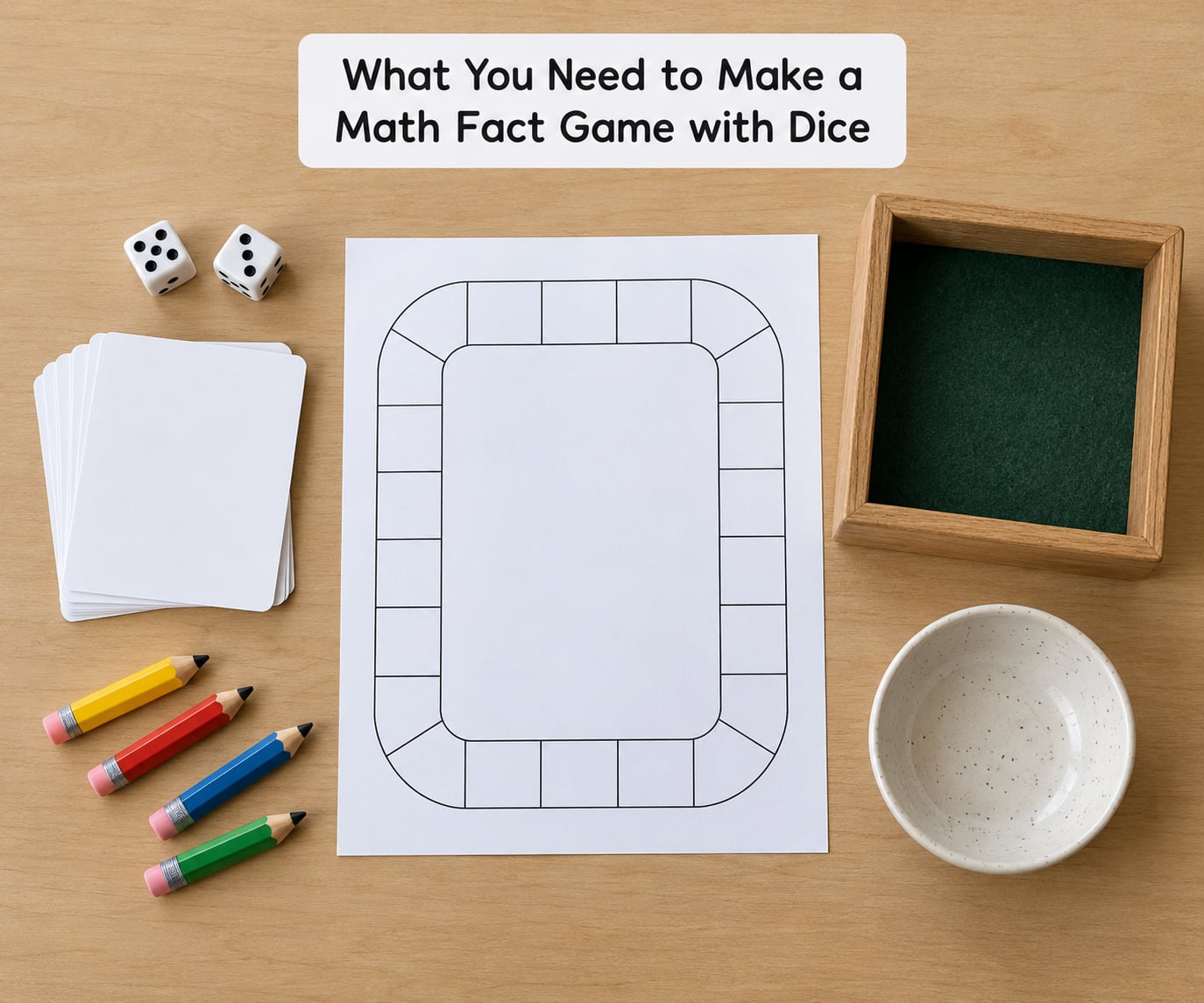
Start with the essentials, and add the rest only once the game works. Families often over-buy before playing a single turn, and a bare-bones version is usually the one that actually gets repeated.
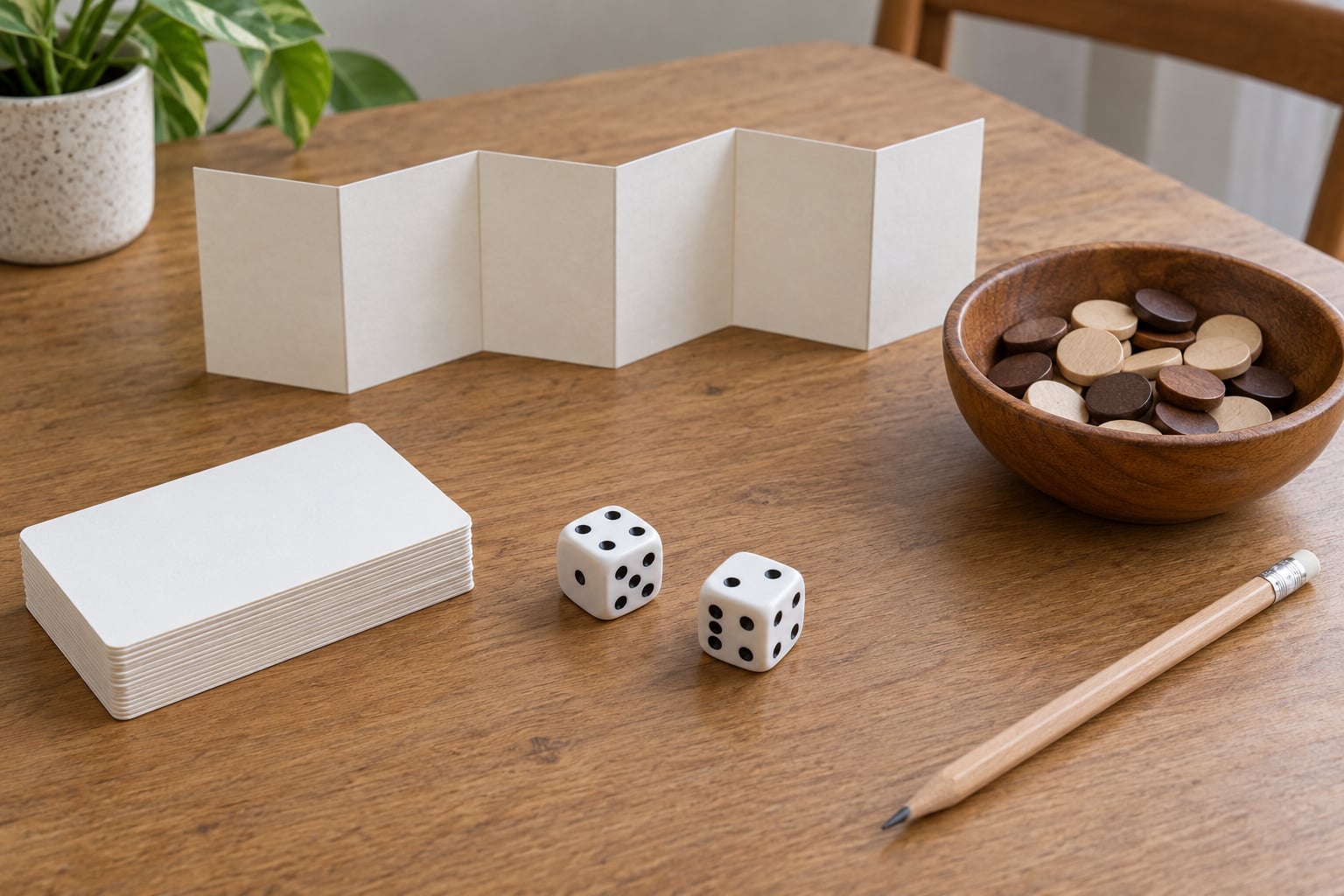
Essentials:
- Two standard six-sided dice. One die works for a beginner version, and two give you a wider spread of facts.
- A sheet of paper per player for writing the fact and the score, or one shared recording sheet if you are keeping score for the whole group.
- A pencil, plus a few spare ones, because they vanish during every session.
- Something to keep score on — a scrap of paper, a chalkboard, or a row of coins.
Helpful, not required:
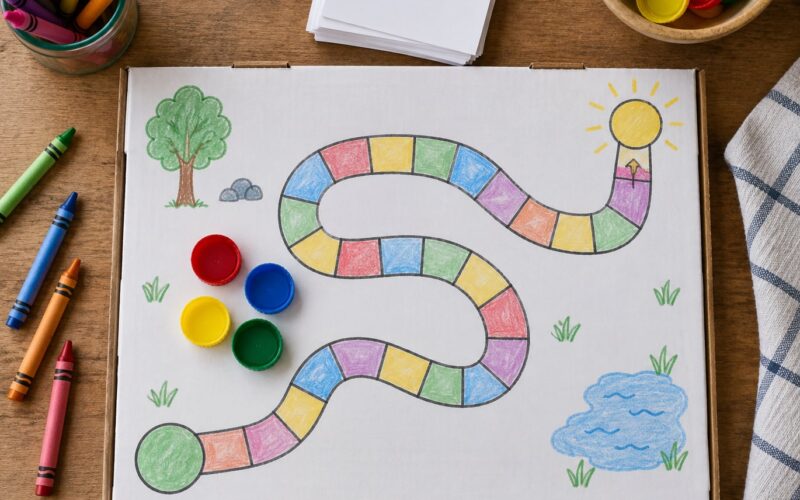
- A game board or play mat. A piece of butcher paper taped to the table is often more useful than a drawn grid, since children can move a marker along it as they score.
- Counters or tokens. Buttons, dry beans, small LEGO pieces, or toy animals all work. Each counter represents one point.
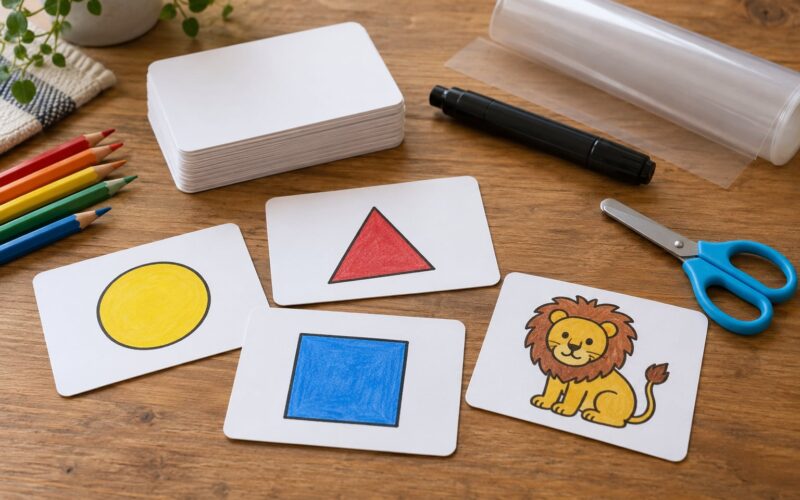
- Number cards. Index cards with 0 to 20 written on them add a memory element and let you change the range without new dice.
- Page protectors or laminating pouches if you plan to reuse a printed board all year.
- A dry erase marker for laminated boards, so no one runs out of paper.
Other dice shapes open up more advanced versions later. A four-sided die keeps sums small, a ten-sided die stretches addition to 20, and two twelve-sided dice make multiplication tables up to 12 feel reachable for older children. A cup or small bowl for tossing and catching dice reduces the mess on the table, which matters more than it sounds when a six-year-old is rolling as hard as they can.
Step-by-Step: Building Your Math Fact Game
1. Choose the Math Facts to Practice
Pick one operation and one number range before anyone rolls, and write the range where everyone can see it. For a child in first or second grade, sums to 10 is a solid starting point; by third grade, sums to 20 or differences within 10 makes more sense. Older or advanced players can work with two-dice products or division facts where the quotient stays whole.
Write the rule on a card and prop it up: Add the two numbers. Stay at or below 10. That single line removes most mid-game arguments.
2. Roll the Dice and Make a Fact
Both players roll their two dice inside the cup, tip them onto the table, and read the numbers aloud. Say the fact as a full sentence rather than a bare number: seven plus three is ten. Children who announce the fact out loud catch their own reversal errors a few days later without being told.
If a roll falls outside your chosen range, the simplest fix is to roll again. A stricter option is to allow the answer but skip the scoring turn, which keeps the pace up while still protecting the difficulty level you set.
3. Answer the Fact Correctly
The child who rolled works out the answer, either mentally or by drawing quick number lines or counters on the sheet. Then they say the whole equation, number and answer, out loud before writing it down. That habit of narrating the equation is what turns a correct guess into a fact they will recall tomorrow.
Keep an answer key for adults. Write every possible fact on one page before the game starts, ordered by sum or difference, so checking takes seconds instead of interrupting play.
4. Check the Answer and Keep Score
Have the other player check the answer against the key and say yes or no. Two-player self-checking works better than a parent referee, because nobody is standing over the game waiting to correct anything. If the answer is right, the child moves one counter along the board or draws one tally mark.
Score accuracy, not speed. Award a point for a correct answer, and consider a second point when the child explains how they got it, using a number line, a counting-on strategy, or a grouping idea. Rushing children who miss facts learn that fast guessing beats careful thinking, which is the opposite of what you want from practice time.
5. Increase the Challenge
Once the range stops being a struggle, change one variable at a time. Move from sums to 10 up to sums to 20, or from two-dice multiplication to three dice with a target product. Swap one six-sided die for a twelve-sided die, or require the answer and a written strategy on the same turn.
To make it easier, roll one die and keep the other number the same for every player, or shrink the range to sums to 5. Change who goes first between rounds, too, so the same child is not always setting the pace.
Common Math Fact Game Mistakes and Easy Fixes
Facts are too hard right now. The child freezes or guesses every turn. Shrink the range, swap the two-dice total for one die plus a fixed number, or go back a level for a few sessions. Fluency first, challenge second.
Nobody is sure whose turn it is. Play drags and then turns into an argument. Mark turn order with a coin flip before the first roll, or have each player roll and act in the same turn. A physical cue helps: each player slides a marker to signal they are up.
Scoring rewards rushing. The fastest player wins every time and accuracy drops. Drop the timer entirely if you have one, and give points for explaining the strategy. Games that end on a fixed number of turns rather than first-to-N also calm this down, because nobody races to finish.
Pieces go missing mid-game. Dry beans end up under the sofa. Use a small container per player, a dice tray, or coins instead of loose counters. If you are using page protectors, keep the writing supplies in a pencil case beside the game so everything returns to one place.
Children reverse the numbers. Seven plus three becomes three plus seven with the wrong answer, or twelve minus four comes out as eight. Slow the pace down: have the child say which die number is the start and which comes second before doing anything else. For subtraction, say the larger number first every time.
The game gets stale. The same rules lose their pull after a few days. Swap the operation, change the scoring so a wrong answer only costs a point instead of the turn, or add a themed set of tokens. Track which facts the child misses most and put those back in rotation the next session.
Frequently Asked Questions
What age is suitable for a math fact game with dice?
A basic version works for children around age five or six who can count to 20 and understand that a die shows a quantity. Five and six year olds usually do well with sums to 10 and differences within 5. Third and fourth graders can handle sums to 20, products from two dice, or simple division. Older students can use the same rules with three dice or larger sets, since the setup never changes.
Do I need to print a game board to play?
No. A sheet of paper with a row of boxes works fine as a score track, and you can move a counter one square per point. A butcher paper mat taped to the table is better for younger children because there is nowhere to lose it. If you do print, laminating the board or sliding it into a page protector lets you reuse it all year with a dry erase marker.
Can I use one die instead of two?
Yes, and for a first game it is often the better choice. One die keeps the numbers small, so a beginner can stay focused on the operation rather than the arithmetic. Pair the single die with a fixed number on the card, such as add the die to 4, which gives you the same practice with steadier results. Switch to two dice once the easy range stops being a challenge.
Which math facts should I practice first?
Start with the facts the child gets right most of the time and extend outward from there. For addition that usually means sums to 10, building on pairs that make 10 before larger jumps. For subtraction, differences within 10 where the smaller number comes first. Multiplication comes later, beginning with pairs involving 1, 2 and 5, since those patterns transfer to the rest of the table.
How can I make the game harder for a child who needs a challenge?
Change one thing at a time so you know what caused the jump. A twelve-sided die stretches sums well past 20, a third die raises the ceiling on products, and a fixed time limit per turn adds pressure. Requiring a written strategy on every correct answer pushes toward mental calculation. Setting a target score to reach, rather than just counting points, also gives a finish line worth chasing.
How do I keep the game fun without making it feel like a test?
Leave the error correction to the players instead of an adult standing nearby, and let them keep score on their own sheet. Avoid any timer, and celebrate an explained answer rather than a fast one. Finishing a ten-minute session is enough; stopping while the child still wants another round is the clearest sign the game worked rather than the worksheet.
Conclusion
The simplest version needs two dice, a pencil, and one rule: roll, say the fact, answer it, check it with your partner, score it. Decide the operation and the number range, lay out the dice and the scoring sheet, and play the first turn tonight. Everything else, boards, counters, bigger dice, is an upgrade you can add once the basics are fun. Updated for 2026.