Construction paper curls because it is hygroscopic: it takes on moisture from the air and from damp hands, and it keeps a memory of the last shape it was held in. To learn how to store construction paper so it does not curl, keep the sheets dry, lay them flat under even weight, file them horizontally, and take them out of any room that swings between damp and hot.
Most of the curling I see is not one big mistake but three small ones stacked up: a partly used pack still open on a shelf, a pile that is too deep, and a closet that gets humid in July. Fix those and the problem largely disappears.
Table of Contents
- 1What You Need
- 2How to Store Construction Paper So It Does Not Curl: Step-by-Step
- 3Step 1: Check the Paper Before Storing It
- 4Step 2: Press Curled Sheets Flat
- 5Step 3: Store Sheets in a Flat Folder
- 6Step 4: Protect the Stack from Humidity
- 7Step 5: Refold Only When Necessary
- 8Common Mistakes
- 9Frequently Asked Questions
- 10How long does it take for construction paper to stop curling?
- 11Can I flatten construction paper with a heavy book?
- 12Should construction paper be stored flat or rolled?
- 13Will a plastic storage bin keep construction paper from curling?
- 14How can I store large construction-paper sheets without bending them?
- 15Why does construction paper curl after it gets wet?
- 16Conclusion
What You Need
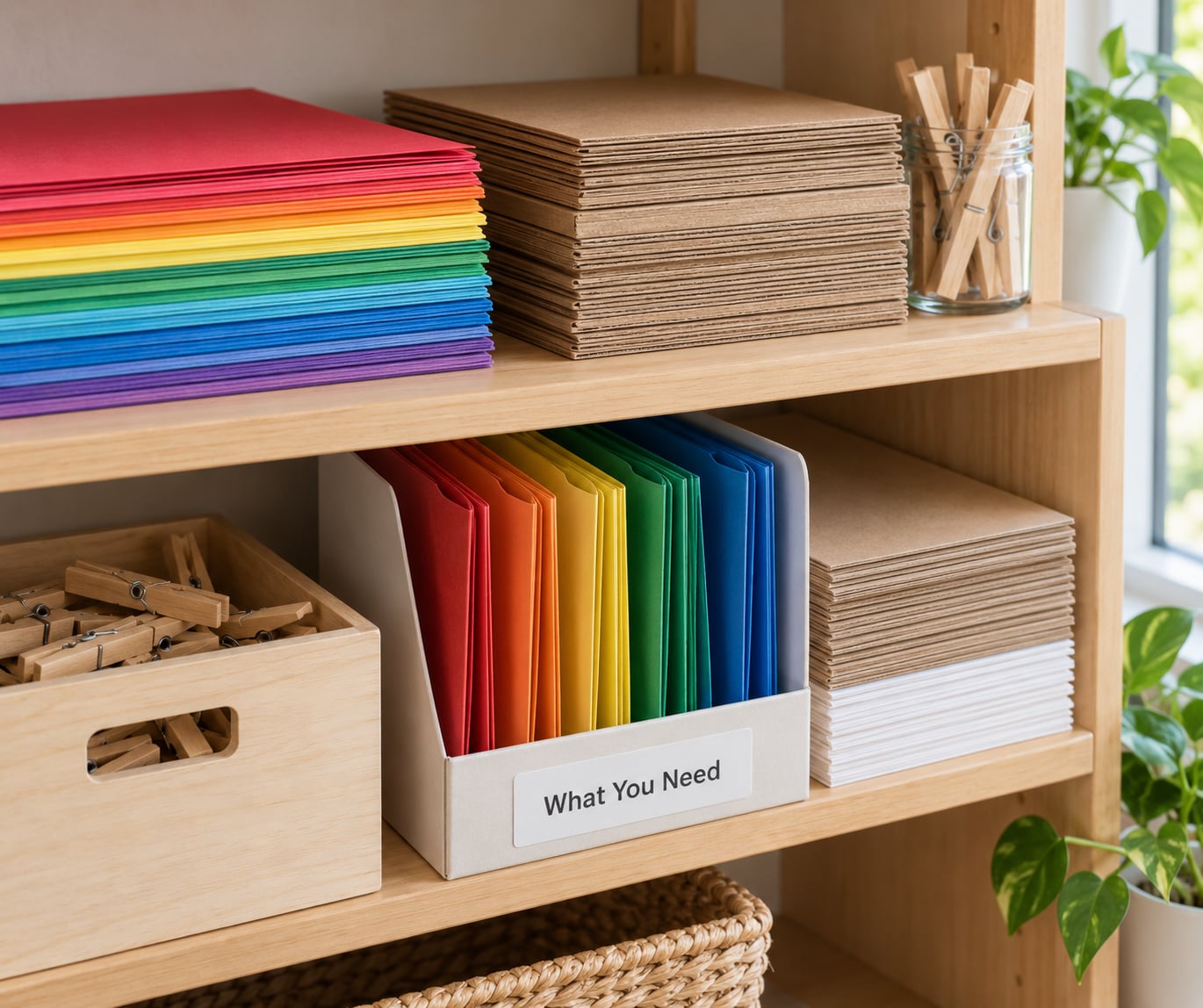
The supplies are ordinary, and most households already have them somewhere. The heavy flat things are the only real requirement.
- Two flat, rigid boards — piece of cardboard, foam board, or a cutting mat. These go outside the paper, not on top of it.
- Heavy books or a small stack of weights — enough to press the middle of the stack without bowing it. A row of hardbacks laid flat works better than one thick novel.
- Clips or binder clips to hold a flat stack together so the sheets do not walk out from under the weight.
- Shallow folders, cardstock cubes, or a paper tray — one per colour if you have the room, otherwise one per project.
- Acid-free tissue paper — optional, but worth having if you store a lot of dark or strongly dyed colours.
- A cheap hygrometer — optional. It turns the humidity advice below into something you can actually check instead of guess.
How to Store Construction Paper So It Does Not Curl: Step-by-Step
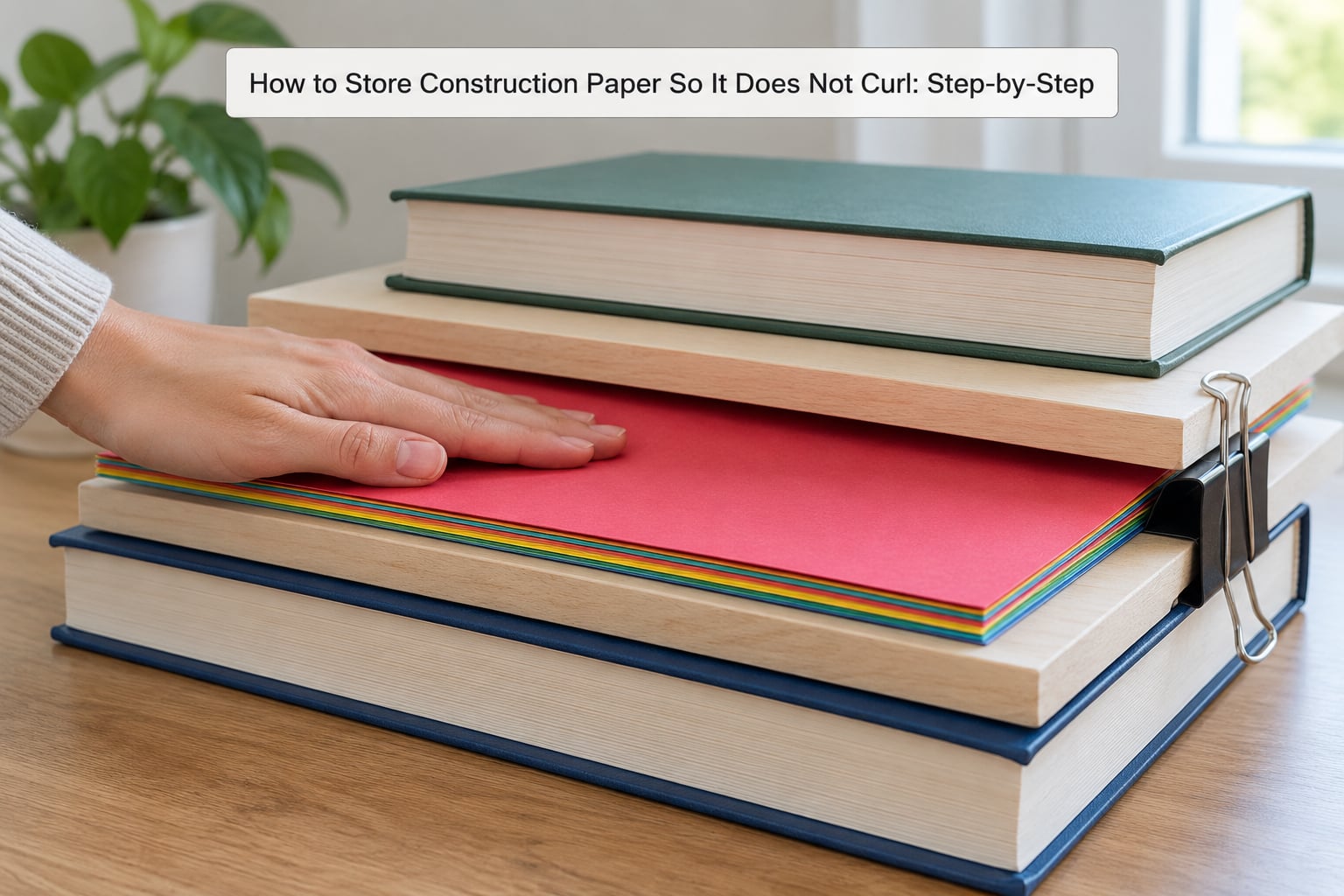
Work through these five steps once when you reorganise, then keep the routine up. Each step takes a couple of minutes.
Step 1: Check the Paper Before Storing It
Lay the pack open on a table and go through the sheets. Pull out anything damp, stained or torn, and brush off loose scraps of paper and pencil dust — trapped grit is what causes those little dog-ear kinks later.
Sort the sheets into two piles: ones that are already flat and dry, and ones that need pressing. This is the step people skip, and it is the reason a whole pack of good paper gets thrown out over one warped sheet.
Step 2: Press Curled Sheets Flat
Sandwich the curled sheets between two clean, dry, flat boards and put a stack of books on top. The weight needs to be even across the whole surface, so lay the books flat rather than standing them up.
Leave the stack undisturbed for 24 to 48 hours. Resist the urge to check on it and re-stack it, because every peek at the edge undoes a little of the flattening.
For a curl that will not budge under weight, a very lightly damp cloth laid over the sheet, with a board on top and an iron set to low held just above it, relaxes the fibres without soaking them. Never press a hot iron straight onto dry paper — it scorches and transfers dye.
Step 3: Store Sheets in a Flat Folder
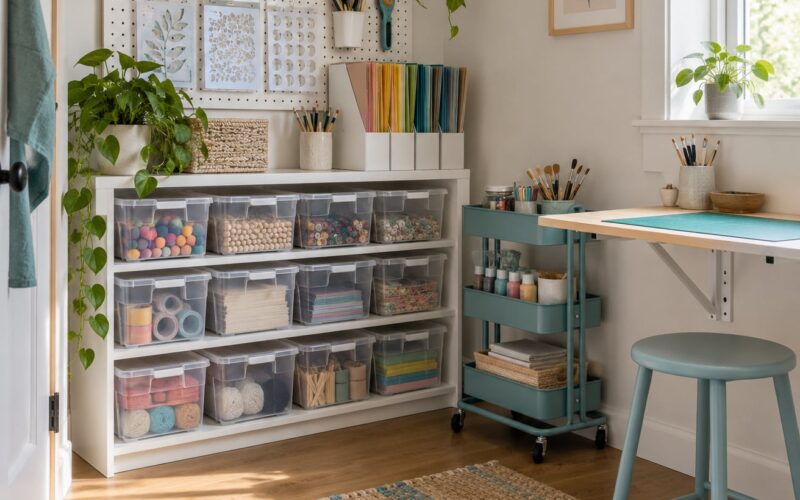
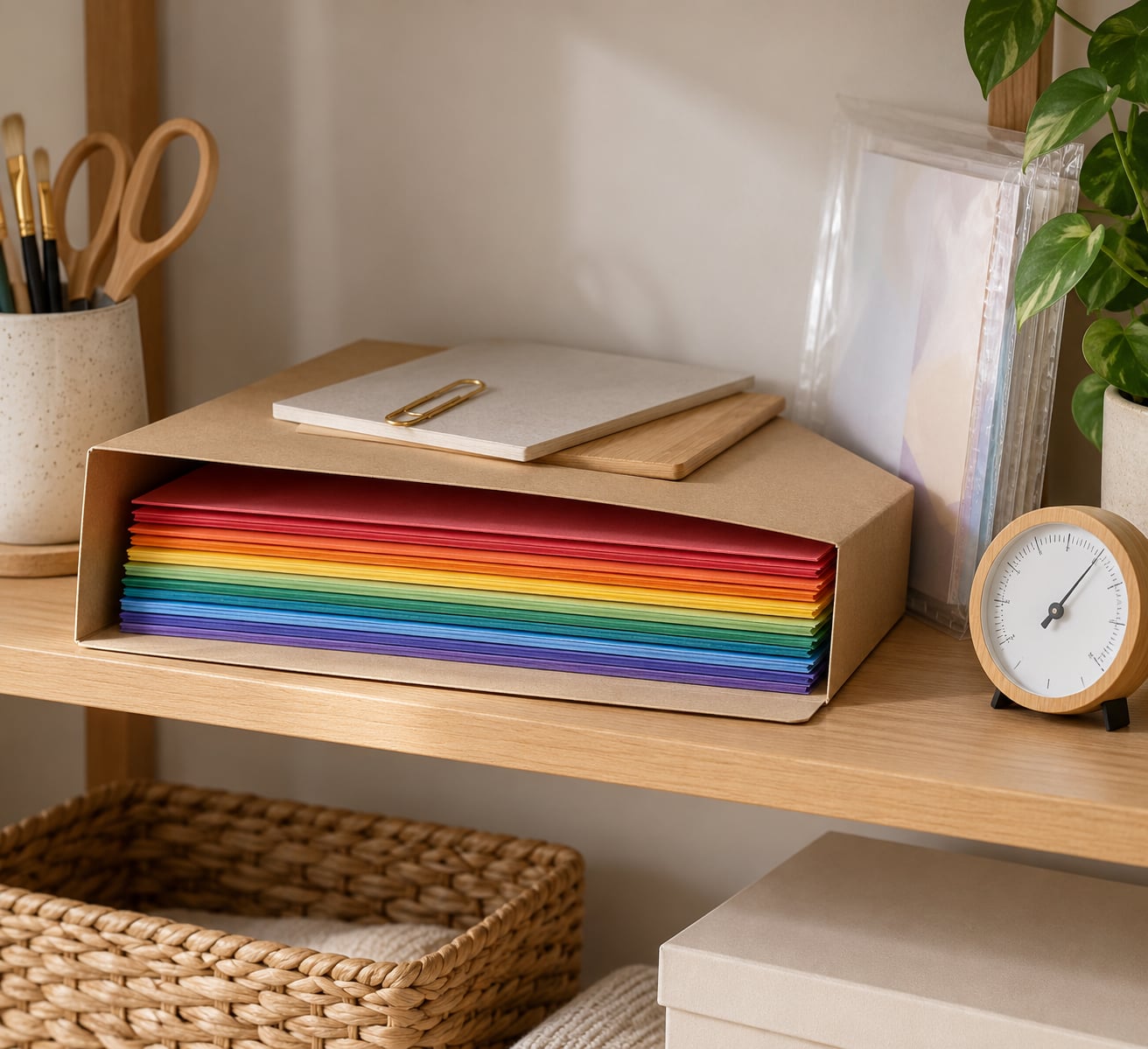
Keep the flattened sheets lying flat in a folder, a shallow drawer, or a paper tray, and group them by colour, size or the craft project they are for. One folder per colour is the easiest system to maintain once you have more than about eight colours.
Keep stacks shallow. Around 30 to 40 sheets is a sensible ceiling, and if you need a divider every 6 to 12 inches in a vertical rack, that is the sign the sheets are bowing.
On the A to Z Teacher Stuff forums, teachers who store paper this way mostly file packs upright in magazine holders, one colour per holder. That works well for unopened packs; the moment a pack is opened and gets handled, put it back in something horizontal.
Step 4: Protect the Stack from Humidity
Moisture is the root cause of most curling, so keep the room steady rather than worrying about single sheets. Aim for 40 to 55 percent relative humidity and roughly 60 to 75F in the storage room.
Avoid places that swing: a damp basement, an attic, a garage, a shed, or the shelf on top of a car. Those places are the worst storage locations for paper because the humidity change is fast and large.
Use sealed bins with a desiccant packet if you have no other option, but open them briefly now and then so trapped air does not sit against the paper. Handling matters too — a stack handled with damp hands picks up moisture at the edges and curls there first.
Step 5: Refold Only When Necessary
Large sheets do not need to be folded. Store them flat between boards with tissue paper between each layer, or slip them into a clear sleeve so nothing shifts.
Rolling is a last resort, and if you must, use a core at least 3 inches wide and roll loosely. A tight roll on a narrow tube sets a curl that keeps springing back — it has what people call curl memory, the tendency to return to the last shape the sheet was held in.
Common Mistakes
These are the failures that come up again and again, each with the correction that actually solves it.
- Corners and edges lift first. Humidity, or damp hands handling the stack. Move the folder to a steadier room, aim for 40 to 55 percent relative humidity, and do not leave bins sealed for months.
- The whole sheet bows like a banana. Stack pressure on an unsupported pile, or sheets leaning against a wall. Shrink the stack to 30 to 40 sheets and lay it on a truly flat shelf.
- Sheets fuse into one stiff block. Moisture plus a tight stack, sometimes with static. Separate them gently while dry, then interleave with acid-free tissue.
- Colour transfers to the next sheet. Dyes still moving in a warm or humid room. Interleave sheets and keep storage cool; dark and wet colours bleed first.
- Newspaper ink marks on the back. Newspaper was used as a pressing layer. Use plain kraft paper or a board instead.
- Packs curl inside their own wrapper. Partly used packs were stored standing up or rolled. Open packs go back flat with a board on top, never stood on end.
Two habits fix most of the rest. Label everything, so a folder without a colour name does not get opened and re-stacked the wrong way round. And buy or keep one flat empty board on top of every open folder — a cheap, flat, constant weight is what keeps the last five sheets flat after everyone has dug through the pile.
Frequently Asked Questions
How long does it take for construction paper to stop curling?
A sheet that has only started to curl usually relaxes after 12 to 24 hours under flat, even weight. Sheets that have been rolled or stored damp need closer to 48 hours, and sometimes a second round. Put the paper between two boards, rest a row of heavy books on top, and leave it alone. Check the middle of the sheet rather than the corners, because the corners are always the last part to relax.
Can I flatten construction paper with a heavy book?
Yes, and for gentle curls it is usually enough. Put the sheet between two flat pieces of cardboard first, then rest the book on top so the pressure spreads evenly instead of denting the middle. Leave it 24 to 48 hours and do not re-stack it while you wait. For a curl that a book will not touch, a very lightly damp cloth with a board on top and a warm iron held above it will relax the fibres without soaking the sheet.
Should construction paper be stored flat or rolled?
Store it flat whenever you have the space. Rolling is fine for short-term transport or for a very large sheet that will not fit anywhere, but roll it loosely around a core at least 3 inches wide. A tight roll on a narrow tube sets a curl that keeps returning no matter how dry the room is, because the sheet has taken on the shape of the roll as a memory.
Will a plastic storage bin keep construction paper from curling?
A bin helps only if the paper goes in dry and comes out regularly. Sealing damp paper in a bin traps the moisture that causes curling, and the problem gets worse the longer it sits. Line the bin with a desiccant packet, keep the room around 40 to 55 percent relative humidity, and open the bin every few weeks so the air inside does not sit against the sheets.
How can I store large construction-paper sheets without bending them?
Leave them flat between two boards with a sheet of tissue paper or plain kraft paper between each layer, and hold the boards together with clips around the edges. A clear sleeve or large envelope keeps the top sheet from lifting while you carry it. If space is the problem, hang the sheet from a tension rod with binder clips rather than folding it — folding leaves a crease you cannot press out.
Why does construction paper curl after it gets wet?
Construction paper is hygroscopic, so it absorbs and releases moisture with the surrounding air. When one face gains or loses moisture faster than the other, the sheet stretches unevenly and bows toward the drier side. Once that bow dries in place, the curl becomes a habit of the sheet. Drying it flat with boards on top usually resets it, and keeping the storage room steady stops it coming back.
Conclusion
Start with the pack you opened last and never put back: spread it flat between two boards, weight it evenly, and leave it for a day. Then move the whole stash into shallow folders on a flat shelf in a room you keep around 40 to 55 percent relative humidity, away from sunlight, basements and attics. How to store construction paper so it does not curl comes down to four habits: keep it dry, press it flat, file it horizontally, and never bend or overfill it.