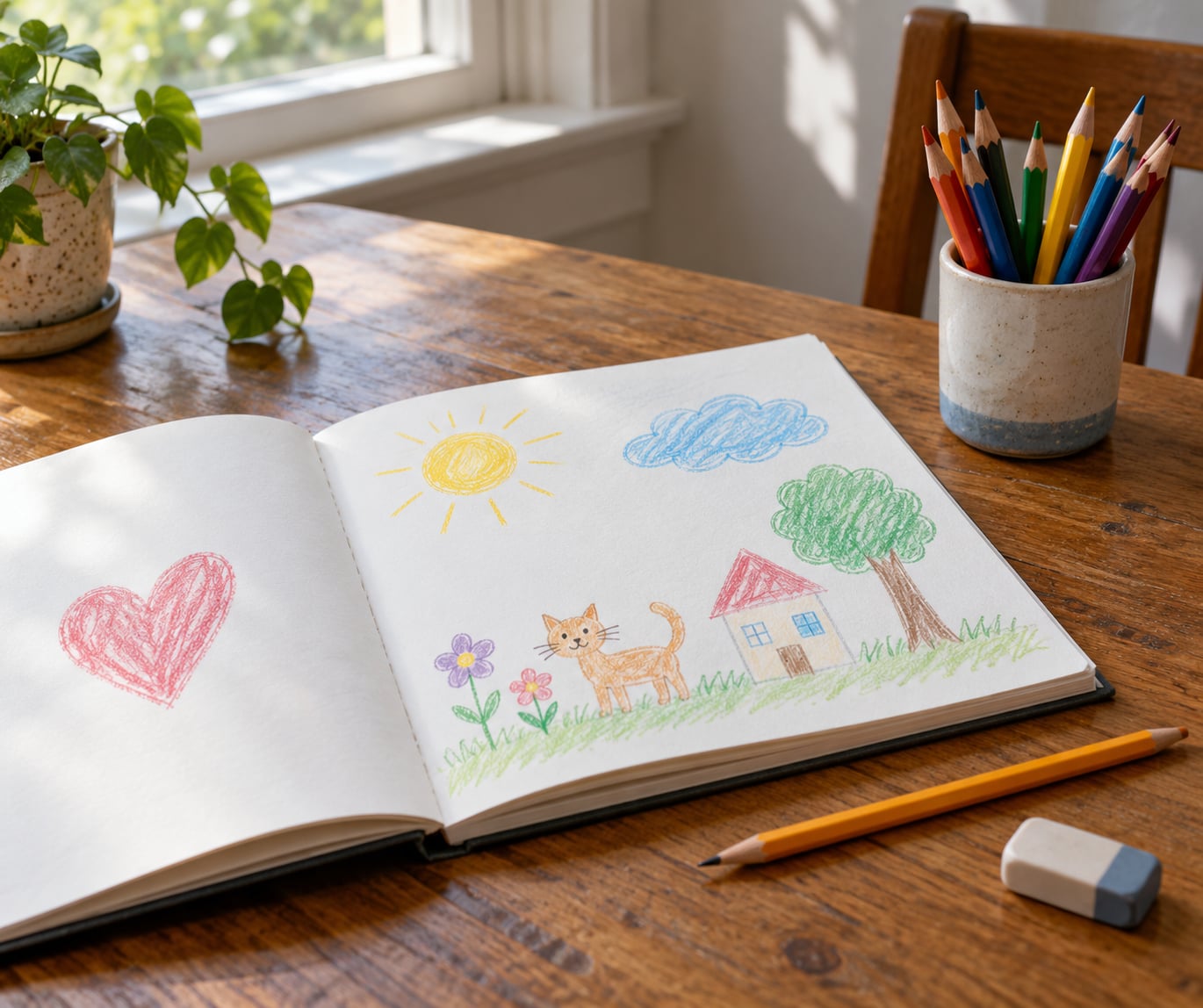
A sketchbook habit starts with three things: a book the child actually wants to touch, five to ten minutes at a set time, and one easy prompt so nobody has to decide what to draw. That is the whole routine, and it works for a four-year-old scribbling as happily as for a twelve-year-old filling pages.
Most routines fail for the same reason. The first pages are fun, the novelty wears off around week four, and then the book sits in a drawer. This guide covers what you need, six steps that build the habit, and the fixes for the moments when it stalls.
Table of Contents
- 1What You Need
- 2Step-by-Step: How to Start a Sketchbook Habit as a Kid
- 3Step 1: Choose a Sketchbook the Child Will Want to Use
- 4Step 2: Set a Short, Predictable Drawing Time
- 5Step 3: Start With Easy Prompts Instead of Blank Pages
- 6Step 4: Let the Child Choose What to Record
- 7Step 5: Celebrate Effort Instead of Comparing Quality
- 8Step 6: Build a Gentle Review and Reward Routine
- 9What to do when the novelty fades
- 10Common Mistakes
- 11Making the session too long
- 12Insisting on realistic results
- 13Correcting the work
- 14Bringing out too many supplies
- 15Skipping days without a rule
- 16Skipping the containment plan
- 17Frequently Asked Questions
- 18What age can a child start a sketchbook habit?
- 19How long should a child draw each day?
- 20What do I do if my child says they cannot draw?
- 21Should I correct my child’s drawing or tell them what is wrong?
- 22What materials do I need to start?
- 23What do I do after a missed day or when the habit stalls?
- 24Conclusion
What You Need

Almost nothing. A blank book, a pencil, and ten minutes of attention will carry a child a long way, so resist the urge to assemble a full art studio on day one.
- A sketchbook. Any paper works. A spiral-bound book, a stack of printer paper folded in half and stapled, or the back of a homework notebook all count.
- Two or three drawing tools. A graphite pencil is the workhorse. Add a black felt-tip pen or a few colored pencils once the pencil feels comfortable.
- An eraser that works. A cheap eraser on cheap paper smudges into a gray cloud and discourages experimenting. This matters more than it sounds.
- One comfortable spot. The kitchen table, a corner of the floor, or a desk in the family room. Wherever it is, keep it in the middle of the household traffic so drawing does not feel like something hidden.
- Optional: a prompt source. A few prompts written on slips of paper in a jar, or a simple weekly list, removes the daily decision entirely.
The goal in the first weeks is experimentation, not artistic quality. Pages will look like the work of a four-year-old, because that is what they are.
Step-by-Step: How to Start a Sketchbook Habit as a Kid
Step 1: Choose a Sketchbook the Child Will Want to Use
Pick the book with your child, not for them. Let them choose between two or three options and the ownership shifts from “your project” to “mine.”
Match the format to the age. Preschoolers do fine with a large-format book that leaves room for big arm movements. School-age kids handle standard paper. Tweens and teens usually prefer a smaller book that fits in a backpack, since it can travel to the car, a waiting room, or a friend’s house.
For a child who resists blank pages, let them decorate the cover first. A collage cover, a favorite character, or a name in giant letters turns an intimidating object into their own property. You know the routine is working when they reach for the book without being asked.
Step 2: Set a Short, Predictable Drawing Time
Choose a time that already exists in the day, then attach drawing to it. After school before the screen comes on, after dinner, or the last ten minutes before bed all work. The trigger matters more than the clock.
Start at five minutes for a child under six, ten minutes for a six-to-eight-year-old, and ten to fifteen for older kids. Then stop when the time is up, even if they want to keep going. Ending on time is what makes the next day possible.
Do not extend the session because a drawing is going well. If the timer is a visual timer they can watch, the ending stops feeling like a punishment.
Step 3: Start With Easy Prompts Instead of Blank Pages
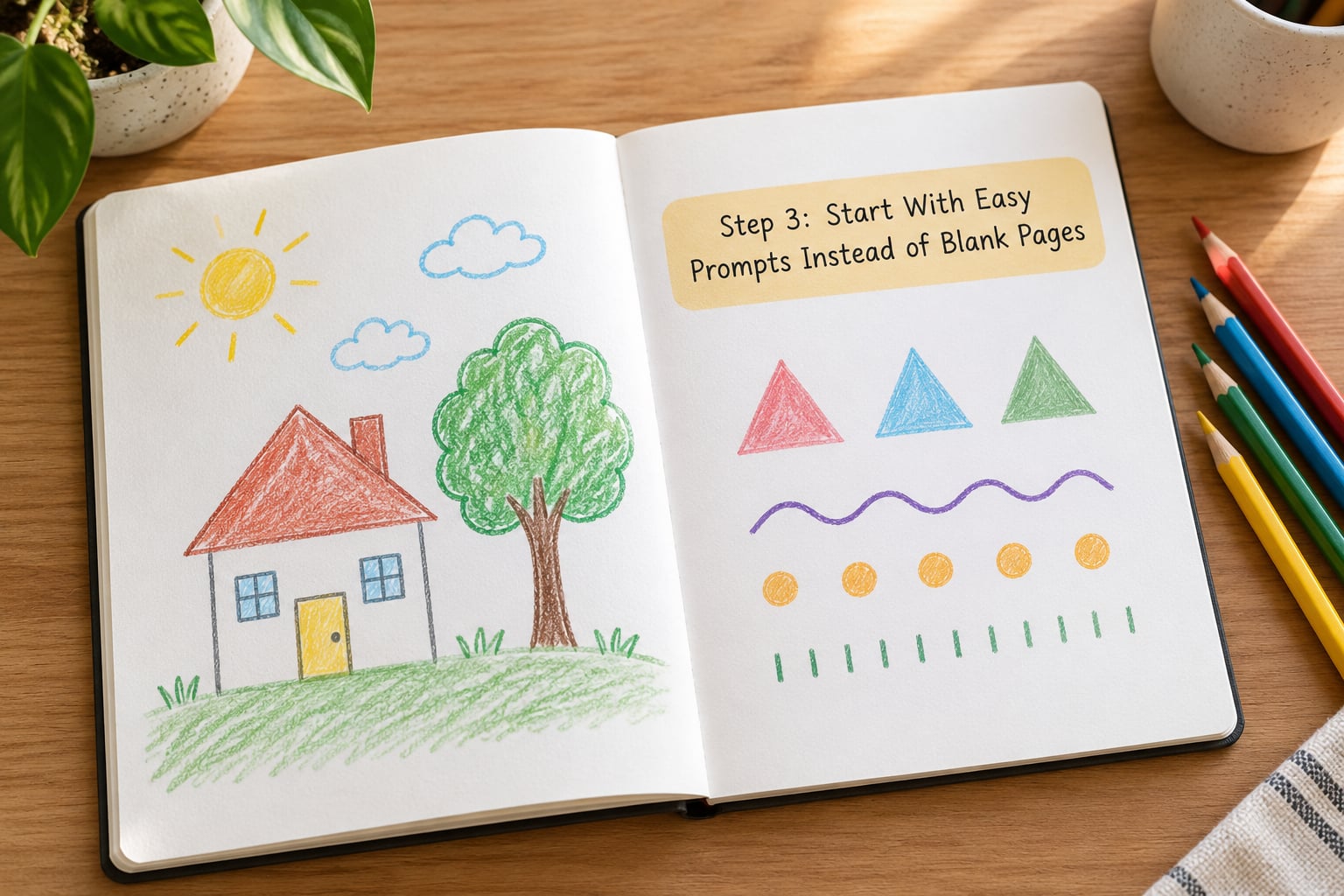
Blank page paralysis is the most common reason a child’s drawing habit stalls, and it has a simple fix. Hand over a subject that takes about thirty seconds of thought.
For a beginner, the easiest subjects are things they can see or already love: the family pet, a favorite toy, a tree outside the window. Then move to simple patterns — stripes, spirals, zigzags, a grid of shapes. After that, invented material: a made-up character, a house for a dragon, a map of an imaginary island.
Keep a rotating list so you are not inventing prompts at 6pm every evening. Write them on paper slips, put them in a jar, and let the child pull one. Once a child can pick a subject without help, the habit no longer depends on you.
Step 4: Let the Child Choose What to Record
A sketchbook is a notebook, not a gallery. Anything the child wants to put on the page is legitimate content for it.
Real-life observations work: the bird on the fence, the new neighbor’s dog, what the kitchen looked like this morning. So do imagined ideas, a comic strip with a funny ending, or a page of characters they invented. Mood drawings count too, since a scribble that means “angry” is self-expression without any drawing skill attached.
Collections are underrated. Buttons, leaves, bottle caps, and wrappers pasted onto a page and outlined in pencil keep the habit going on days when drawing feels like too much. You will know this step has landed when a page makes no sense to you and the child explains it with total confidence.
Step 5: Celebrate Effort Instead of Comparing Quality
How you respond in the first ten seconds after a drawing shapes whether the habit survives. Correcting, redrawing, or sighing at a page teaches a child that drawing is a performance they can fail at.
Describe instead of evaluate. “You added a window to the door.” “That line goes fast.” “You came back to this page three days later.” Those comments are specific, true, and about the process rather than the result.
Some lines worth keeping in your pocket for tired evenings:
- “Tell me about this.”
- “What happens next in the story?”
- “You used the whole page this time.”
- “I would not have thought of that.”
- “Which page do you want to keep forever?”
Never compare a child’s drawing to a model, an artist’s work, or a sibling’s. The routine is working when your child starts talking about a page before you have seen it.
Step 6: Build a Gentle Review and Reward Routine
Consistency beats volume. Five minutes most days fills more pages than a three-hour Saturday, and it is the version that still exists in December.
Once a week, look through the book together. Let your child pick a favorite page to keep out on display, and put it somewhere they pass daily: the fridge, a bedroom door, a corkboard. Kids keep going when someone else sees the work.
Store finished books upright in a small crate or a dedicated folder so they do not get buried. When one fills up, celebrate it and start the next. A finished book is a good problem, and flipping to a fresh page is its own reward.
What to do when the novelty fades
Expect a dip around week three or four. It is normal, and the fix is usually a change of subject rather than more encouragement. Switch to a new medium, start a themed book, or let the child choose a different prompt format for a stretch. Keep the time and place the same, because those two things are what hold the habit together when interest dips.
Common Mistakes
Almost every abandoned child sketchbook fails for one of a handful of reasons. Each has a straightforward fix.
Making the session too long
Thirty-minute sessions rarely survive contact with a child’s attention. Cut to five minutes, keep the time steady for two weeks, then add two minutes. Short and repeatable beats long and abandoned.
Insisting on realistic results
Nothing kills a child’s confidence faster than a parent asking for more accurate proportions. Accept the drawing as it is. If they want to improve, that is what a beginner drawing book is for, and it is a later step.
Correcting the work
Taking the pencil out of a child’s hand to fix a line teaches that drawing is adult work. Comment on the page instead of editing it.
Bringing out too many supplies
New art supplies are exciting for about a day, and a full set of markers bleeds through thin paper fast enough to end the session early. Start with pencil and paper. Add one medium at a time, once a week.
Skipping days without a rule
Decide in advance what a light day looks: two minutes of scribbling still counts, and drawing in the car counts. Missing a day is fine. Missing a day and then treating the whole routine as over is not.
Skipping the containment plan
Somewhere to draw beats everywhere. A small table, a washable mat or sheet of paper under the work, and one rule about where the tools may go will save a lot of friction in week two.
Two habits keep this sustainable: put the sketchbook somewhere visible so starting needs no decision, and let the session end on time even mid-sentence. A routine a child looks forward to is the only version that lasts.
Frequently Asked Questions
What age can a child start a sketchbook habit?
Children can start at any age, and the setup changes rather than the goal. Around three to five, expect scribbles, dots, and large shapes, and keep sessions to about five minutes. A six-year-old can draw simple recognizable objects and people. By eight or nine, many children are ready for observation sketches, patterns, and simple stories. A teen will usually keep a sketchbook only if it stays private and pressure-free, so treat it as their own object rather than a display piece.
How long should a child draw each day?
Five to ten minutes most days is enough, and it is far more sustainable than one long weekly session. Preschoolers usually manage five minutes comfortably, six to eight year olds handle about ten, and older children often prefer ten to fifteen if the subject interests them. Stop when the timer goes off even if a drawing is unfinished, because ending on time is what makes the next session easy to start.
What do I do if my child says they cannot draw?
Most drawings start rough, so say that out loud and then demonstrate by making a deliberately simple one yourself. Ask them to draw one object you name, not a whole picture, and notice the small things they did get right. Many children who say they cannot draw are comparing a private rough attempt to polished work other people finish. Pointing that difference out, and keeping the book private until they choose to share it, usually loosens the fear within a week.
Should I correct my child’s drawing or tell them what is wrong?
No. Correcting or redrawing a page teaches a child that drawing is a performance they can fail at, and it is the fastest way to end the habit. Describe what you see instead: the detail they added, the line that moves fast, the page they came back to. If a child asks for help improving, use a beginner drawing book or copy an object rather than editing their own work. Praise aimed at effort and choices survives far longer than praise aimed at realism.
What materials do I need to start?
A notebook, a pencil, and an eraser are enough. Any paper works, including printer paper folded in half and stapled, and the back of an existing homework book works fine too. Add a black pen or a few colored pencils once the child is comfortable with pencil. Hold off on a full marker set early on, since markers bleed through thin paper and end sessions early. A small cup and a washable mat under the work will contain most of the mess.
What do I do after a missed day or when the habit stalls?
Just resume at the next scheduled time, without a speech about catching up. A missed day is noise; a skipped week starts a habit of skipping. If enthusiasm fades around week three or four, change the subject rather than the routine: try a themed book, a new medium, or a different prompt format. Keep the time, the place, and the short length identical, since those anchors do more work than motivation does.
Conclusion
Do three things this week. Let your child pick the sketchbook, put a five-minute drawing time on the calendar in the same spot each day, and sit down together for one easy prompt.
The habit builds from those small, regular moments rather than from finished artwork. Ten pages of enthusiastic scribbles in 2026 beat one beautiful drawing the child never repeats.