Stray hot glue strings come off a finished project with a little patience and the right tool for the surface. If the glue has fully hardened, the fastest safe route is to cool it further so it turns brittle, then lift it from the loose end with tweezers or a plastic card. Heat works too, but only on surfaces that can take it.
Most of the damage people do happens in the first three seconds, when they pull a warm string off a painted surface or dig at a thin one with a fingernail. There are really three problems hiding under the phrase glue mess, and each needs a different fix.
- Strings are thin, stretchy webs that fling off the gun as the glue cools and contract. They sit on top of the finish and lift off cleanly.
- Blobs are the pooled glue at the actual joint. Those are structural and usually stay put.
- Residue is the dull film a blob or string leaves behind after it comes off. That needs a solvent or oil, not a tool.
If you solve the wrong one of those three, you end up scrubbing at a finish that never needed scrubbing. On r/TerrainBuilding the advice that keeps coming back is the simplest version of all: wait until it is dry, then cut or lift off the excess you do not want.
Table of Contents
- 1What You Need
- 2How to Remove Hot Glue Strings from a Project Step by Step
- 3Step 1: Let the Glue Cool Completely
- 4Step 2: Choose the Right Removal Method
- 5Step 3: Lift the String Slowly
- 6Step 4: Remove Remaining Marks
- 7Common Mistakes and Simple Fixes
- 8Pulling a warm string
- 9Using more force than the job needs
- 10Heating delicate materials
- 11Using a solvent without checking compatibility
- 12Treating a string like a blob
- 13Not preventing the next one
- 14Frequently Asked Questions
- 15Can you remove hot glue strings from paper without tearing it?
- 16What is the safest way to remove glue strands from fabric?
- 17Does hot glue come off with heat, and which materials should avoid it?
- 18How do I remove hot glue from a wooden craft without scratching it?
- 19Can I use rubbing alcohol or another solvent to remove hot glue residue?
- 20How can I prevent hot glue strings from forming on future projects?
- 21How to Remove Hot Glue Strings from a Project: Final Tips
What You Need
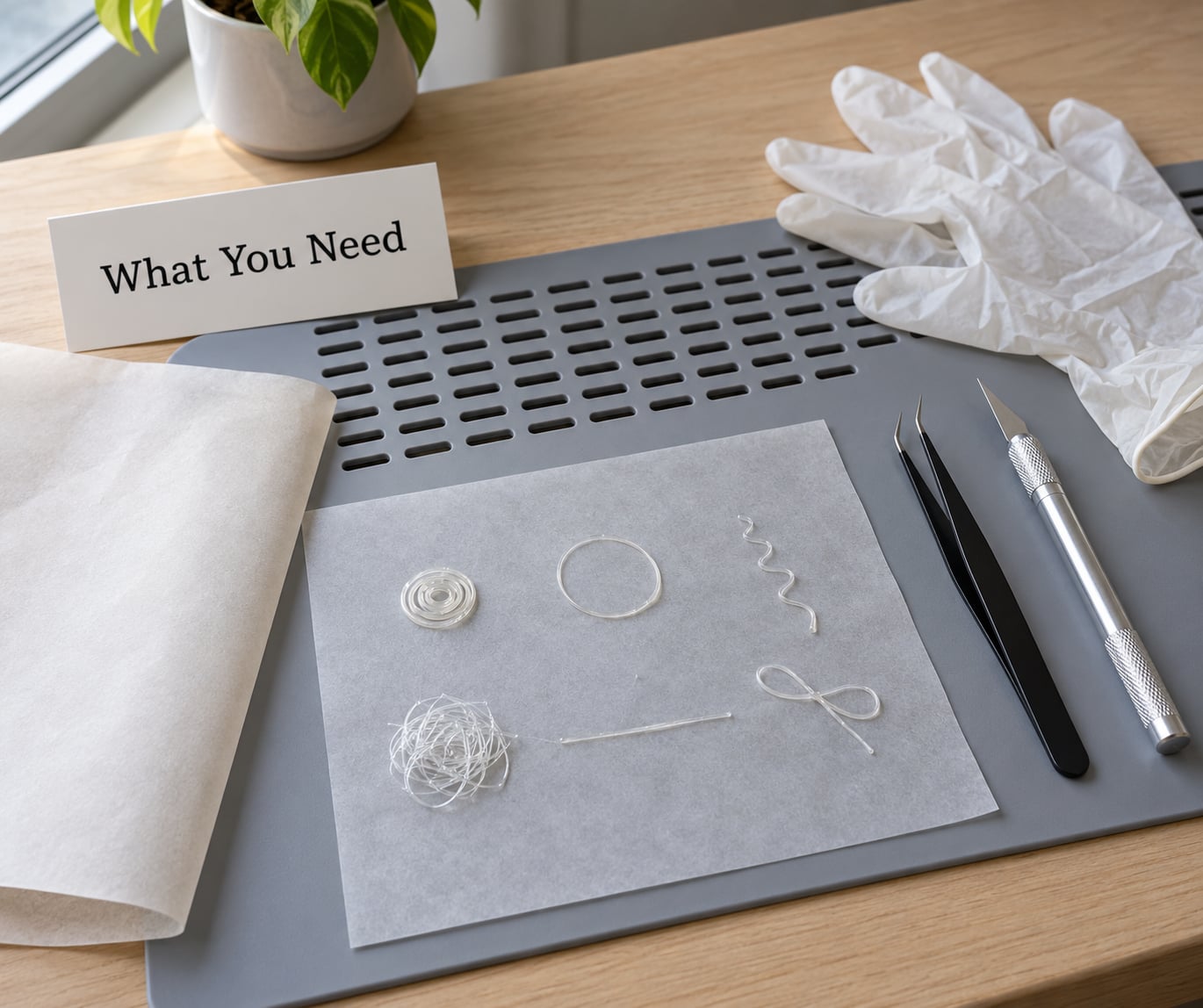
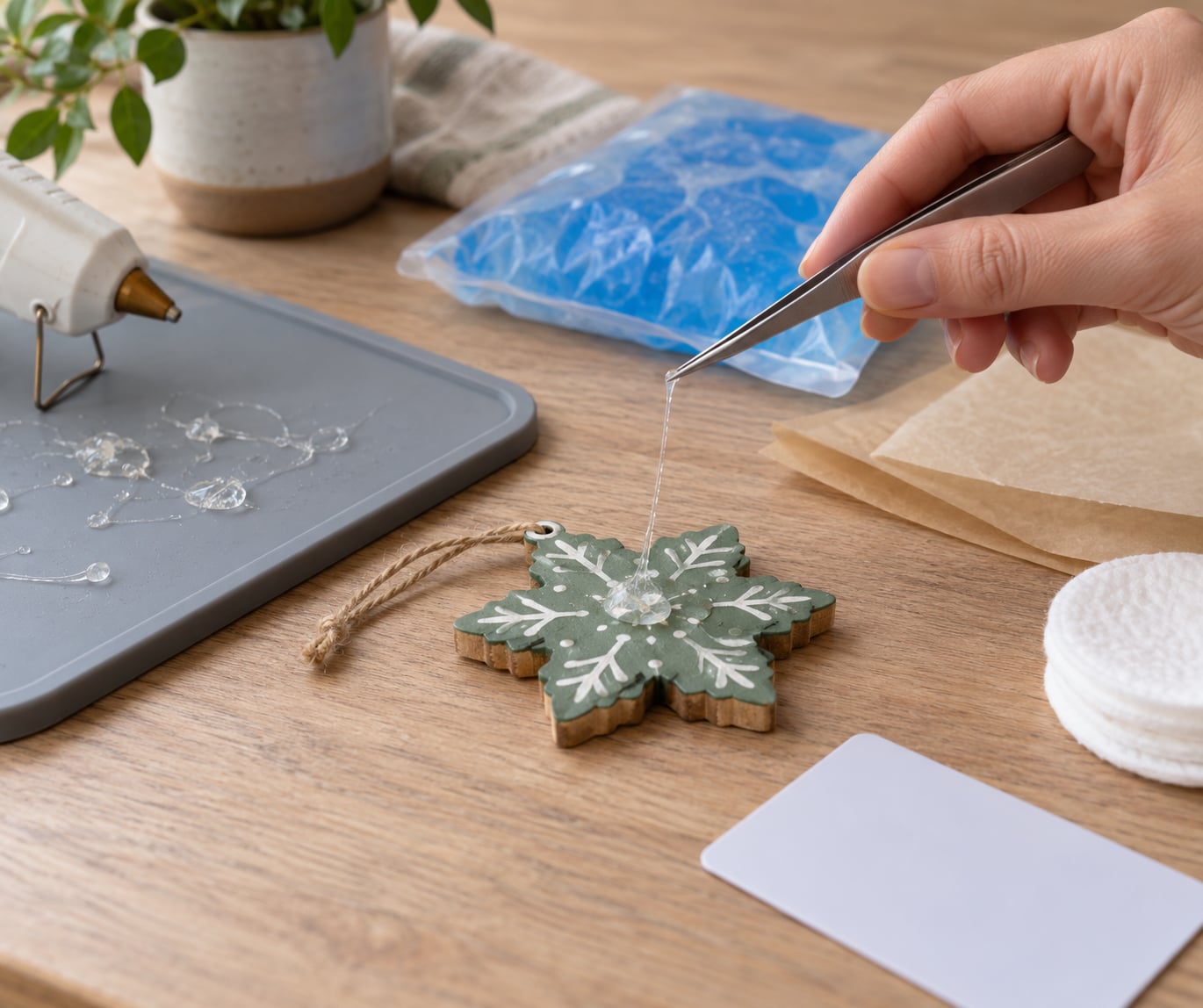
Set up before you start rather than halfway through a job. I keep a small caddy next to the glue gun with the four tools I actually reach for.
- Disposable gloves, nitrile if you have them. Glue gets on your hands and it is miserable to peel off later.
- Tweezers with fine points. This is the single most useful tool for strings.
- A plastic card, an old gift card or a plastic scraper. It will not scratch glass, wood or painted surfaces the way metal will.
- An ice pack or a bag of frozen peas, for the cold method.
- Cotton pads and a little isopropyl alcohol or plain olive oil, for the film a string leaves behind.
- A lint roller if you work over fabric, felt or faux fur.
A craft knife belongs on the list too, but only for sturdy surfaces like bare wood or a photo frame edge. Model builders on forum.flitetest.com cut blobs out of joints with a sharp X-Acto, which is a sensible use. Pointing one at paper, painted faces or fabric is how you turn a cleanup job into a repair job.
Two setup habits are worth the extra minute. Work somewhere ventilated, because a glue gun fumes irritate people faster than they expect, especially kids in a classroom. And clear the area first, since a strand that flicks off during cleanup will land on the floor or the sofa instead of your mat.
How to Remove Hot Glue Strings from a Project Step by Step
Step 1: Let the Glue Cool Completely
Touch the string lightly with a fingernail. If it dents or smears, it is still warm and it will stretch into a thinner, stickier thread rather than releasing. Leave it.
A few minutes on a cool surface, or ten minutes in the freezer for a small piece, is usually enough. Cold makes hot melt adhesive brittle, and brittle glue snaps off in pieces instead of pulling at whatever is underneath. Wipe condensation off before you touch the piece, otherwise the water and the warm glue make a worse mess than the string did.
Step 2: Choose the Right Removal Method
Match the tool to the surface rather than to the string.
- Firmly attached strings on hard surfaces: peel and roll. Press the loose end down with a fingertip and roll it back on itself. It lifts as one piece most of the time.
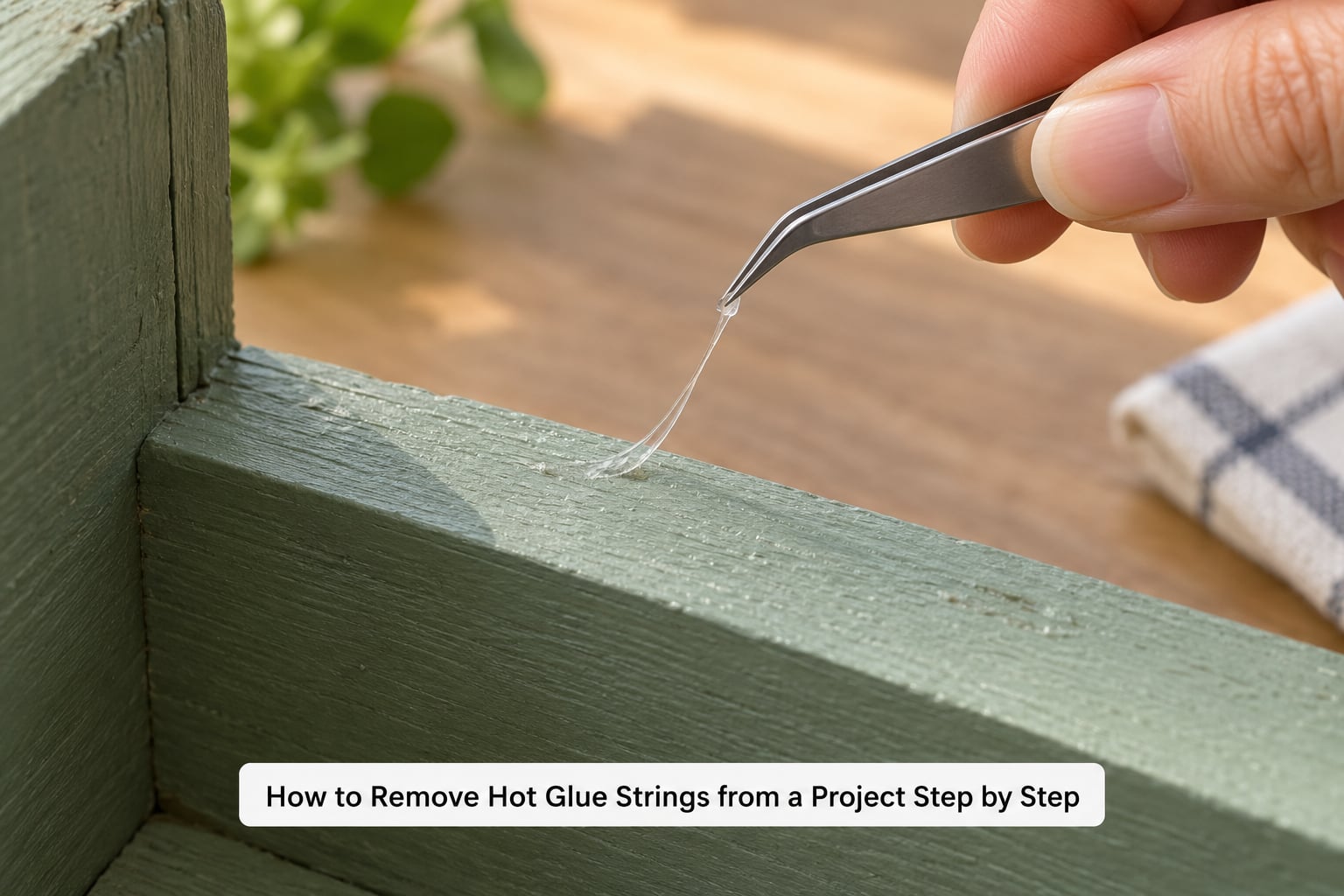
- Loose strands on any surface: tweezers. Close the tips near the base where the string meets the surface, not at the tip, then lift in one smooth motion.
- Flattened smears on glass, metal or sealed wood: a plastic card held at a shallow angle, pushed away from the joint.
- Strings on fabric, felt or faux fur: a lint roller, or tape wrapped adhesive-side-out around your fingers. The Puppetry mailing list archive called this a Hot Glue Mastery trick and it still works: press, lift, discard.
- Stubborn strings you cannot lift: brief warmth. A hair dryer on low, held about 20 cm away and kept moving, softens the glue so it peels. People on forum.trains.com use this and the same advice comes with the caveat: go carefully.
Step 3: Lift the String Slowly
Start at the free end and work toward the glue. Pull at a low angle, nearly parallel to the surface, not straight up. Straight up is what drags paint, paper fibres or fur fibres with it.
If the string stretches instead of releasing, stop. That means it is still warm or it has caught fibres. Let it cool again, or snip the loose length away with scissors and deal with the stub that is actually stuck.
One more tip from the model-building forums: if glue is smeared flat rather than standing in a string, rub a bare finger over it. Slight warmth from your hand plus the drag of skin often rolls it into a bead you can lift, on paper especially.
Step 4: Remove Remaining Marks
After the string is gone, the finish often looks duller than the rest of the piece. That is film, not glue.
Dab a cotton pad with isopropyl alcohol and blot it. Blot, never rub, and always test a hidden spot first, especially on painted or sealed surfaces where alcohol can dull varnish. On skin-safe materials, a drop of olive oil or petroleum jelly loosens the film and lifts it after a few minutes. Warm soapy water is the gentlest option for fabric and carpet, worked in with a cloth rather than a brush.
Avoid acetone on plastic and acrylic, which it clouds or melts. Avoid boiling water on wood, which swells the grain, and avoid scrubbing residue deeper into carpet fibres. On leather and finished furniture, test the solvent behind the piece first.
Common Mistakes and Simple Fixes
Pulling a warm string
Warm glue stretches and sticks to whatever it grabs. Stop, let the piece cool fully, and try again. If you have already pulled, the string has probably taken a small amount of surface with it, so switch to leaving the stub and treating the mark later.
Using more force than the job needs
If a gentle roll does not release the string, the answer is usually a better tool, not more pressure. Switch from fingers to tweezers, or from tweezers to a plastic card held flatter.
Heating delicate materials
Hair dryers and irons can warp foam, melt acrylic, curl paper and soften glue you did not target. Test any material you are unsure about with a two-second blast from a distance, in a spot nobody sees.
Using a solvent without checking compatibility
Alcohol and acetone are not interchangeable. Acetone dissolves some plastics and ruins finished coatings. Citrus adhesive removers are gentler but slow and smell strong, so use them in a ventilated space.
Treating a string like a blob
Chiselling at a structural blob risks the joint. Strings lift; blobs usually get trimmed flush with a knife on hard surfaces or left alone under a bead of paint.
Not preventing the next one
Most stringy glue is a temperature and technique problem, not a glue problem. Once the nozzle is warmed fully, trigger in short bursts and lift the gun before the bead travels. A silicone or foil sheet under the work catches strands before they reach the project. Keep the gun upright on a drip cup between pulls, and use a low-temperature glue stick for paper, fabric and foam, since it flows thinner and strings less.
Strings caught in doll hair or faux fur are a special case. Snip the strand close to the head rather than pulling, then tease out the rest with a fine needle while the glue is still cold and brittle.
Frequently Asked Questions
Can you remove hot glue strings from paper without tearing it?
Yes, if the string is fully cool and you never pull straight up. Roll the string back on itself with a fingertip, or slide a plastic card under it at a shallow angle. Skip fingernails and knives on paper entirely, since both take fibres with them. If the glue is still warm, leave it for a few minutes, because warm glue on paper tears the sheet instead of releasing.
What is the safest way to remove glue strands from fabric?
Freeze first, then lift. For a removable piece, ten to fifteen minutes in the freezer makes the glue brittle enough to pick off in pieces. For fabric you can wash, blot warm soapy water around the string, never rub, and never use alcohol, which dulls colour. A lint roller also lifts loose strands well and is the gentlest option of all.
Does hot glue come off with heat, and which materials should avoid it?
Heat softens hot glue so it peels, and a hair dryer on low held about 20 cm away works well. Keep it moving. Skip heat on foam, acrylic and thin plastic, which warp, and on paper, which curls. It is also risky on paint and varnish, where softening the glue can lift the coating underneath. When in doubt, cold is the safer route.
How do I remove hot glue from a wooden craft without scratching it?
Use a plastic card, not a metal blade. Hold the card nearly flat and push it away from the joint to lift hardened glue. Woodworkers on lumberjocks pair scraping with a damp rather than soaking rag to clear the last of the film, and that same damp-not-wet rule matters here, since soaking can swell the grain. Finish with a dry cloth and a fresh coat of your sealant.
Can I use rubbing alcohol or another solvent to remove hot glue residue?
Isopropyl alcohol works well on the dull film a string leaves behind. Dab it on, wait a minute, then blot with a clean cotton pad. Test a hidden corner first, because alcohol can dull varnish and some paints. Olive oil or petroleum jelly are gentler options for skin-contact items. Avoid acetone on plastic and acrylic, which it can cloud or melt.
How can I prevent hot glue strings from forming on future projects?
Work on a silicone mat or a foil sheet so strands land there instead of on the piece. Let the nozzle heat fully before the first pull, trigger in short bursts, and lift the gun as soon as the bead is placed. Stand the gun upright in a drip cup between pulls, and use a low-temperature glue stick on paper, fabric and foam because it flows thinner and strings less.
How to Remove Hot Glue Strings from a Project: Final Tips
Cool the glue, protect the surface, then use the least aggressive method that will work. Roll it, lift it with tweezers, or freeze it first if it resists. Pull at a low angle from the loose end every time, and stop the moment it stretches.
Last thing, sweep up every loose strand before you put the project away. A stray string in a drawer will be welded to something else by the time you find it.