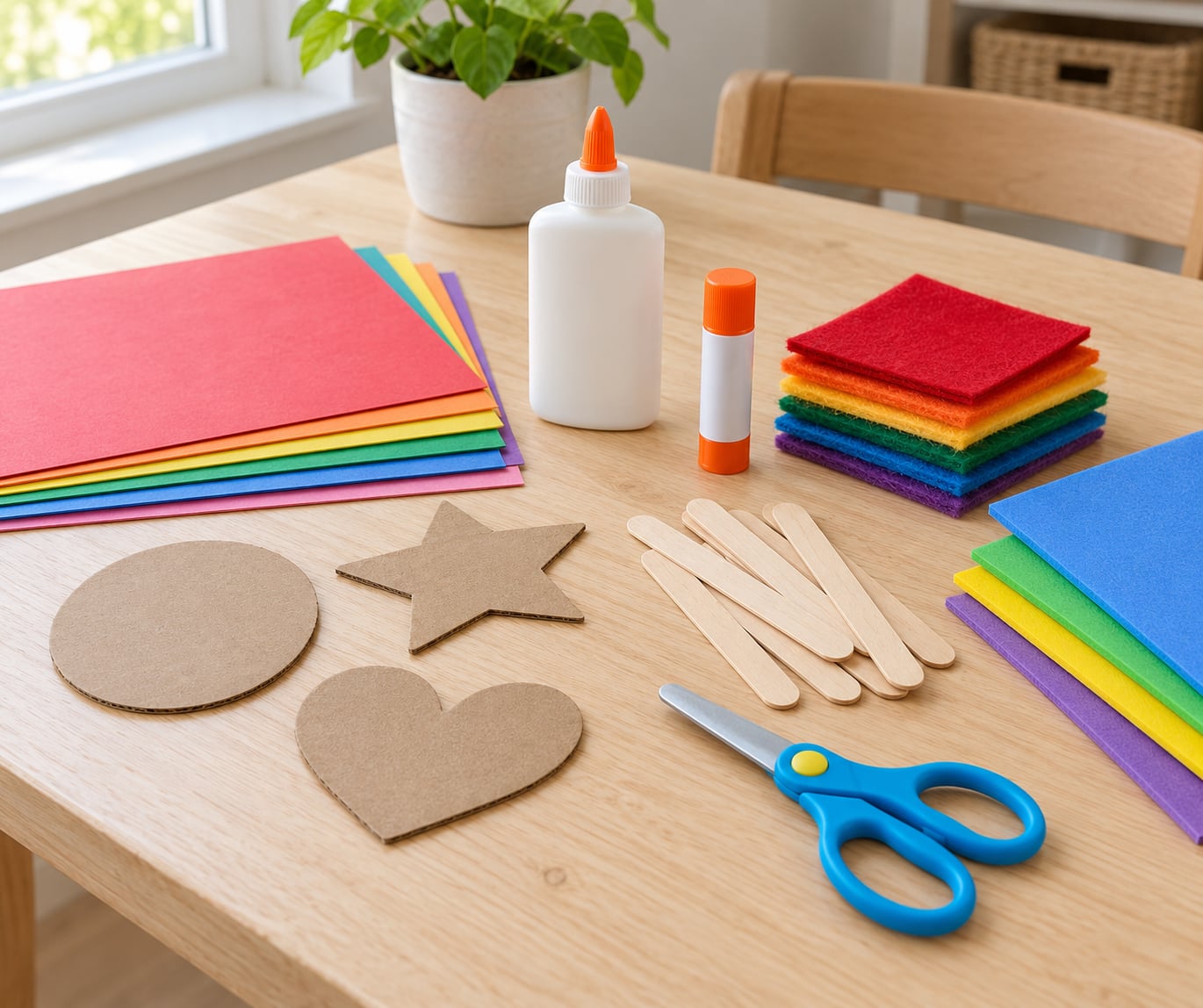
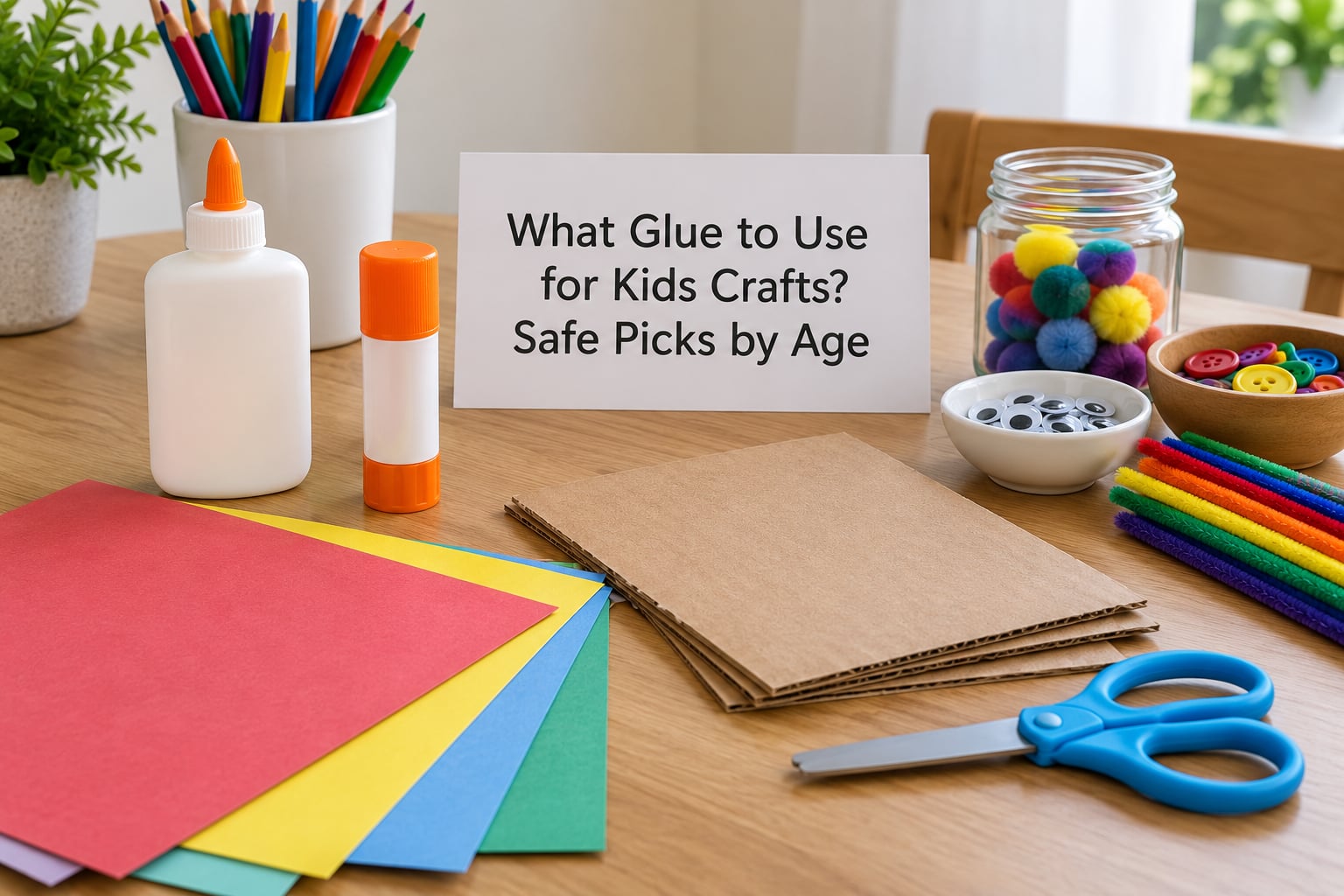
Washable white school glue and glue sticks are the safest everyday choices for kids crafts, and between them they handle almost every paper, cardboard, felt and pom-pom project. Heavier pieces like wood craft sticks, beads and foam need a stronger craft glue. Read on for which glue matches which material.
The confusing part is not that there are a dozen kinds of glue. It is that most bottles say almost nothing useful. Parents tell me they read a label that just said liquid glue and gave up, then wondered later whether it was safe for a two-year-old. So here is the short version before the detail.
Most of what children glue at a craft table is porous: paper, cardboard, felt, fabric, foam, wood. Glue that is water-based and solvent-free works because it soaks into those fibres and sets as the water dries. That single fact explains most of the choices below.
Table of Contents
- 1What Glue to Use for Kids Crafts?
- 2How to Choose the Right Glue for the Material
- 3Washable Glue vs. Craft Glue vs. Glue Sticks
- 4Which one should a toddler use?
- 5When to skip the glue stick entirely
- 6Best Glue for Paper and Cardboard Crafts
- 7Best Glue for Felt, Fabric, Foam, and Pom-Poms
- 8Best Glue for Wood, Beads, and Harder Craft Pieces
- 9How to Make Kids’ Glue Crafts Less Messy
- 10Safety and Storage Tips for Kids’ Glue
- 11Frequently Asked Questions
- 12What kind of glue is safe for children to use?
- 13Is white school glue non-toxic?
- 14What is the best glue for construction paper that does not wrinkle?
- 15What is the best glue for pom poms and pipe cleaners without a glue gun?
- 16How do I get glue off clothes and carpet?
- 17Can you make your own glue for kids crafts?
- 18Start With One Bottle and Add As You Go
What Glue to Use for Kids Crafts?
Use washable white school glue, sold as PVA glue, for anything paper, cardboard or fabric. Use a glue stick when you want minimal mess and fast results on light paper. Use tacky craft glue when the project has weight to it, such as pom poms, beads or layered cardboard.
Before buying any bottle, check for three words on the label: non-toxic, washable, and AP seal. The AP seal is the mark of the Art and Creative Materials Institute, a US non-profit that tests art materials against a toxicology review. It is not a guarantee a child cannot have a reaction, but it is the clearest signal that a product was formulated and reviewed for use in art settings.
Worth knowing about the chemistry, since it explains everything else: PVA is polyvinyl acetate, a plastic polymer carried in water. Spread it on paper and the water soaks in, carrying glue into the fibres. As the water evaporates, the polymer sets into a soft, clear film. That film is why PVA bonds paper so well and plastic so poorly, and why it washes out of clothes with plain water.
Glue also will not stick to its own bottle. Everything around the nozzle has dried PVA in it, and there is nothing left for fresh glue to grab. A crusty bottle that still squeezes fine is normal, not expired.
How to Choose the Right Glue for the Material
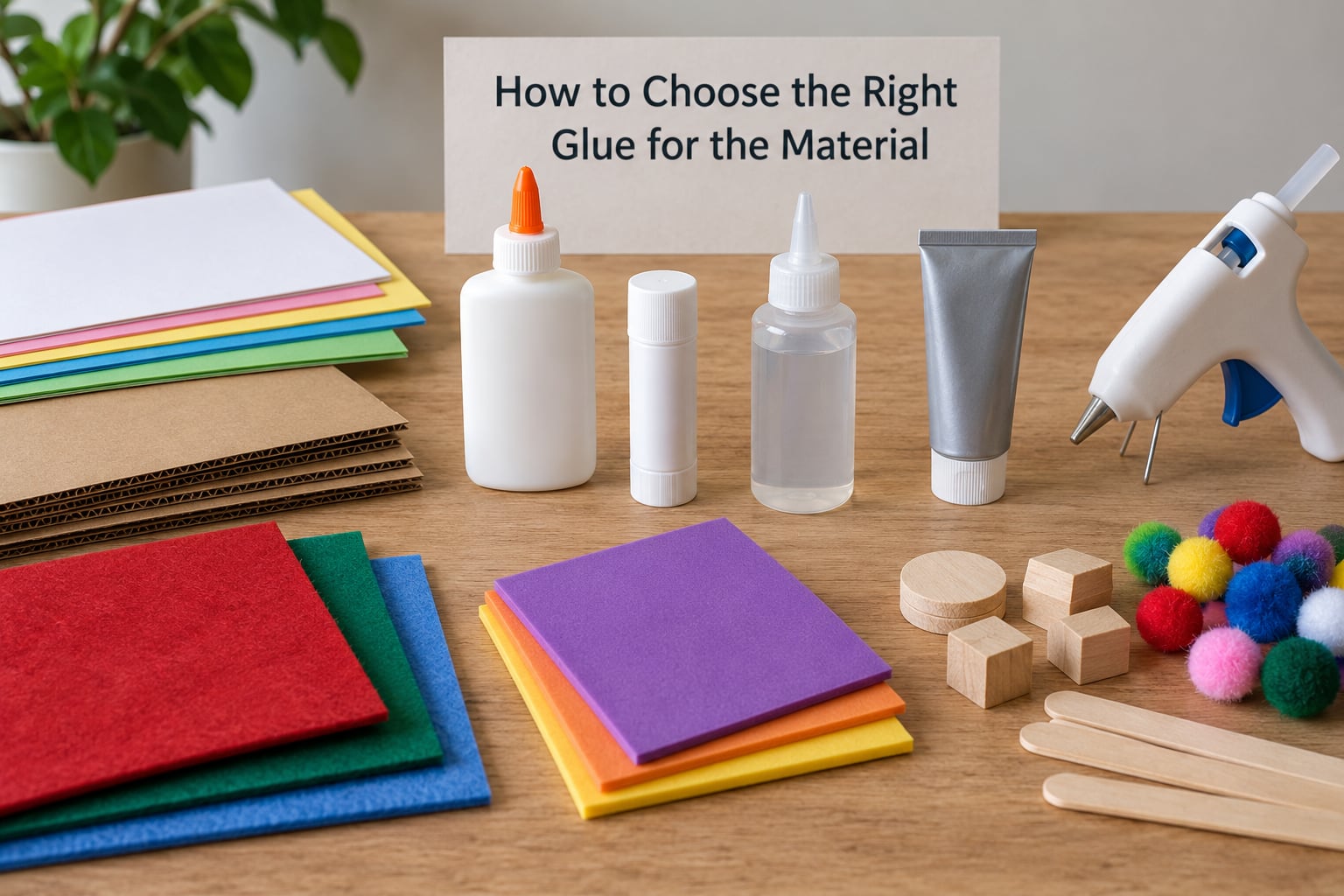
Match the glue to the thing being joined, not to how permanent the child wants it to be. Start with the material, then check five things: how long it takes to set, how strong the bond needs to be, whether the joint has to stay flexible, whether it must wash out of clothes, and how strong the smell is.
That last one surprises people. A water-based glue should smell faintly sweet or barely at all. If a craft glue smells like a hardware store, it is solvent-based and belongs in an adult’s toolbox, not a preschool art table.
| Material | Best glue | Why it works |
|---|---|---|
| Printer paper, collages | Glue stick | Quick grab, almost no mess, easy for small hands |
| Construction paper | Washable white school glue | Bonds paper to paper where a stick peels apart |
| Cardstock | Tacky craft glue | Thicker stock needs a wetter bond |
| Corrugated cardboard | Washable white school glue | Soaks into the corrugation and grips well |
| Paper mache | Diluted white school glue | Thin coats soak in without tearing wet paper |
| Craft foam | Tacky craft glue | Regular school glue dries chalky on foam |
| Felt | Tacky craft glue | Does not soak through and stays flexible |
| Fabric | Fabric glue, washable formula | Stays flexible instead of going stiff and brittle |
| Pom poms | Tacky craft glue or glue dots | Needs grab on the rounded surface |
| Pipe cleaners | Tacky craft glue | Holds the fuzzy twist point firmly |
| Beads and wooden buttons | Tacky craft glue | Weight and smooth surface defeat a glue stick |
| Craft sticks, wood pieces | Craft glue, or adult-supervised wood glue | Needs a bond that handles being picked up |
| Photographs | Acid-free glue or photo corners | Standard glue can yellow and fade prints over years |
If a material is not on this list, ask two questions: does water soak into it, and does it need to bend? If yes to both, white school glue or tacky glue will do. If water rolls off it, you need an adhesive made for non-porous surfaces, and that is an adult job.
Washable Glue vs. Craft Glue vs. Glue Sticks
These three cover the large majority of children’s craft time. They differ less in strength than most parents expect, and more in mess, drying time and how much supervision they need.
| Factor | Glue stick | Washable white school glue | Tacky craft glue |
|---|---|---|---|
| Mess | Lowest | Moderate, spreads under pressure | Highest, forms threads |
| Hold strength | Light paper and cardboard | Paper, cardboard, fabric | Foam, beads, pom poms, wood |
| Time before you can move a piece | Seconds to a minute | Several minutes | Minutes, depending on the bead size |
| Reposition time | Short but workable | Long enough to slide pieces into place | Short |
| Dries | Clear | Clear, slightly shiny | Clear, sometimes stringy while setting |
| Best ages | 2 and up | 3 and up | 4 and up, with close supervision |
Which one should a toddler use?
For ages two and three, glue sticks are the practical choice. There is nothing to spill, nothing to squeeze wrongly, and a glue stick left on its side just makes a small sticky mark instead of a puddle. I set out one stick per child and one between two children if they are sharing, which cuts the passing and fighting considerably.
Liquid white glue still works at that age, but expect it on hands, sleeves and the table. Many families use a glue stick for the main craft and keep liquid glue within reach of an adult only.
When to skip the glue stick entirely
If the project is paper onto paper and you want it to stay put for more than a few days, use liquid. Stick-bonded paper-to-paper builds tend to peel at the edges, which shows up a month later when the finished thing is on a shelf and nobody wants to re-glue it.
Best Glue for Paper and Cardboard Crafts
Glue sticks handle collages, cut-out shapes and anything flat. Liquid white glue takes over once the project has structure: paper chains, cardboard houses, layered sculptures and papier-mache masks.
Construction paper wrinkles because the glue is too wet and too spread out. Three habits fix it. Put glue only where the pieces touch instead of over the whole shape, use a thin even layer rather than one thick pass, and press with something flat and firm, like the back of a spoon or a piece of card, for a full minute.
For cardboard, glue the flaps and let them sit under something weighted for ten minutes. Corrugated board soaks up liquid glue quickly, which is exactly why it holds so well and why a squeeze bottle works better than a brush here.
Paper mache is the one case where you deliberately thin the glue. Mix one part white school glue with roughly one part water, and paint it on rather than soaking strips in it. Wet paper tears. Paste goes on thick, sets, and comes off the table much easier later.
Best Glue for Felt, Fabric, Foam, and Pom-Poms
These materials are where parents run into trouble, because plain white glue dries chalky on foam and rarely grabs a round pom pom. Tacky craft glue is built for this, sticking to the surface rather than soaking through it.
Flexibility is the thing to watch. Standard craft glue leaves a stiff film, so felt-to-felt pieces stop bending and felt storybooks crack open along the fold. Fabric glue, or a washable tacky glue, stays soft enough to fold.
On foam, ordinary school glue dries pale and patchy on the surface and can flake off later. Tacky glue soaks slightly into the foam and holds much better, which is why it is the standard pick for foam sword handles and costume pieces.
Pom poms and pipe cleaners fail for one reason: too little glue, applied to the end only. Run a small amount around the contact point, hold the piece in place with a fingertip for thirty seconds, then set it on a flat surface rather than leaning it against something.
Whatever you choose, test a hidden corner first. Felt and fabric dyes can bleed into wet glue, and a bond that works on the sample can fail on the other half of the sheet.
Best Glue for Wood, Beads, and Harder Craft Pieces
Plain white glue is fine for a small wooden shape that stays on the table. For anything a child will pick up, lift or hang, step up to tacky craft glue. For dollhouse builds, wooden bead crafts or a cardboard house that has to stand on a shelf, an adult-supervised wood glue gives a bond that does not shear at the joint.
Some adhesives belong entirely outside a child’s reach. Super glue, which is cyanoacrylate, bonds skin in seconds and is genuinely painful to remove. Hot glue guns cause burns and leave strings everywhere, and the low-temperature version still gets hot enough to be a problem for small hands. Contact cement and solvent-based craft glues give off fumes that make a room unusable for a child’s craft session.
Ventilation matters more than people expect. Even a water-based glue should be used in a room with a window open or a fan running, and a child who has asthma or sensitivity to strong smells should be kept out of the space while any adhesive is open.
How to Make Kids’ Glue Crafts Less Messy
The cleanup problem is solved before the glue comes out, not after. A few things make a big difference.
- Put a washable tablecloth or a sheet of newspaper down before anyone opens a bottle.
- Give each child a shallow tray or a folded piece of card to glue on. Glue stays on the tray instead of spreading across the table.
- Use a paintbrush or a foam brush instead of fingers for anything wet. Little hands push too much glue by accident.
- Cap the bottle every time. Glue that dries in the nozzle is the main reason parents report a half-empty bottle going bad.
- Set pieces flat and let them dry before stacking. Lifting wet paper is how the wrinkles start.
- Keep a damp cloth in a bowl nearby and wipe while the glue is still wet. Dried glue takes scrubbing.
For glue-heavy projects such as papier-mache, work on a sheet of parchment or wax paper taped to the table. It peels off afterwards and saves the surface underneath.
Safety and Storage Tips for Kids’ Glue
Reading the label takes thirty seconds and answers most safety questions. Look for the AP seal and the words non-toxic and solvent-free. Washable is a practical label rather than a safety one, but it is the difference between a laundry problem and a ruined shirt. Check for an age guidance printed on the bottle, and check whether it says acid-free if photographs or keepsake paper are involved.
Supervision scales with the child, not the glue. At two and three, you apply the glue. From three to five, they apply glue sticks and you handle liquid. From six, they can work independently with washable glue, as long as it stays in a designated area.
Storage is where money gets wasted. Glue goes back upright, lid on, in a drawer rather than a hot garage or a cold shed. Cold can thicken or gel PVA, and if a bottle freezes let it come to room temperature and squeeze gently before giving up on it. Pin a binder clip on the nozzle if kids keep using it as a straw.
Some families make their own paste for sensory play and toddlers who put things in their mouths. Mix one cup flour with a third of a cup salt, add enough water to make a thick smooth paste, and cook it gently on the stove, stirring, until it pulls away from the sides. Cool it fully before any child touches it. It is safe to taste, weak on paper, and it lasts about a week in a sealed container at room temperature.
Whatever you choose, the package label and your local safety guidance take priority over anything in an article, including this one. If a child gets glue in their eyes or mouth, follow the first aid instructions printed on the bottle.
Frequently Asked Questions
What kind of glue is safe for children to use?
Washable white school glue and glue sticks are the safest everyday choices. Look for the AP seal from the Art and Creative Materials Institute, plus the words non-toxic and solvent-free on the label. Avoid super glue, hot glue guns, contact cement and solvent-based craft glues. Supervise children under five with liquid glue, and keep the bottle within reach of an adult.
Is white school glue non-toxic?
Water-based school glue is formulated to be non-toxic and is safe for normal craft use by children, which is why it carries the AP seal. That means toxicology experts have reviewed the formula, not that any product is risk-free. Keep glue out of eyes and mouths, and follow the first aid directions printed on the bottle if an accident happens.
What is the best glue for construction paper that does not wrinkle?
Use washable white school glue and apply it only where the two pieces touch, in a thin even layer. A glue stick works for flat collages, but paper glued to paper often peels apart later. Press the pieces together with something flat for a full minute, then leave them on a flat surface to dry rather than holding them in the air.
What is the best glue for pom poms and pipe cleaners without a glue gun?
Tacky craft glue is the answer. It grabs the surface instead of soaking into it, so it holds round and fuzzy materials that plain school glue drops. Put a small amount around the contact point, hold the piece with a fingertip for about thirty seconds, then set it flat. Glue dots also work well and leave no brush behind.
How do I get glue off clothes and carpet?
Act while the glue is still wet. Scrape off thick blobs, then work cool water into the fabric from the back of the stain with a little dish soap and blot, never scrub. For dried glue, warm the area gently and peel what lifts, then repeat the wash. Check the garment care label first, since soaking can ruin some fabrics.
Can you make your own glue for kids crafts?
Yes, for sensory play and young toddlers. Combine one cup flour with a third of a cup salt, add water to make a thick smooth paste, and cook gently while stirring until it pulls away from the sides. Cool completely before a child uses it. Homemade paste is weak on paper and keeps about a week in a sealed container at room temperature.
Start With One Bottle and Add As You Go
Put one washable white school glue with an AP seal in front of you, plus a box of glue sticks, and you can handle most craft time before the year is out. Add tacky craft glue the first time someone glues a pom pom or a wooden button, and leave super glue and glue guns to the adult toolbox.
Do one thing first: check what is already on your craft shelf for a label that says non-toxic, solvent-free and washable. If a bottle is unlabelled or has faded to nothing, that is the one to replace, not the new glue you were about to buy.