Mixing brown from the primary colors takes about five minutes and three tubes of paint: red, yellow and blue in equal parts, stirred together until every hue cancels the others out and what is left reads as brown. Knowing how to make brown paint from primary colors is the first real color-mixing skill most people learn, because it works in every medium and it teaches you how value and undertone behave.
The catch is that the first mix is usually not the brown you pictured. Beginners overdo the blue, add water too early, or stop stirring halfway through the purple stage. Fix those three habits and you can dial in warm, cool, light and dark browns on demand, without buying another tube.
Below is the whole method: what to lay out, five steps with quantities, and the fixes for the mistakes that turn brown into grey mud.
Table of Contents
- 1What You Need
- 2Step-by-Step: How to Make Brown Paint from Primary Colors
- 3Step 1: Choose Your Red and Blue Paints
- 4Step 2: Mix Red and Blue to Make Purple
- 5Step 3: Add Yellow to Make Brown Paint From Purple
- 6Step 4: Adjust the Brown Shade
- 7Step 5: Thin, Test, and Use the Brown Paint
- 8Common Mistakes: How to Make Brown Paint from Primary Colors
- 9Frequently Asked Questions
- 10Can you make brown paint by mixing red, blue, and yellow?
- 11What is the easiest ratio for making brown paint from primary colors?
- 12Why does my red, blue, and yellow paint mixture look green instead of brown?
- 13How do I make lighter brown paint without using white?
- 14How do I make a darker or warmer shade of brown?
- 15What kind of paint should I use for a children’s craft?
What You Need
You need far less than a paint store shelf. If you already have poster paint or a craft box, you have everything.
- Red primary paint. A true red works. A warm-leaning red such as crimson gives you a warmer brown later.
- Blue primary paint. Ultramarine or phthalo blue both work. Ultramarine leans violet and gives a softer brown; phthalo is stronger, so add it in smaller amounts.
- Yellow primary paint. Lemon yellow is bright, cadmium or ochre-leaning yellow is earthier. Ochre-flavored yellow gets you closer to a natural umber with less fuss.
- A mixing surface. A palette, a scrap sheet of paper, a plate, or the lid of a jar. For a wall or a large surface, a five-gallon bucket with a mixing stick works.
- A brush or craft stick. A flat brush or palette knife for thicker paint, a craft stick for poster paint, a clean spoon for small amounts.
- Water or thinner. Clean water for acrylic, gouache and poster paint; turpentine or mineral spirits for oil. Beginners often skip this, then wonder why their paint is too thick to spread.
- Optional white. For tints, lighter browns and skin-tone mixes.
- Optional black. To deepen a mix without adding more pigment and muddying it.
- A clean brush per test. Or one brush and a jar of water, rinsed between every shade you try.
Step-by-Step: How to Make Brown Paint from Primary Colors
Step 1: Choose Your Red and Blue Paints
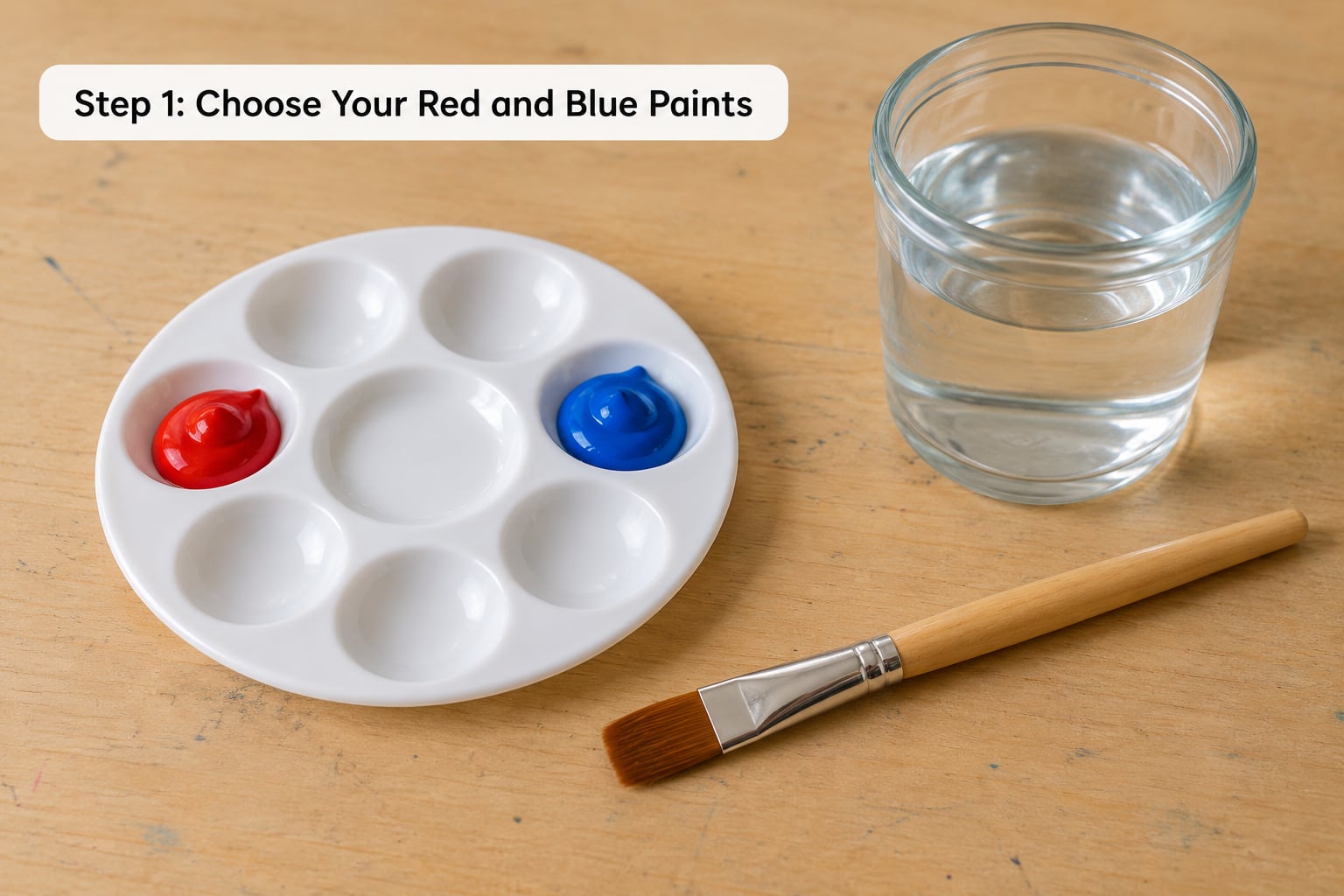
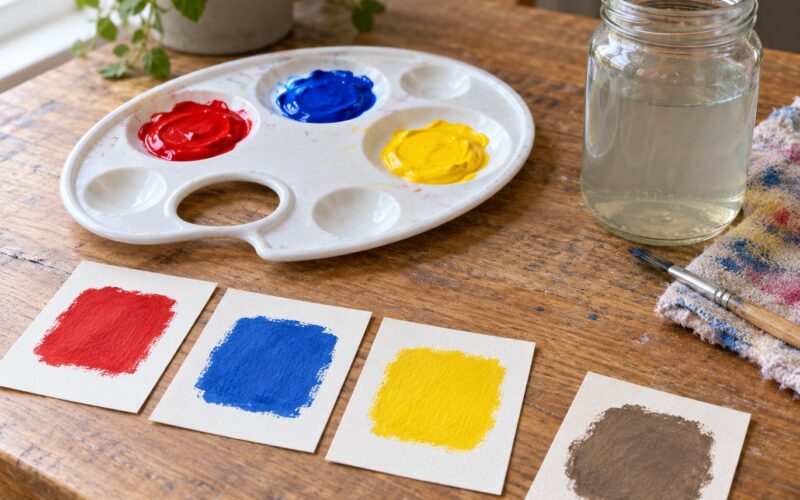
Squeeze out equal amounts of red and blue first. For a small test swatch, a pea-sized dab of each is plenty; for a full surface, start with a quarter cup of one and a quarter cup of the other.
Guessing by eye is the mistake here. Beginners use far more blue than they think, because blue is the color that reads as “more” when it sits next to a warm red. Measure the first dab, then keep matching that size for the rest of the mix.
Step 2: Mix Red and Blue to Make Purple
Combine the red and blue and stir until no streak of either color survives. The mixture should look violet or purple at this stage, not brown. If it still looks red, you need more blue; if it looks blue, you need more red.
Stop before the hue disappears. That purple stage is where you set your warmth, and once the yellow goes in you cannot pull it back out.
Step 3: Add Yellow to Make Brown Paint From Purple
Add yellow slowly, starting at roughly one part yellow to two or three parts purple, and stir between every addition. The color travels through olive and green on the way to brown, which is normal.
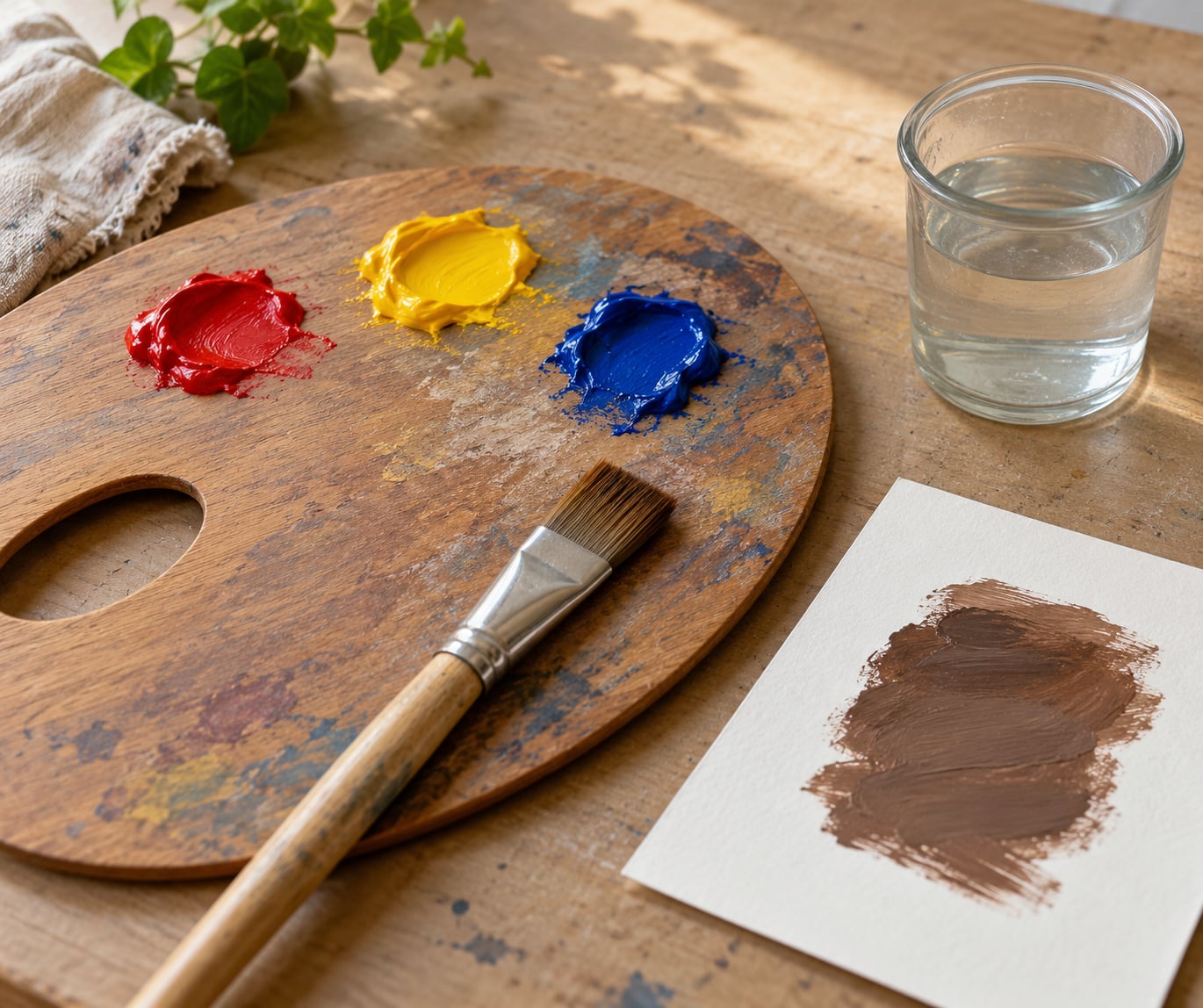
Equal parts of red, yellow and blue is the classic 1:1:1 recipe and it lands on a neutral medium brown. Keep adding yellow until the green cast fades and the mixture reads as an earthy brown rather than a mossy one.
| Mix ratio (red : yellow : blue) | Resulting shade | Best for |
|---|---|---|
| 1 : 1 : 1 | Neutral medium brown | All-purpose base, filling color, matching an existing brown |
| 2 : 1 : 1 | Warm reddish brown, close to burnt umber | Skin tones, brick, wood, autumn foliage |
| 1 : 2 : 1 | Golden olive brown | Straw, dry grass, shaded ground |
| 1 : 1 : 2 | Cool taupe brown | Stone, concrete, winter shadows |
| 1 : 2 : 0.5 | Warm tan | Light wood, cardboard, craft paper effects |
| Orange 1 : Violet 1 (two colors) | Deep earthy brown | When you have no blue left |
Ratios scale linearly, so 2:1:1 means twice the red to one part yellow and one part blue. Write the numbers on the side of the palette lid when you like a result. Next time you go straight to it.
Step 4: Adjust the Brown Shade
Now nudge the color in small increments, testing after each one.
- Warmer brown: add a touch more red or yellow, a dab at a time. Most people find browns that lean warm are far more useful than neutral ones.
- Cooler brown: add blue very slowly. One extra drop can push the whole mix toward grey, so stir and check between every drop.
- Lighter brown: add white for a tint, or more yellow for a warm, chalky tan.
- Darker brown: add a little black, which darkens without adding another pigment and muddying the mix. A drop of complementary color works too.
- More depth or transparency: a dab of raw sienna or burnt umber if you have them shifts the mix toward earth tones instead of toward mud.
Step 5: Thin, Test, and Use the Brown Paint
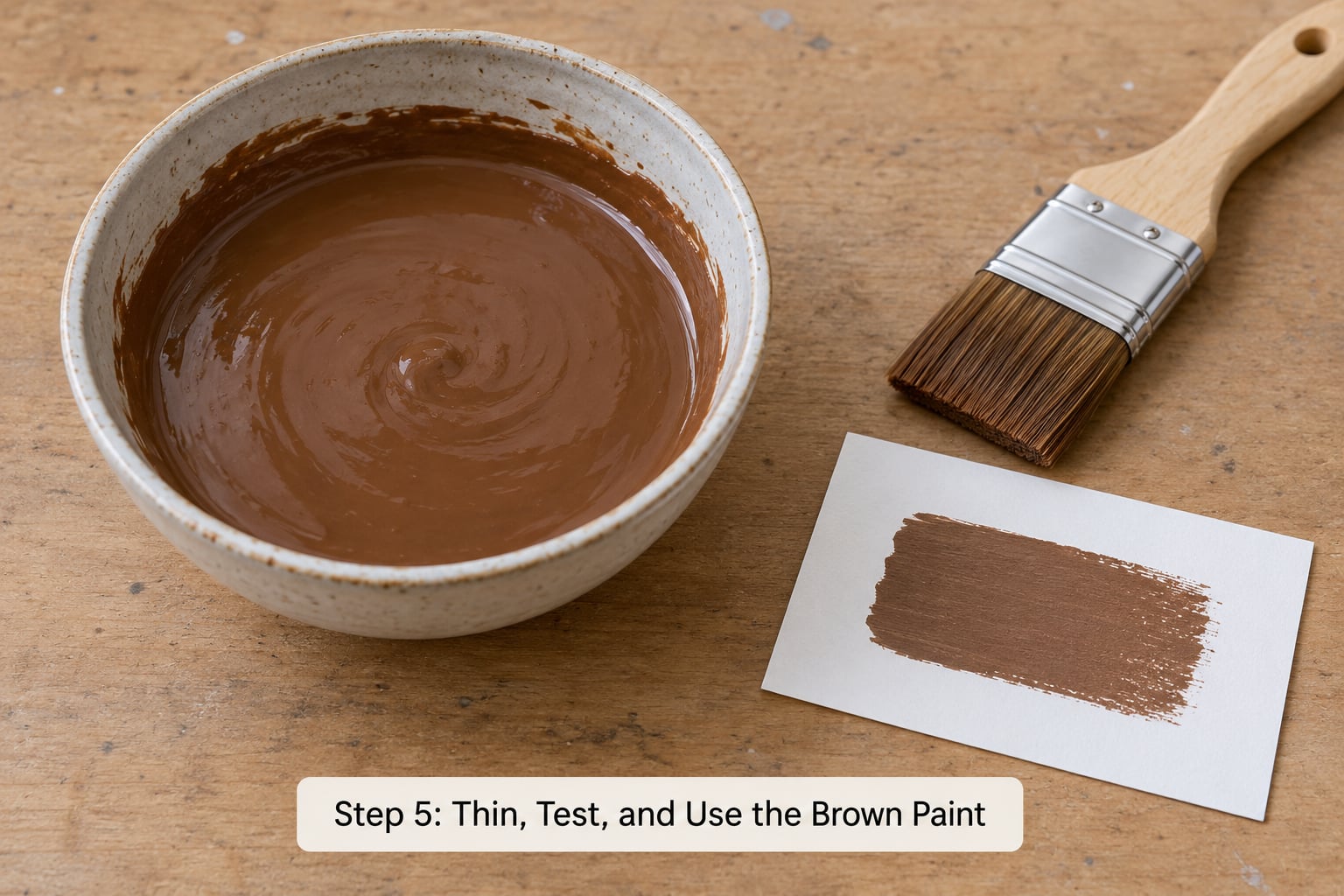
Add water or thinner a little at a time until the paint flows off the brush in a steady ribbon rather than a thick blob. For oil paint, do not add water at all; use turpentine or mineral spirits, and a drop of linseed oil if you want more body.
Test on scrap paper or an offcut of the surface you are painting, and let it dry fully before judging it. Paint looks lighter and greyer wet, and a dried swatch under warm indoor light can shift noticeably from the same paint near a window. That difference is lighting, not a bad mix.
For a wall, cabinet or mural, multiply the tested ratio by the area you need and mix it all in one container so the shade stays consistent. If you run short mid-project, remix from the same ratio instead of adding color to the leftovers at the end.
Common Mistakes: How to Make Brown Paint from Primary Colors
The mix turned grey. Too much blue is the usual cause, and grey is what happens when blue cancels more yellow than the yellow can cancel back. Add more yellow, or a small amount of red, and it moves toward brown again. Adding white makes it worse, not better.
It looks green instead of brown. You stopped at the olive stage. Keep adding yellow in small amounts; green is the midpoint on the way to brown, not a dead end.
It looks too red. Pull it back with yellow or blue rather than trying to lighten it. One part blue to four parts of the current mix will cool it noticeably.
Watercolor browns look murky. Almost always the same two causes: over-wetting and too many pigments in one puddle. Use fewer colors per mix, keep the paper damp rather than flooded, and let each layer dry before adding the next.
The brush carried old color into the mix. Rinse between every test. Even a trace of leftover blue or green in the bristles will tip a clean mix toward mud.
The paint is too thick to spread. You mixed pigment with no thinner. Add water (or the right solvent for oils) a few drops at a time until the paint ribbons off the brush.
The shade does not match the brown you are trying to copy. Take a physical swatch to a paint store and have them match it with a scanner. Home mixes are for learning and for using up what you own; a large match job is faster and more exact that way.
One shortcut worth knowing: brown is really a neutral, and neutrals can be mixed from complementary pairs rather than all three primaries. Blue plus orange gives a deep earthy brown, red plus green gives a warm dark brown, and yellow plus purple gives a golden brown. Two colors is easier to control than three, which is why experienced painters lean that way.
Frequently Asked Questions
Can you make brown paint by mixing red, blue, and yellow?
Yes, and that is the standard method. Red, yellow and blue are the three traditional primary colors, and when all three are present each one neutralizes the other two. No hue dominates, so what remains is a neutral earth brown. Adjust the proportions afterward to move the result warm, cool, light or dark.
What is the easiest ratio for making brown paint from primary colors?
Start with 1:1:1 by volume, one part red to one part yellow to one part blue, and stir fully. That gives a neutral medium brown. For a warmer, more useful brown, shift to 2 parts red, 1 part yellow and 1 part blue, which lands close to burnt umber. Write down whichever ratio you settle on so you can repeat it.
Why does my red, blue, and yellow paint mixture look green instead of brown?
Green is the midpoint on the way to brown, so you have most likely stopped mixing too early or added too much blue. Keep adding yellow a little at a time and stir between each addition. The color passes from olive through tan into brown. Adding red instead also helps if you want a warmer result rather than a yellower one.
How do I make lighter brown paint without using white?
Dilute the mix with water or the appropriate thinner for your medium, or add more yellow. Yellow pushes brown toward a light golden tan, which suits straw, wood and cardboard effects, while water gives a translucent wash in watercolor or gouache. For a solid opaque tint you really do want a small amount of white.
How do I make a darker or warmer shade of brown?
For a darker brown, add a touch of black. It deepens the value without adding another pigment, so the mix stays clear instead of turning muddy. For warmth, add small amounts of red or yellow, aiming for roughly 2 parts red to 1 part yellow and 1 part blue. Add blue last and very slowly, since too much turns everything grey.
What kind of paint should I use for a children’s craft?
Washable tempera or water-based poster paint is the safest and easiest choice. It mixes with plain water, dries quickly, cleans off most surfaces and comes in bright primary shades. Watercolor works too if you want a wash effect, and acrylic is fine for older children under supervision. Check the label and keep all paint out of reach of small children.
Start with equal parts of red and yellow, then add blue a drop at a time until the purple turns to a clear, warm-leaning brown. Write the ratio down. Once you have that one recipe locked in, every shade after it is a small adjustment rather than a guess.