Paint turns muddy when you mix more than two colors at once, especially when those colors sit on opposite sides of the color wheel. The pigments pull against each other and drag the mix toward gray and brown. The fix is to keep each mixture to two colors plus white, and to start from the color you want most rather than equal blobs of everything.
If you’re searching why do my mixed paint colors turn muddy, you’re probably a parent, a teacher, or a kid with a palette that has gone dull and chalky. The good news is that muddy paint is a normal result of color mixing, not a broken tube of paint. Once you can name the cause, you can stop it and fix it.
Table of Contents
- 1What Makes Mixed Paint Colors Look Muddy?
- 2How Does Color Mixing Affect the Result?
- 3Why Do My Mixed Paint Colors Turn Muddy?
- 4Which Color Combinations Create Muddy Results?
- 5How Can Kids Mix Brighter Colors?
- 6What Are the Best Fixes for Muddy Paint?
- 7Can You Make Muddy Colors Look Good in Kids’ Art?
- 8Frequently Asked Questions
- 9Why do my mixed paint colors turn muddy even when I use good paint?
- 10Does adding white paint fix muddy colors?
- 11Why does mixing red and green make brown or gray?
- 12Should I throw away paint that has turned muddy?
- 13How much water should children add to paint?
- 14Is muddy paint bad for a child’s painting?
- 15Conclusion
What Makes Mixed Paint Colors Look Muddy?
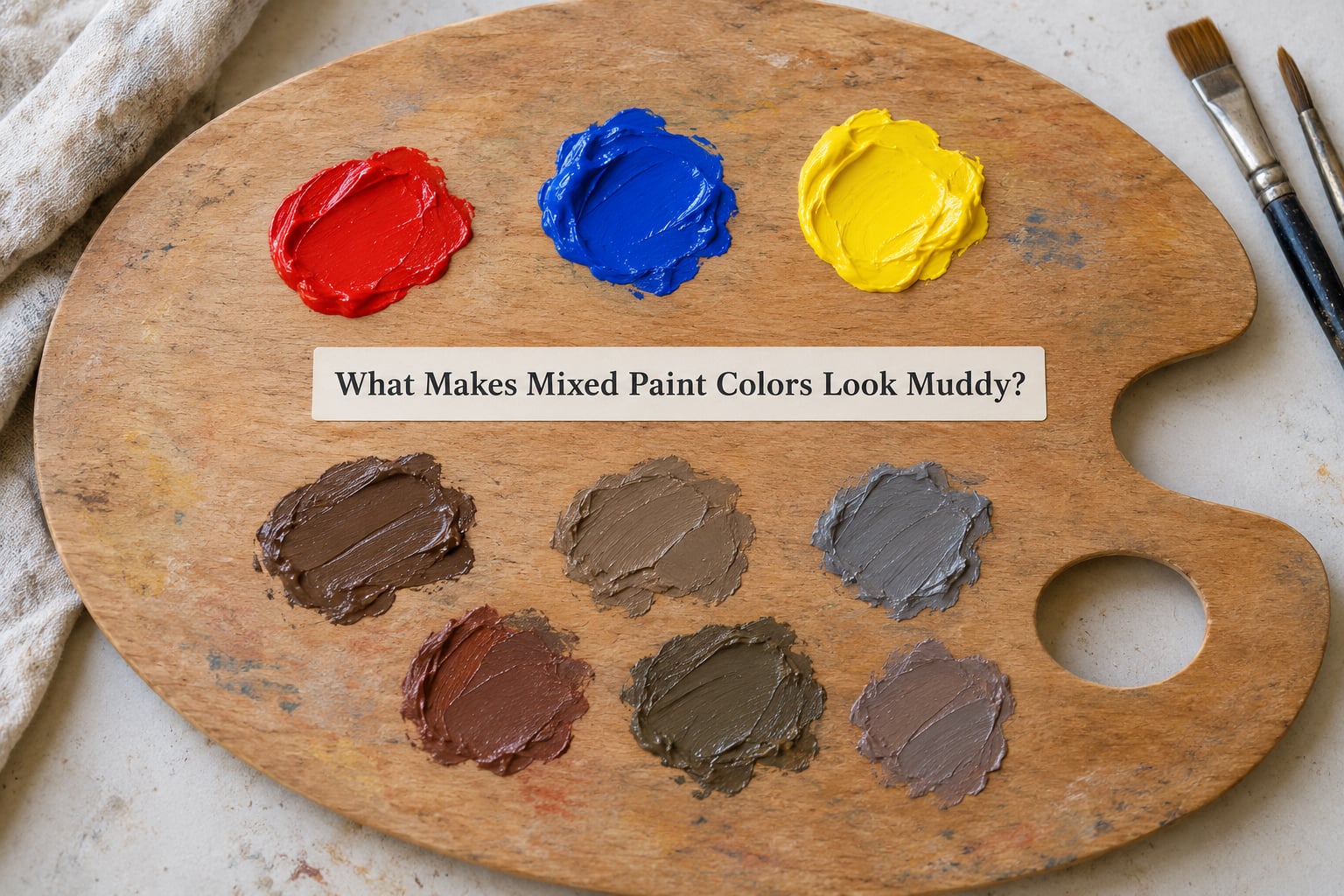
Muddy means desaturated. A muddy color is not a new color that appeared from nowhere. It is a color that has lost most of its brightness, usually with a gray or brown cast sitting on top.
Four things cause it, and they usually show up together:
- Too many colors in one puddle. Every extra color adds pigment that absorbs a little of the light the others reflect. Three colors in a heap give you less brightness than two.
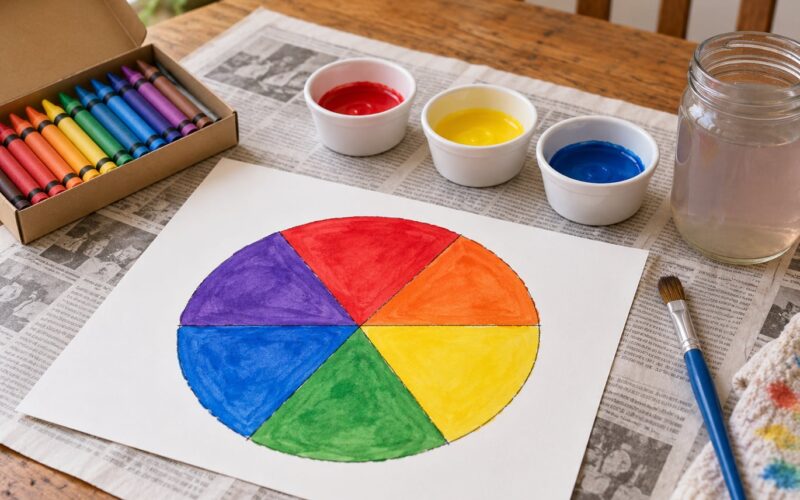
- Complementary colors touching. Red and green, blue and orange, yellow and purple sit across from each other on the color wheel. Mix a pair like that and they largely cancel each other out.
- An uneven pigment load. A tiny speck of a strong, dark color spread through a big blob of paint can tint the whole thing gray without you noticing where it came from.
- Too much water or medium. In watercolor and thin acrylic, extra water spreads the pigment out so thinly that the color has nothing to show. Pouring paint behaves the same way when the paint-to-medium ratio is off.
Red plus green is the clearest example. Children expect a brown or a dark gray, then decide the paint is broken. It isn’t. Both pigments absorb most of the same light, so what’s left to reflect back at you is very little.
How Does Color Mixing Affect the Result?
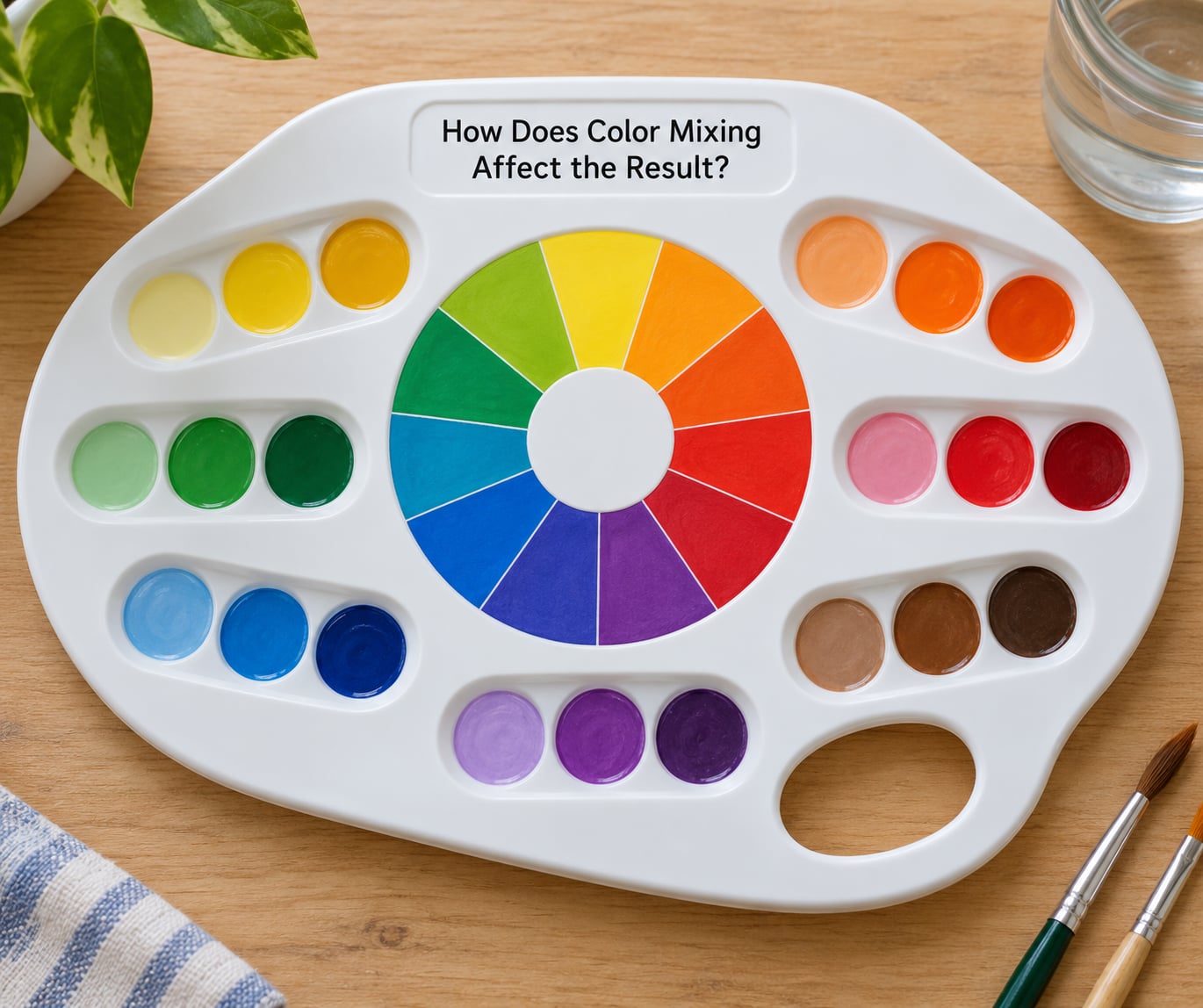
Paint mixes by subtraction. Each pigment absorbs some wavelengths of light and reflects the rest. Stack pigments and each one absorbs more of what the others were reflecting, so the color that comes back is weaker and duller.
Three words help here, and once a child knows them, diagnosis gets easy:
- Hue is the color family: red, blue, yellow.
- Value is how light or dark it is.
- Saturation is how strong the color is, also called chroma.
When a mix goes muddy, the value usually stays put and the saturation drops. That’s why the color looks dirty rather than simply dark. A dark, clean color has high saturation at low value. A muddy one has low saturation, and the two are easy to confuse at a glance.
Why Do My Mixed Paint Colors Turn Muddy?
Three things, in order of how often they cause it. First, complementary colors are mixed together, and they neutralize each other. Second, three or more colors land in the same spot because the child was trying to “use it all up.” Third, a dark or weak pigment overwhelms the mixture, either because it was too generous or because the brush still carried traces of an earlier color.
One more habit makes all three worse: reaching for white to brighten a dull mix. White is not brightness, it is only a value change. It dilutes the chroma and pulls the hue toward gray, which is exactly the dirty look the child was trying to escape.
Painters call this the two-color-plus-one rule. Pick two colors that sit near each other on the wheel, add white or black as the third, and stop. A third color is fine when its job is to shift temperature slightly, but it should never be a third opinion about brightness.
Which Color Combinations Create Muddy Results?
These are the pairs that cancel, and what to reach for instead.
| Combination | What you get | Try instead |
|---|---|---|
| Red + green | Brown or gray | Orange, for a warm result |
| Blue + orange | Dull brown | Violet, for a cool result |
| Yellow + purple | Muddy tan | Red or orange |
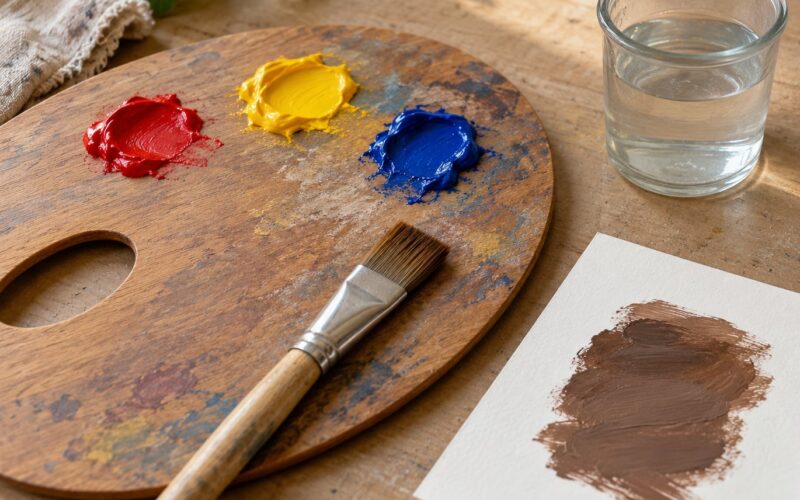
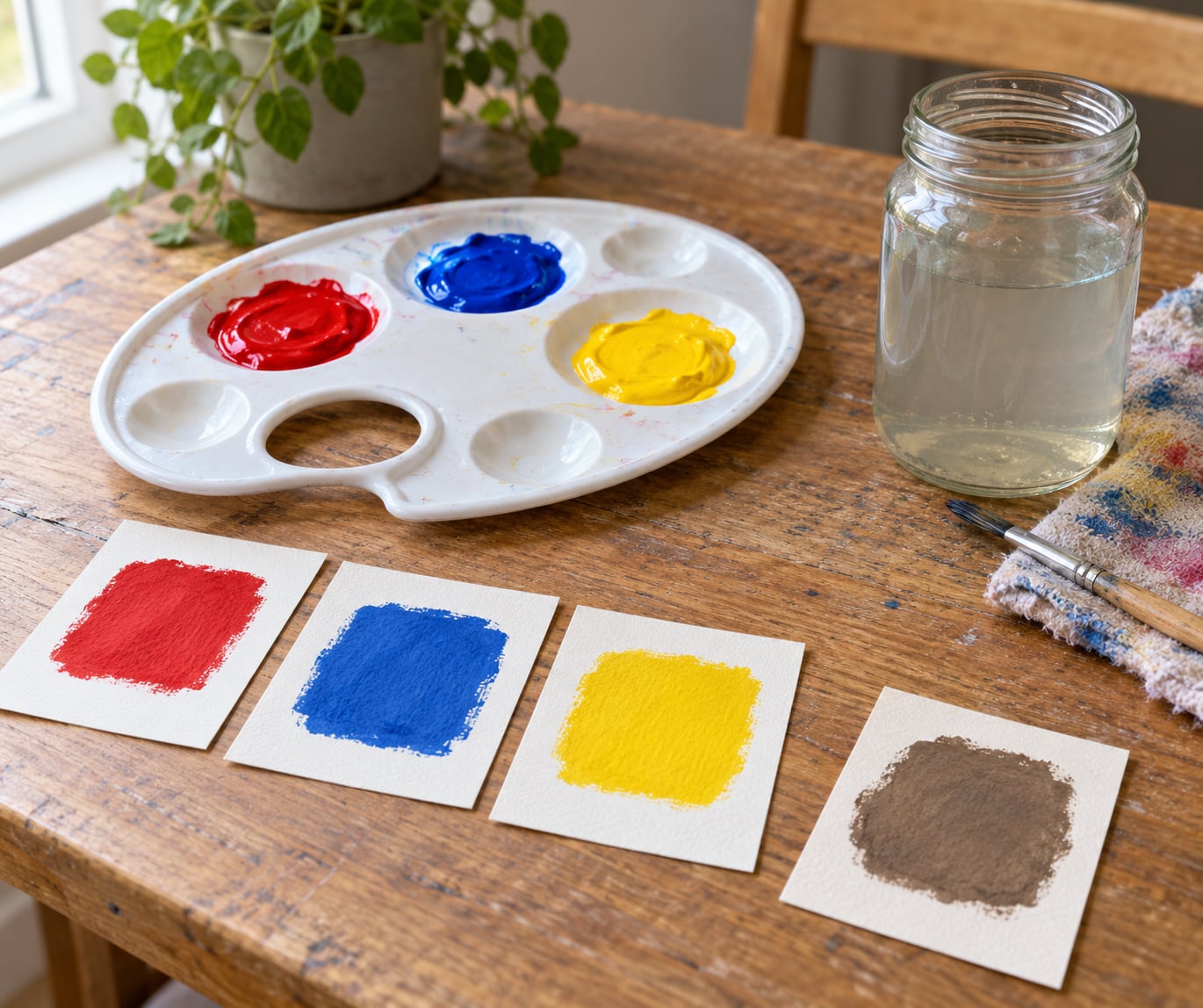
| Red + blue + yellow | Flat brown-gray | Pick two, always |
| Any color + a lot of white | Chalky and washed out | A stronger version of the same hue |
| Warm red + cool yellow | Off, dingy yellow-green | Warm red with warm yellow |
Temperature matters as much as position. A warm red and a warm yellow make a lively orange, while a cool red and a cool yellow land somewhere near olive. Both are red plus yellow, so the color wheel alone won’t explain the difference.
How Can Kids Mix Brighter Colors?
Most of the work happens before the second color touches the palette.
Start with less paint than you think you need. A pea-sized blob gives a child room to add without burying the first color.
Put down the dominant color first. If the goal is a red apple, the red goes down alone, and the second color arrives a drop at a time until it looks right. Equal parts of two colors is the fastest route to the middle of the wheel, which is where the mud lives.
Keep a clean reserve nearby. A small untouched blob of the pure color lets a child correct a mix without adding a third pigment to it.
Mix neighbors, not opposites. Blue into yellow makes a green that has somewhere to go. Blue into orange makes brown every time.
Rinse the brush between colors. A brush that carries a trace of black from the last stroke will gray down the fresh mix without any obvious second cause.
And test on a scrap of paper first. Kids will happily mix a whole new puddle to check an idea when a thumb-sized swatch would have answered the question in five seconds.
What Are the Best Fixes for Muddy Paint?
If the mix is already dull, work through this in order and stop as soon as the color looks right.
- Add more of the dominant color. A small amount of the clean hue you wanted most often brings back brightness without introducing a new hue.
- Add a drop of a neighboring hue. If the mix is a dull yellow-green, a touch of clean yellow pushes it back toward yellow instead of letting it sit in the mud.
- Adjust value, not saturation. White or black fixes a color that is too light or too dark. Neither one brings brightness back, so use them only for value.
- Add a complement on purpose, in a tiny amount. This is the one fix that sounds like the problem and isn’t. A drop of the opposite hue knocks the saturation down to a controlled level, which is deliberate muting rather than mud.
- Start over when nothing else works. If the pile has been watered down, contaminated, and loaded with four colors, no amount of adding will recover it. A fresh blob takes less time than the rescue does.
For thick oil paint, scrape the mixture flat with a palette knife before judging it. Colors that look hopeless in a mound often look fine spread thin. For thin media, glaze a clean color over the dull area instead of scrubbing into it.
If the same recipe never matches itself, paint a swatch of the mix you liked and keep it. Mixes vary with how much water or medium is in the brush, and a saved swatch is the only reliable record of what you had.
Can You Make Muddy Colors Look Good in Kids’ Art?
Yes, and this is where the frustration turns useful. Those dull mixtures are neutrals, and neutrals are most of what a painting is made of.
Bark, stone, mud, road surfaces, distant hills, tree trunks, cloud shadows, and the shaded side of a face are all gray-brown territory. Reaching for a clean bright color in those spots is what makes a painting look garish, not what makes it look finished.
The difference between mud and a deliberate muted color is control. A muted color starts as the hue you wanted and has its saturation reduced on purpose with a complement, a touch of gray, or a thin layer of warm brown. Mud arrives because colors were combined without a plan.
For children, this is worth naming out loud. A swatch of planned gray is a decision; a swatch that happened because three colors got left in the same hole is an accident. They can look almost identical, and knowing which one is which is a real skill.
Frequently Asked Questions
Why do my mixed paint colors turn muddy even when I use good paint?
Good paint is rarely the cause. Pigment quality changes how bright a color looks, but muddy results come down to how the colors were combined. Mixing more than two hues at once, or a pair that sits opposite each other on the color wheel, pulls the result toward gray and brown no matter which brand you buy. Clean brushes and a clean palette prevent most of it.
Does adding white paint fix muddy colors?
No, and it is the most common reason colors stay dull. White changes value, not brightness. Adding it thins the pigment load and drops the chroma, which is why a muddy color turns chalky and grayish rather than fresh. If a mix needs brightness, add more of the clean dominant hue. Use white only when the color is genuinely too dark.
Why does mixing red and green make brown or gray?
Red and green are complementary, meaning they sit across from each other on the color wheel and absorb nearly the same wavelengths of light. Mixed together, each pigment cancels much of what the other would reflect, so very little colored light comes back. The result reads as brown or neutral gray. To get a warm result from red, add yellow instead.
Should I throw away paint that has turned muddy?
Only if it has been contaminated or diluted past the point of use. A mix made from two or three colors can usually be rescued by adding a small amount of the dominant clean hue, a drop of a neighboring hue, or a deliberate touch of a complement to mute it. A watery, brush-contaminated puddle is not worth saving, and a fresh blob takes less time than the rescue.
How much water should children add to paint?
Enough to make the paint flow, and no more. Watercolor and thin acrylic need a puddle about the size of a coin to start, then small additions as the mix dries out. Too much water spreads pigment so thinly that the color has no strength left, which reads as muddy even when the combination itself is fine. Add a little, test on scrap paper, then add more if needed.
Is muddy paint bad for a child’s painting?
No. Muddy mixtures make excellent shadows, bark, stone, road surfaces and distant shapes, and they are often the most useful colors on the page. The thing worth teaching is the difference between a color someone planned and a color that happened because three hues landed in the same spot. Encouraging kids to use dull colors on purpose turns a frustration into a real color skill.
Conclusion
Start with two colors that sit near each other on the wheel, lay down the dominant one first, and add the second a little at a time. Keep a clean blob of the pure color within reach so a dull mix can be corrected without a third pigment, and save a swatch of any mix that works so the next batch can match it. The grays that show up along the way are useful, as long as someone chose them on purpose.