The short answer to what paper to print coloring pages on: bright white copier paper around 75–100 gsm for crayons and colored pencils, about 120 gsm if markers are involved, and 147 gsm or 200 gsm stock only for alcohol markers, paint, or pages you want to keep. The medium you color with decides the sheet, not the printer.
I have three kids and a stack of half-finished printouts on the table as I write this. The pages that survived a full coloring session were not the expensive ones — they were the ones printed on something a little heavier than what came out of the tray by default.
Table of Contents
- 1What Paper to Print Coloring Pages On?
- 2Which Coloring Medium Changes the Paper Choice?
- 3What Paper to Print Coloring Pages on for Marker Coloring
- 4How Do Paper Weight, Coating, and Brightness Affect Results?
- 5Which Paper Is Best for Crayons, Pencils, Markers, and Paint?
- 6What Paper Is Best for Inkjet, Laser, and School Printers?
- 7How Do You Choose Paper for Home, Classroom, or Reuse?
- 8How Do You Set the Printer for the Best Coloring Page?
- 9Which Paper Problems Should You Avoid?
- 10Frequently Asked Questions
- 11Can I use regular printer paper to print coloring pages?
- 12Should I use 80 gsm or 120 gsm paper for coloring pages?
- 13What paper is best for inkjet and laser printers?
- 14Can I print coloring pages double-sided to save paper?
- 15Is thin paper bad for coloring with crayons and markers?
- 16Can I print coloring pages on tracing paper or reusable plastic sheets?
- 17Conclusion: Start with Standard White Copier Paper
What Paper to Print Coloring Pages On?
Plain white copier paper is the right starting choice for crayons, colored pencils and gel pens, and it is what most homes already have. Anything wetter or sharper — felt-tip markers, watercolor, tempera, oil pastels — wants a heavier sheet that resists ink soaking through to the back.
Here is the whole picture in one table. When someone asks what paper to print coloring pages on, this is the answer set. Weights are given in both pounds and grams because paper packs in North America use pounds and most of the rest of the world uses gsm.
| Paper type | Weight | Best for | Durability | Printer fit | Cost tier |
|---|---|---|---|---|---|
| Standard copier paper | 20 lb / 75 gsm | Crayons, light coloring | Low, tears easily | Any printer | Low |
| Bright white premium printer paper | 24–32 lb / 90–120 gsm | Crayons, pencils, school markers | Medium | Any printer | Low |
| Drawing or sketch paper | 80–110 lb / 150–200 gsm | Colored pencil layering | High | Rear feed preferred | Medium |
| Cardstock, smooth or vellum | 65–100 lb / 147–270 gsm | Alcohol markers, tempera, paint | High | Rear feed, one at a time | Medium to higher |
| Watercolor paper | 200–300 gsm | Water brushes, watercolor pencils | Very high | Wide format only | Higher |
| Reusable plastic sheets | Not applicable | Dry erase, repeated use | Reusable | Laser friendly, no inkjet | Medium, pays back fast |
The single question I get asked most often is whether thin paper is simply bad. It is not bad, it is just a different tool — and it is the right tool for a four-year-old with a crayon and the wrong tool the day that same child grabs a marker.
Which Coloring Medium Changes the Paper Choice?
Every medium puts stress on the sheet in a different way, so the paper that survives crayons can fall apart under markers.
Crayons need grip and a little toughness. Wax sits on top of the surface and mostly stays there, but a young child pressing hard on 20 lb paper will crease and eventually tear through it. Anything from 24 lb up solves that, and toothier paper gives the wax something to hold.
Colored pencils want tooth. The pigment is dry and needs a rough surface to catch and hold, which is why layered shading looks richer on drawing paper than on a slick office sheet. Very smooth paper is not automatically better here.
Felt-tip and water-based markers are the real test, because the ink is water plus dye and it moves through unsized fibre. Thin paper bleeds to the back in seconds. Heavier paper slows it down, and a smoother surface keeps the tip from catching and fraying.
Gel pens and fineliners use a small amount of quick-drying ink, so almost any paper works. Smooth 24–32 lb stock gives the crispest lines and lets the pen glide instead of skipping.
Watercolor pencils and water brushes put actual water on the page. Standard paper buckles and pills. Watercolor paper at 200 gsm or heavier is built for this and is about the only sensible choice.
Tempera, poster paint and finger paint soak deep and stay wet long enough to wrinkle most thin sheets. Heavy cardstock absorbs the mess and wipes clean.
What Paper to Print Coloring Pages on for Marker Coloring
Marker coloring is where paper choice matters most, because a bleed-through stain is permanent. Start at 120 gsm bright white paper, which handles water-based school markers without soaking through in normal use.
Before you print forty pages, color one corner of a single sheet with the darkest marker you have. Let it sit for a minute. If the ink has traveled through, move up a weight tier rather than repeating the mistake.
A simple trick from coloring forums that costs nothing: slide a spare sheet of heavier paper behind the page you are working on. A laminated sheet behind the page works the same way and additionally stops indentations pressing into the artwork underneath.
Heavier paper is not free, in two senses. Your printer lays down more ink on a textured surface, and a toothy sheet drinks marker fluid faster, which is why colorists report their markers drying out sooner on rough paper than on smooth.
If you want the crispest marker work rather than the cheapest, blending card and marker pad papers are purpose-made for it. Marker pad stock around 120 lb is heavy for home printers, so check your manual before filling the tray.
How Do Paper Weight, Coating, and Brightness Affect Results?
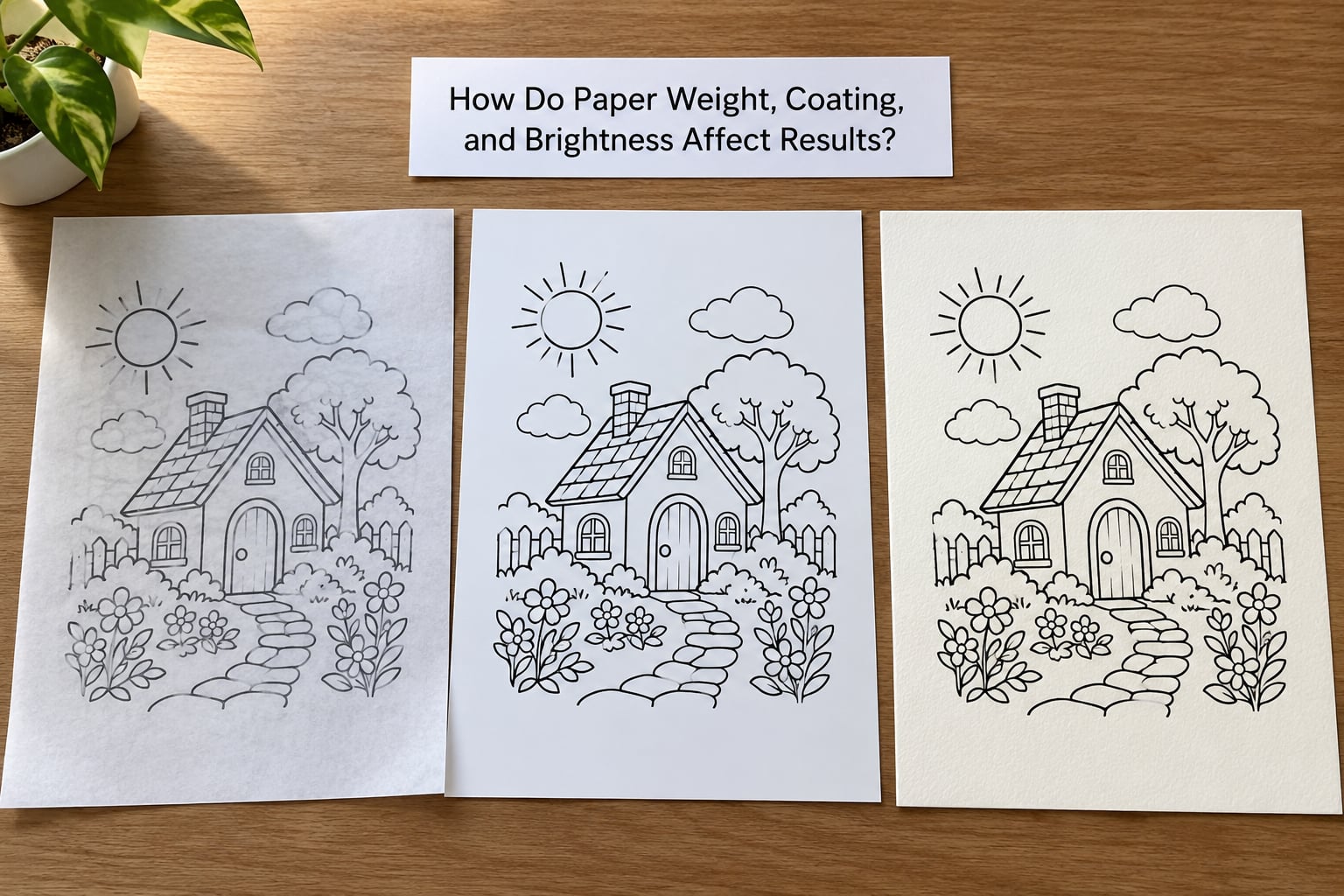
Paper weight is the first number people get wrong, because the pound rating depends on the sheet size it was measured against. A pound rating means the weight of 500 sheets of one specific base size, so the same number describes different thicknesses depending on whether the sheet is letter or tabloid.
Grams per square meter, written gsm or g/m², avoids the trap completely because it measures the actual material. When you are comparing two packs and one only lists pounds, gsm is the number you want.
| What it is called | Pounds | Approximate gsm | In practice |
|---|---|---|---|
| Copy paper | 20 lb | 75 gsm | Floppy, tears under pressure |
| Premium printer paper | 24 lb | 90 gsm | Fine for crayons |
| Bright white premium | 32 lb | 120 gsm | The all-around pick |
| Light cardstock | 65–67 lb | 147 gsm | Holds markers, pencils love it |
| Cover cardstock | 100–110 lb | 200–270 gsm | Paint and alcohol markers |
| Watercolor paper | Not usually listed | 200–300 gsm | Wet media only |
Thickness is only one property. Brightness tells you how white the base fibre is, and a whiter sheet makes colored pencil layers look brighter and more even. Opacity, how much you can see through the sheet, matters when you color on both sides.
Coating and surface finish change everything about how a tool behaves. Glossy and photo paper are coated to hold inkjet dots in place, which makes lines look sharp but gives felt-tips almost nowhere to grip. Matte coated paper looks closer to plain paper and colors more evenly.
Vellum Bristol has a soft tooth and absorbs more ink. Smooth Bristol takes a pencil point and gives detail, but a hard HB pencil will not leave much of a mark on it. That is the paper quality being too thick trap, and it runs the other way from what most people expect.
For pages you plan to frame or keep, look for acid-free paper. Standard copier paper yellows over a few years, and kids do keep the pages they make.
Which Paper Is Best for Crayons, Pencils, Markers, and Paint?
Named options help, so here is what each family actually is and when it earns its place.
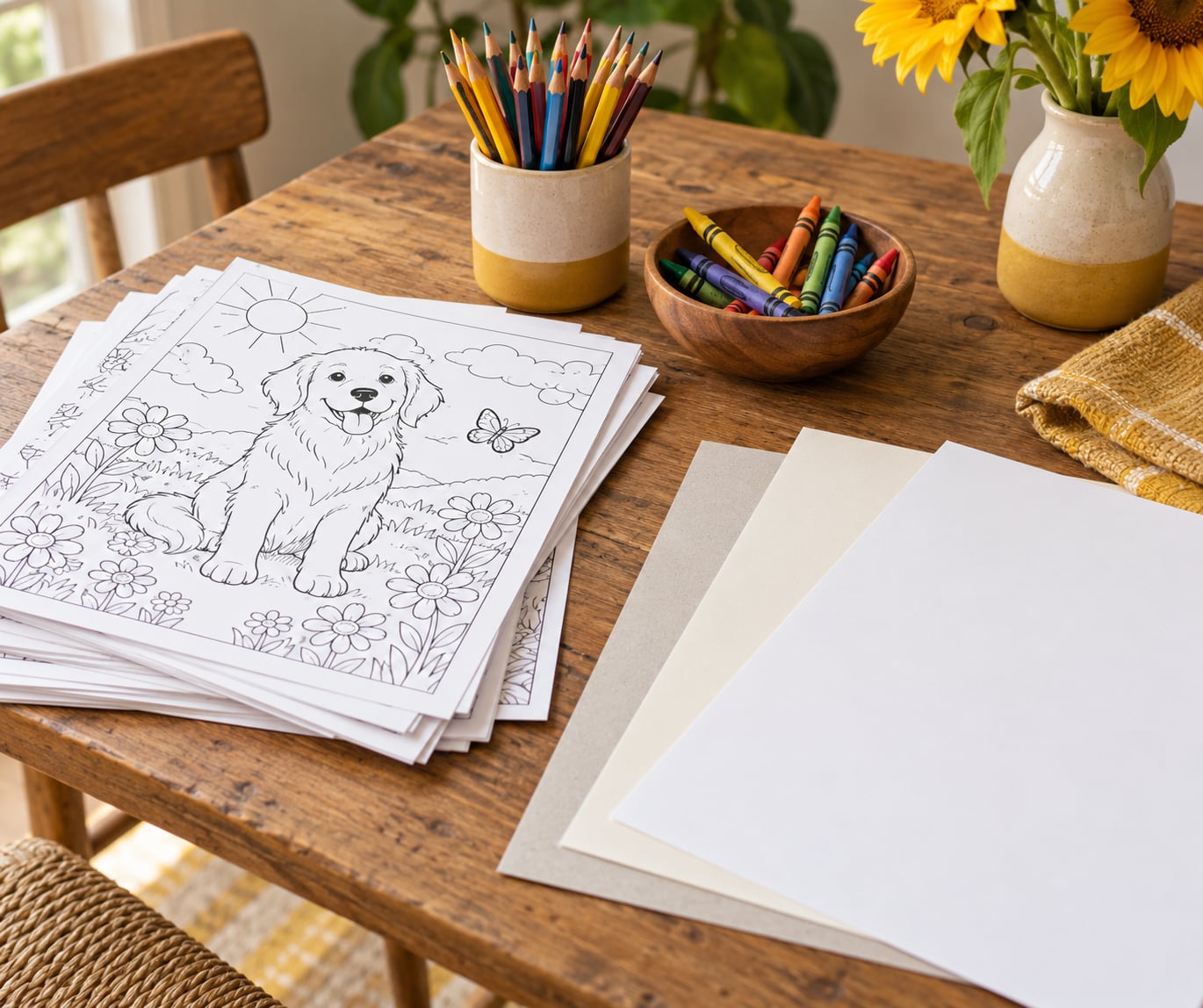
32 lb bright white premium printer paper, about 120 gsm is the sensible default for a home. It feeds through any printer, takes crayon and colored pencil without tearing, and stops most school markers.
Colored pencil paper such as the Strathmore 400 series, a multi-ply drawing sheet made to hold dry pigment, is the difference between flat scribbled color and smooth layered shading.
Cardstock Bristol vellum at 67 lb and 147 gsm is the most commonly recommended step up for markers and colored pencils. It handles both, prints on most home printers, and is the paper adult colorers mention most often as their everyday choice.
Smooth Bristol at 100 lb suits gel pens, fineliners and very fine detail work, and it is too hard for a soft pencil. Vellum at the same weight suits pencils better and bleeds a little more with markers.
Blending card and marker pad paper are engineered for alcohol markers. They take dense color without feathering into the fibre, and they are usually the heaviest thing you will try to run through a home printer.
Watercolor paper in hot press or cold press is the right home for watercolor pencils and water brushes. Hot press is smoother and takes inkjet ink cleanly; cold press has more tooth and holds washes better.
Reusable plastic sheets are worth considering for dry erase and for a toddler who will color the same image forty times. They wipe clean, and most inkjet printers will not touch them, so check before printing.
What Paper Is Best for Inkjet, Laser, and School Printers?
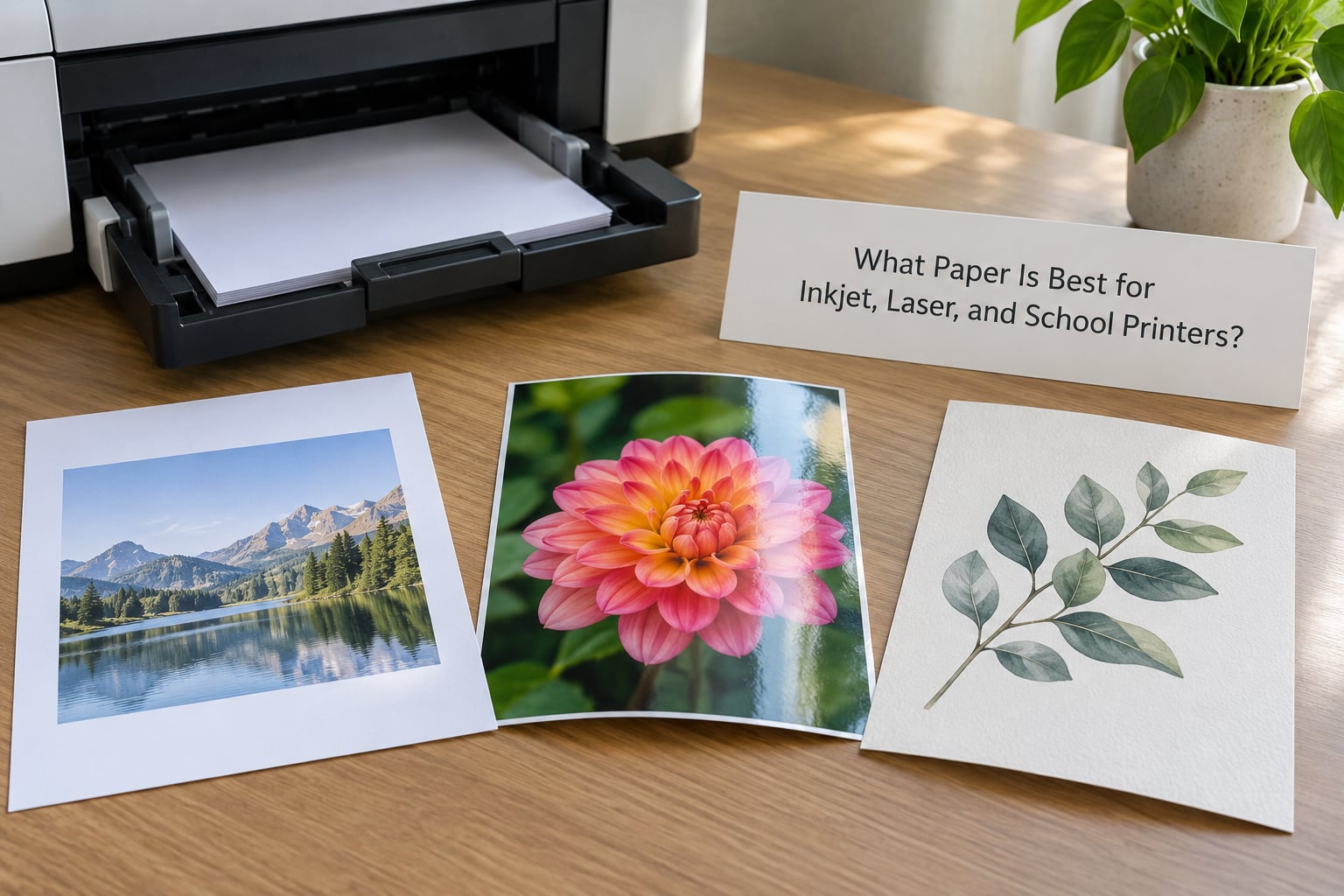
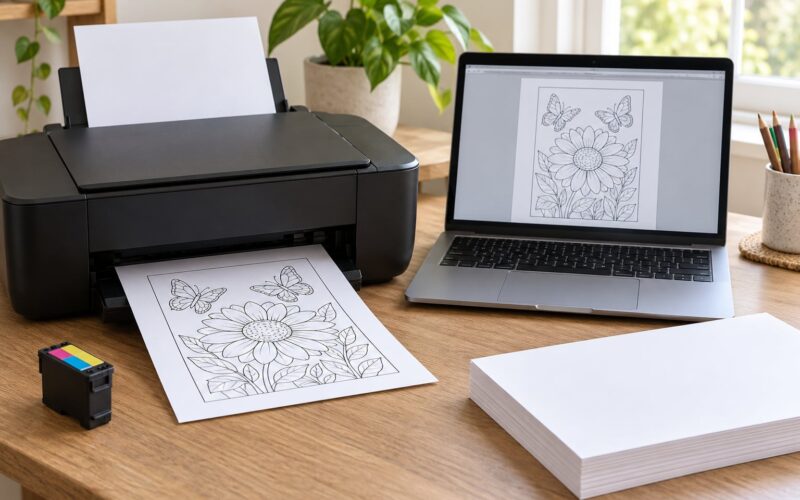
Plenty of good paper choices fail simply because the printer could not feed them. Most home printers have a bottom cassette that handles up to about 120 gsm and a rear or manual feed slot that takes thicker sheets one at a time.
Check your printer manual for two things: the maximum paper weight it accepts, and whether a manual feed slot exists. If you see a small hinged flap at the back of the printer, that is usually the rear feed.
Inkjet printers lay down liquid ink that soaks into the surface, so they favor matte or uncoated sheets. Laser and laser-based school copiers fuse toner with heat, which tolerates glossy and coated paper that an inkjet would smear or leave dull.
A few habits prevent most jams. Keep the paper square to the tray edges, do not cut a larger sheet down to fit, and print heavy stock one sheet at a time through the rear feed. If the machine offers a plain paper or heavy paper setting, use it.
Curled edges and misfeeds are usually a moisture problem. Store paper flat, not leaning against a wall, and keep it away from damp cupboards and warm windowsills.
How Do You Choose Paper for Home, Classroom, or Reuse?
Think about volume first. A handful of weekend pages do not justify a trip to an office supply store, but a classroom set of sixty changes the math quickly because cost per sheet matters more than any quality difference at that scale.
Younger children usually color with crayons and paint, so spend on the heavier cardstock that survives tears and wipes. Older children layering colored pencils benefit most from toothy drawing paper rather than extra weight.
For reuse, laminated sheets or plastic dry erase sheets win on volume because a single sheet can be colored dozens of times. For storage, acid-free paper keeps finished pages from yellowing in a folder over a year or more.
If you have no printer at home, an office supply store or neighborhood print shop can print a run on whatever stock you buy there, which is often cheaper than buying a full ream to use a hundred sheets.
Recycled and post-consumer papers are now widely available in standard weights and work fine for crayons and pencils. Check the brightness, since heavily recycled sheets are often a shade warmer.
How Do You Set the Printer for the Best Coloring Page?
Menu names differ between manufacturers, but the settings themselves do not. Set the paper type to match what you loaded, and set the paper weight one step up if you chose something heavier than ordinary copy paper.
Use portrait orientation and scale at actual size rather than fit to page, so nothing gets cropped when you print. Choose the highest print quality setting, since fine lines matter more than speed on a page that is going to be colored.
Turn double-sided printing off whenever markers are involved. A bleed stain on the back of a page ruins both sides, and single-sided printing doubles as a free set of spare sheets.
Preview for margins before a long run, then print a single test page and color it with the medium you plan to use. Ten seconds of testing has saved me more ruined printouts than any printer setting ever did.
Which Paper Problems Should You Avoid?
Most disappointing coloring pages are a paper problem wearing a disguise.
Bleed-through means ink reached the back of the sheet. Print single-sided, move up a weight tier, or put a spare sheet behind the page while coloring.
Crayon tearing happens on thin sheets pressed hard. Use 24 lb or heavier, or a heavier cardstock if the coloring is enthusiastic rather than careful.
Smearing on inkjet usually means glossy or coated paper, which an inkjet cannot dry properly. Switch to matte or plain.
Dull lines come from textured art paper under inkjet ink. If you want crisp outlines, use smooth or bright white printer paper instead.
Jams and misfeeds mean the paper is too heavy for the cassette. Feed it one sheet at a time through the rear slot, or drop back to a lighter weight.
Curled edges are humidity. Store the paper flat and let printed sheets sit for a minute before handling them.
Markers dying quickly is usually rough, uncoated art paper drinking ink. Smooth coated or vellum surfaces keep more fluid in the nib.
One more worth knowing: grayscale coloring pages printed with color ink set can look muddy and inconsistent. If your printer offers a true grayscale option, use it for adult coloring pages and colored pencil work.
Frequently Asked Questions
Can I use regular printer paper to print coloring pages?
Yes, for crayons, colored pencils and gel pens it works fine. Standard 20 lb paper is thin enough to tear under firm crayon pressure and it lets water-based marker ink soak to the back, so upgrade to 24 lb or 32 lb bright white if markers or a young child are involved. Most homes already have the right paper in the drawer.
Should I use 80 gsm or 120 gsm paper for coloring pages?
Use 120 gsm if markers are involved, because that weight slows ink soak-through and still feeds through every home printer and school copier. Around 80 gsm, close to 20 lb copy paper, is fine for crayons and light coloring but tears more easily. For most homes that settles what paper to print coloring pages on without a trial run.
What paper is best for inkjet and laser printers?
Inkjet printers print best on matte or uncoated bright white paper, because liquid ink needs an absorbent surface to dry into. Laser printers and most school copiers run hotter and handle glossy, coated and heavier stock far better, since toner is fused rather than soaked. Set the paper type on the printer to match what you loaded.
Can I print coloring pages double-sided to save paper?
You can, but only for crayons, colored pencils and gel pens. Water-based and alcohol markers bleed through thin sheets, and a stain on the back ruins the second page too. Print single-sided whenever markers are on the table, and use the saved backs as spare sheets behind your work to stop bleed-through.
Is thin paper bad for coloring with crayons and markers?
Thin paper is not bad, it is just unsuited to the tool. Crayons sit mostly on the surface, so 20 lb paper works until a child presses hard and tears it. Marker ink travels through unsized fibre, which is where thin paper really fails. A 120 gsm sheet fixes almost every problem you will hit at home.
Can I print coloring pages on tracing paper or reusable plastic sheets?
Tracing paper works for light-tracing crafts but shows ink weakly and markers bleed straight through it, so it is poor for coloring. Reusable plastic sheets are better for repeated dry erase use and wipe clean, but inkjet printers usually cannot print on them while laser printers can. Check your printer type before buying a pack.
Conclusion: Start with Standard White Copier Paper
Begin with bright white copier paper around 75 to 100 gsm. It handles crayons and colored pencils, runs through any printer, and costs almost nothing to waste when a three-year-old decides the page was wrong.
Move up to about 120 gsm the moment markers enter the picture, to drawing paper with a real tooth when colored pencil layers matter, and to 147 gsm or heavier cardstock for alcohol markers, tempera and paint. Glossy and coated sheets are for inkjet sharpness, and watercolor paper is only for water.
Then do the one thing most guides skip: print a single page, color it with the actual medium your child will use, and check the back before you commit to a stack of forty.