To get crayon off the wall, start with warm water and a little dish soap, then move to a baking soda paste for marks that stay. Crayon is wax, so a damp cloth alone will only smear it. Every method below takes a few minutes, costs almost nothing, and is safe for painted walls as long as you test a hidden spot first.
Last updated: October 2026.
Crayon ends up on walls for a reason. A toddler finds a bare stretch of drywall by the sofa, colours in a circle with a fat crayon, and walks off. The color itself is pigment, but the binder holding it to the wall is wax, and wax does not dissolve in water. That single fact explains why the popular “just wipe it with a wet cloth” advice so often fails.
Start low and work up. Gentle heat and soap come first, mild abrasives next, and paint stripping chemicals last, because each step down the list costs more paint than the one before it.
Table of Contents
- 1What You Need
- 2Step-by-Step: How to Get Crayon Off the Wall
- 3Method 1: Scrape the Wax Carefully
- 4Method 2: Use Warm Water and Mild Dish Soap
- 5Method 3: Make a Baking Soda Paste
- 6Method 4: Dab with a Small Amount of Oil
- 7Method 5: Try the Wall-Surface Method
- 8Common Mistakes
- 9Scrubbing too hard
- 10Using very hot water
- 11Applying oil over a large area
- 12Testing products after the damage happens
- 13Using sharp metal tools
- 14Frequently Asked Questions
- 15What is the safest way to get crayon off a painted wall?
- 16Will warm water remove crayon without damaging paint?
- 17Can baking soda remove crayon marks from a wall?
- 18How do I get crayon residue off after scraping?
- 19What should I do if the wall is textured or the mark will not come off?
What You Need
The supplies are ordinary, and you probably already have most of them:
- A soft microfiber cloth or cotton rag
- A small bowl and a spoon for mixing paste
- Warm water and mild dish soap
- Baking soda
- A plastic scraper or an old credit card
- A soft-bristled toothbrush for tight corners and texture lines
- A small amount of food-grade oil, such as vegetable or mineral oil
- Optional: a melamine sponge, and a cleaner the paint or wallpaper manufacturer recommends for that surface
Which method you pick depends mostly on the wall finish. Flat or matte paint is porous and holds wax deep in the surface, so it needs more time and gentler pressure. Eggshell and satin wipe cleaner, and semi-gloss lets almost nothing stick in the first place. Glossy and semi-gloss surfaces can take slightly more scrubbing, but they also show scuffs more readily, so keep the pressure light.
Whatever the finish, find a spot behind furniture or in a closet and try your method there first. It takes an extra minute and it tells you whether the paint will chalk or lose its sheen.
Step-by-Step: How to Get Crayon Off the Wall
Method 1: Scrape the Wax Carefully
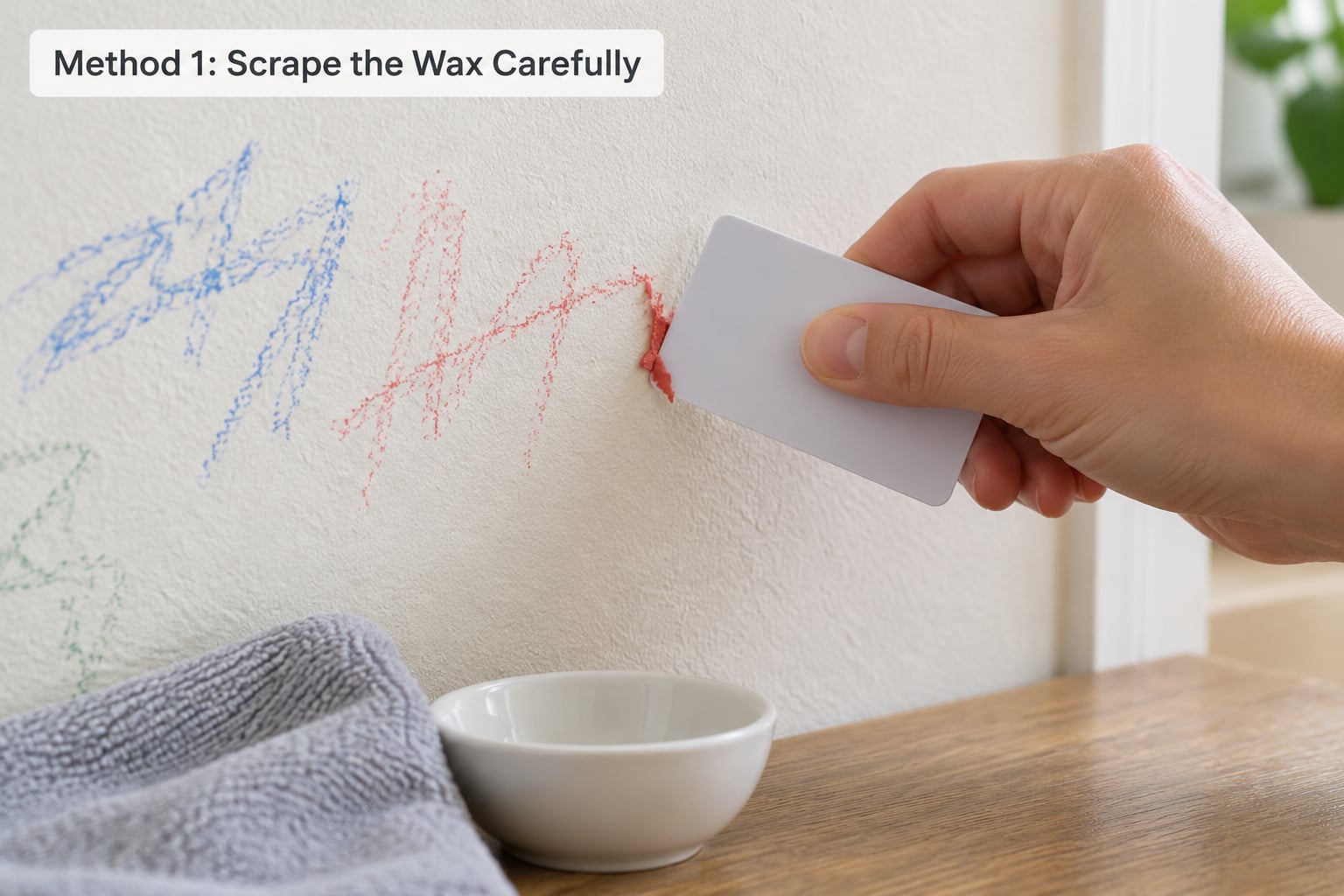
Thick, hardened strokes can often be lifted before anything is applied to the wall at all. Hold a plastic scraper or an old credit card at a shallow angle, almost flat to the wall, and push it slowly under the edge of the wax.
Work in short strokes from the outside of the mark toward the middle, and keep lifting pieces off as you go. If the scraper starts to catch the paint, stop immediately and change to a cleaning method. Metal tools, knives, and razors leave scratch marks in latex paint that you will notice later under raking light.
This is the fastest method for a single heavy line drawn with a new crayon. It is also the one that can hurt you most if you rush, so patience matters more than pressure.
Method 2: Use Warm Water and Mild Dish Soap
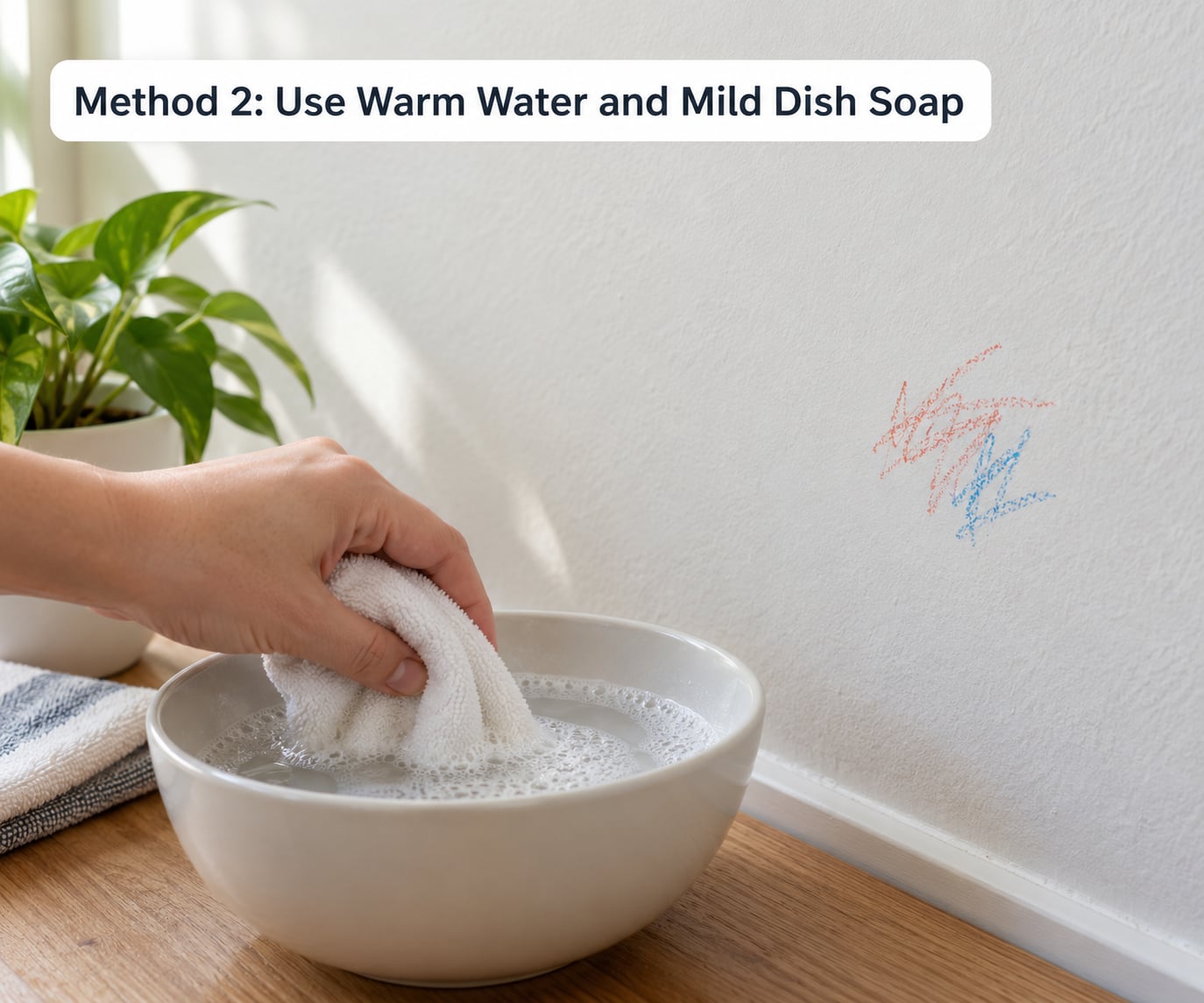
Mix a drop or two of mild dish soap into a bowl of water that feels warm rather than hot. Dip a soft cloth in, wring it out so it is damp rather than dripping, and press it against the mark for a few seconds to let the soap work.
Then wipe in small circles rather than long strokes, and check the cloth often. Wax smears at first and lifts in patches, and you want the cloth to pick the wax up instead of pushing it around. Repeat the damp-and-wipe cycle several times, finishing with a clean damp cloth to remove the soap film.
On glossy paint this alone often does the job. On flat paint expect it to loosen the surface wax and leave a faint shadow you will deal with in the next step.
Method 3: Make a Baking Soda Paste
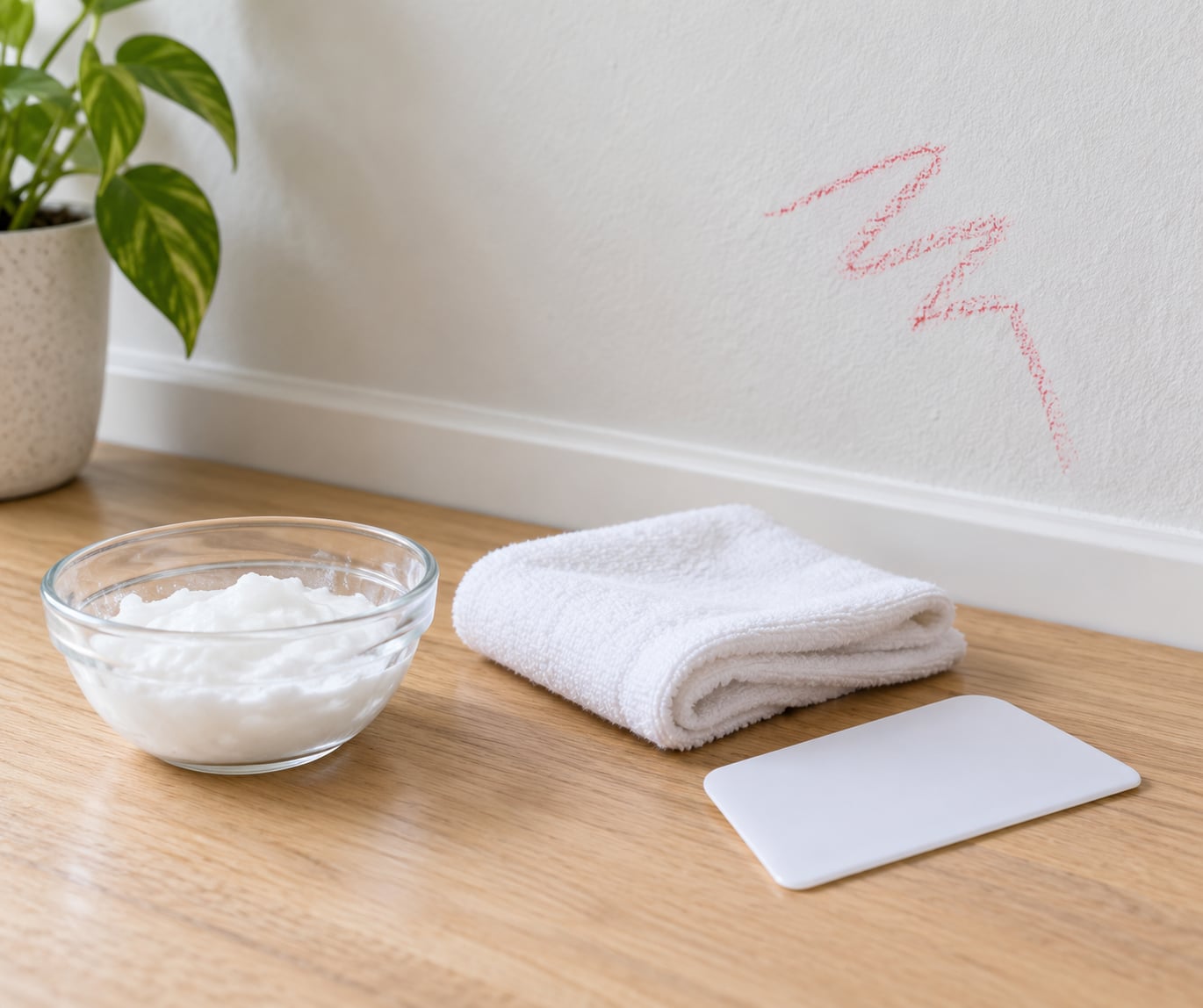
Stir baking soda with just enough water to make a thick paste you can hold on the spoon, similar to wet cement. Baking soda is a very fine, very mild abrasive, so it lifts wax mechanically without the harshness of a scouring pad.
Dab the paste onto the mark with a fingertip or a damp cloth, leave it for 30 seconds so it has time to break the wax down, then rub in small circles. Wipe with a clean damp cloth and look at the wall before you repeat. On flat or eggshell paint, this usually takes two or three passes and about ten minutes of scrubbing.
Two things to avoid: a thin, watery mix that runs down the wall, and any baking soda paste that has been sitting long enough to dry out and crust. Mix a fresh batch for each small area.
Method 4: Dab with a Small Amount of Oil
Oil loosens stubborn wax that water has already softened and is the method to reach for when a mark has survived soapy water and a baking soda paste. Put a few drops of food-grade oil on a cotton pad, not on the wall, and dab the mark lightly.
Let it sit for a minute, then wipe with a paper towel or old rag. The wax lifts as a soft, greasy film. The essential follow-up is a second cleaning with warm soapy water and a clean cloth, because oil left behind will hold dust and can stain the new paint if you repaint over it.
Keep the area small. Oil soaking into flat paint leaves a patch that is slightly different in color for a while, so work a section at a time rather than treating the whole wall.
Method 5: Try the Wall-Surface Method
If the mark is still there after the gentler methods, read the label on a cleaner the paint or wallpaper manufacturer recommends for that surface, and confirm it is safe for painted walls. A melamine sponge, sold as a Magic Eraser type product, is a common last step; dampen it, squeeze out the excess, and rub with light pressure.
Melamine sponges work by micro-abrasion, which is why they are effective and why they can strip a thin layer of flat paint if you lean on them. Test on the hidden spot, and stop as soon as the wax color disappears from your cloth.
Avoid bleach, ammonia-based glass cleaner, oven cleaner, and any pad labelled for non-stick surfaces. On wallpaper, check whether it is vinyl or paper and treat the paper kind gently, since moisture lifts the paper and wrinkles the wall.
Common Mistakes
Scrubbing too hard
Pressure does not remove wax faster, it just removes paint. Use a soft cloth, a soft-bristled toothbrush in textured lines, and more time instead of more force. If the paint starts to feel warm or slightly furry under your hand, you are stripping it.
Using very hot water
Hot water can soften a latex or eggshell finish and make it take a permanent dent. Warm, not steaming, is the right temperature for every method here.
Applying oil over a large area
Oil works on a spot. Spread over half a wall, it soaks into flat paint and leaves an uneven patch that takes weeks to even out. Use cotton pads, small amounts, and one section at a time.
Testing products after the damage happens
Always test in an inconspicuous spot first, the same way you test a paint colour. If a test spot dulls, stop and use a gentler method for the whole mark.
Using sharp metal tools
Knives, razors, and steel wool cut or abrade the paint long before the wax lifts. A plastic card does the same job without the risk, and steel wool belongs nowhere near painted drywall.
If the paint is already scuffed, feather the edge of the bare spot with a fine sanding sponge, wipe the dust off with a damp cloth, and touch it up with a small brush of matching paint. Repaint the whole wall only when several spots need work.
For the next round, put washable crayons in a basket on a high shelf, mount a roll of paper on a low wall or clip a sheet to an art table, or cover the surface below the artwork line with a clear plastic sheet protector. A designated art spot takes the guesswork out of it.
Frequently Asked Questions
What is the safest way to get crayon off a painted wall?
Start with the least aggressive option that could work: a plastic card to lift thick wax, then warm water with a drop of dish soap and a soft cloth. Baking soda paste comes next. Save melamine sponges and oil-based cleaners for marks that survive the gentle methods, and always test in a hidden spot before you treat the whole mark.
Will warm water remove crayon without damaging paint?
Warm water alone is unlikely to lift wax, because wax is water-resistant, but warm soapy water is safe on painted walls when you use lukewarm rather than hot water and a soft cloth. Soap needs a minute of dwell time to work. On flat paint expect it to remove surface wax and leave a faint shadow you can treat with baking soda paste.
Can baking soda remove crayon marks from a wall?
Yes, on most painted drywall. Baking soda is a very mild abrasive, so a thick paste applied to the mark and worked in small circles will lift wax without the harshness of a scouring pad. Give it about 30 seconds before scrubbing, use a fresh batch rather than a watery mix, and expect two or three passes on flat or eggshell paint.
How do I get crayon residue off after scraping?
After lifting the wax, wipe the area with a cloth dampened with warm soapy water to pick up what is left, then follow with a clean damp cloth to remove the soap film. If a waxy shadow remains, work a small amount of oil into it, wait a minute, and wipe, then clean the area with soap and water so no greasy film is left on the paint.
What should I do if the wall is textured or the mark will not come off?
On a textured wall, work the paste into the bumps with a soft-bristled toothbrush instead of a flat cloth, and expect to spend closer to ten minutes. If the mark survives soapy water, baking soda paste and careful scrubbing, stop escalating. Cover it with an art display, touch up the paint if it is scuffed, or repaint that section rather than risk the whole wall.
The first thing to do is lift any thick wax with a plastic card, then work warm soapy water into what is left with a soft cloth. Give the wall a second round with baking soda paste before you reach for anything stronger. Most marks go in those two passes, and the paint stays exactly as it was.