Why does school glue not stick to plastic? Because the glue never really bonds to it. School glue is a water-based PVA adhesive, and most plastics, especially polyethylene and polypropylene, are non-polar with very low surface energy, so the glue beads up instead of spreading into a thin film. It sits on the surface and dries there, then peels away the first time the piece gets handled. The good news: a couple of minutes of surface preparation makes it work on most craft plastic, and the rest just means picking the right glue family for the plastic you actually have.
I ran into this every year in my house with plastic bottle crafts. The fix that stuck for me was slow and boring: wash, scuff lightly, wipe, then glue. Here’s what is actually going on chemically, and what to do about it.
Table of Contents
- 1Why Does School Glue Not Stick to Plastic?
- 2Which Types of Plastic Are Hardest to Glue?
- 3How to Make School Glue Stick to Plastic
- 4What Makes Plastic a Difficult Surface for Glue?
- 5Can You Glue Plastic with White School Glue?
- 6Which Adhesive Works Best for Plastic?
- 7How to Prepare Plastic Before Gluing
- 8How to Glue Plastic Without Making a Mess
- 9Troubleshooting a Weak Plastic Bond
- 10Safety Tips for Children’s Plastic Crafts
- 11Frequently Asked Questions
- 12Why does school glue not stick to plastic?
- 13Should I sand plastic before gluing it?
- 14What is the best glue for plastic toys?
- 15How long does glue need to dry on plastic?
- 16What can I use instead of strong glue for a child’s craft?
- 17What to Do First
Why Does School Glue Not Stick to Plastic?
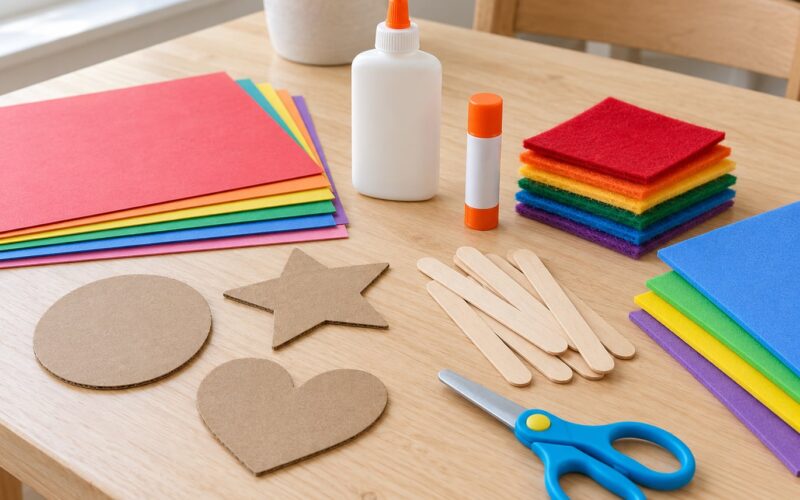
White school glue, or PVA, is a polar adhesive carried in water. It bonds to things with lots of polar groups and texture, which is why it grips paper, cardboard, wood and fabric so well. Many plastics are the opposite: long chains of carbon and hydrogen with almost no polar sites, packed tightly together.
An adhesive only grips when it spreads across a surface and makes molecule-to-molecule contact. On low-energy plastic the PVA liquid keeps its droplet shape instead of flattening, exactly like water on a waxed car. It bridges a gap between parts, it never gets close enough to hold, and it slides off when you pick the piece up.
So when you are stuck on why does school glue not stick to plastic, the answer comes down to two things: which plastic it is, and what is sitting on its surface. More glue, more pressure and longer drying time will not fix either one.
Which Types of Plastic Are Hardest to Glue?
The hardest ones are the polyolefins, which is the family name for polyethylene (PE) and polypropylene (PP). Those are your milk jugs, juice bottles, detergent bottles, yogurt tubs, takeaway containers and most drinking straws. PTFE (Teflon) and silicone are the extreme cases: nothing ordinary sticks to them.
Surface texture matters as much as resin type. Molded plastic comes out of the tool smooth, so the glue has nothing to grab. New items may also carry a mold release agent, a thin oily film left behind so the plastic would come out of the mold at all. Fingerprints and handling dust do the same job in smaller amounts.
| Plastic | Resin code | Does school glue stick? | What to use instead |
|---|---|---|---|
| Polyethylene (HDPE) | #2 | No | Polyolefin primer plus acrylic adhesive, or hot-melt plastic welding |
| Low-density polyethylene (LDPE) | #4 | No | Same as HDPE; a mechanical fastener or tape often works better |
| Polypropylene (PP) | #5 | No | Polyolefin primer, cyanoacrylate with primer, or a solvent-welded joint |
| Polyethylene terephthalate (PET) | #1 | Poorly, unless scored or treated | Plastic cement or an epoxy formulated for plastics |
| PVC rigid | #3 | Usually yes | White glue for light joints, PVC cement for a permanent one |
| Polystyrene (PS) | #6 | Yes | White glue works well |
| Acrylic / Perspex | #7 (other) | Yes | White glue is fine, acrylic cement for clean joints |
| ABS | #7 (other) | Yes | White glue or plastic cement |
| Polycarbonate | #7 (other) | Yes | White glue for light loads, plastic cement for strength |
| PTFE / Teflon | #7 (other) | No | Nothing bonds reliably; mechanical fastening only |
| Silicone rubber | #7 (other) | No | A silicone-specific adhesive |
Find the resin code stamped on the bottom of a container. The number and letters inside the recycling triangle tell you exactly what you are holding, and that is faster than guessing. A #7 stamp simply means the manufacturer has no more specific code to claim, so check the moulded letters on the base before you buy adhesive.
How to Make School Glue Stick to Plastic
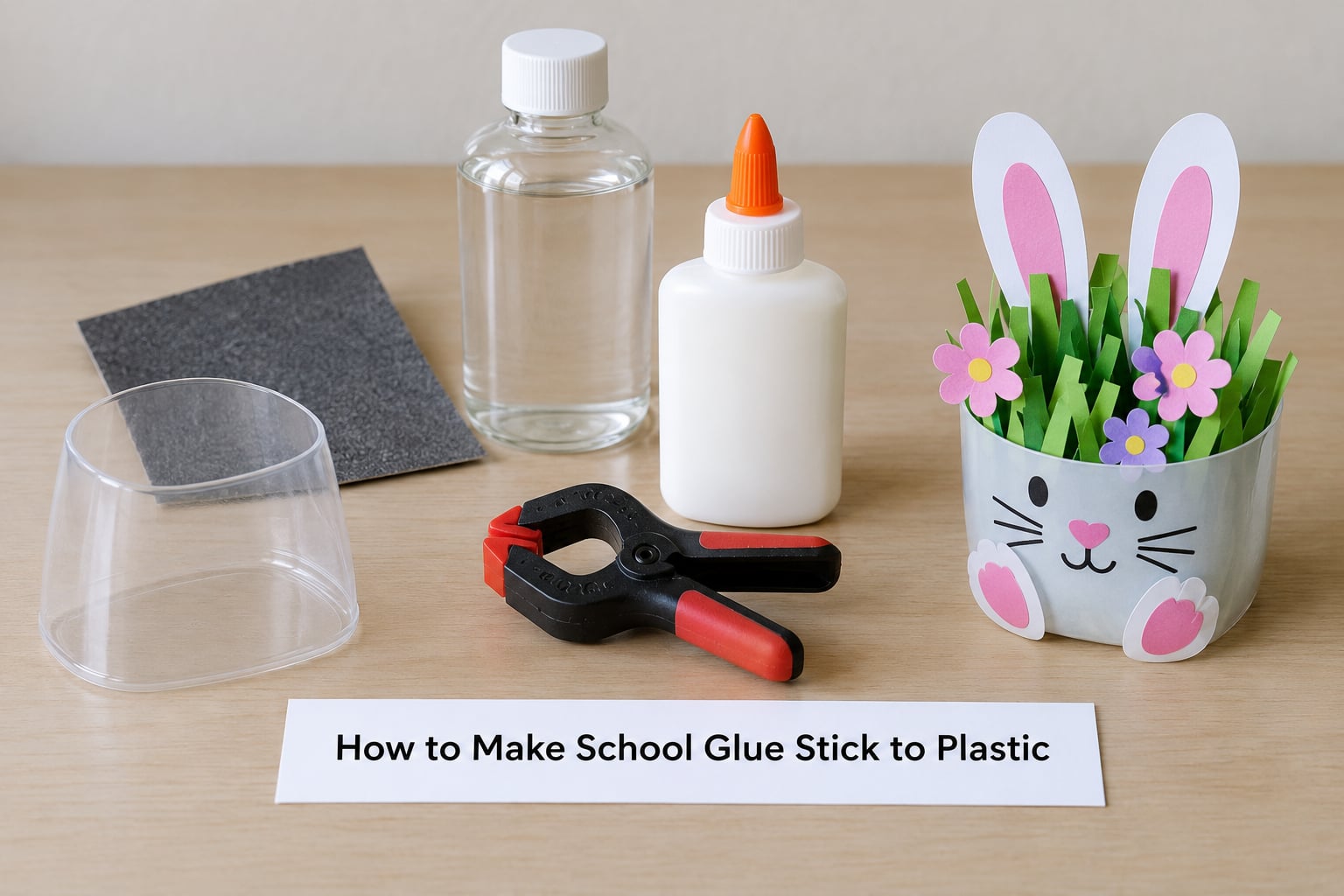
Use this when the plastic is PVC, polystyrene, acrylic or ABS, or when the joint is decorative rather than structural.
- Identify the plastic. Check the resin stamp. If it says PE or PP, stop here and use a primer or a different adhesive family.
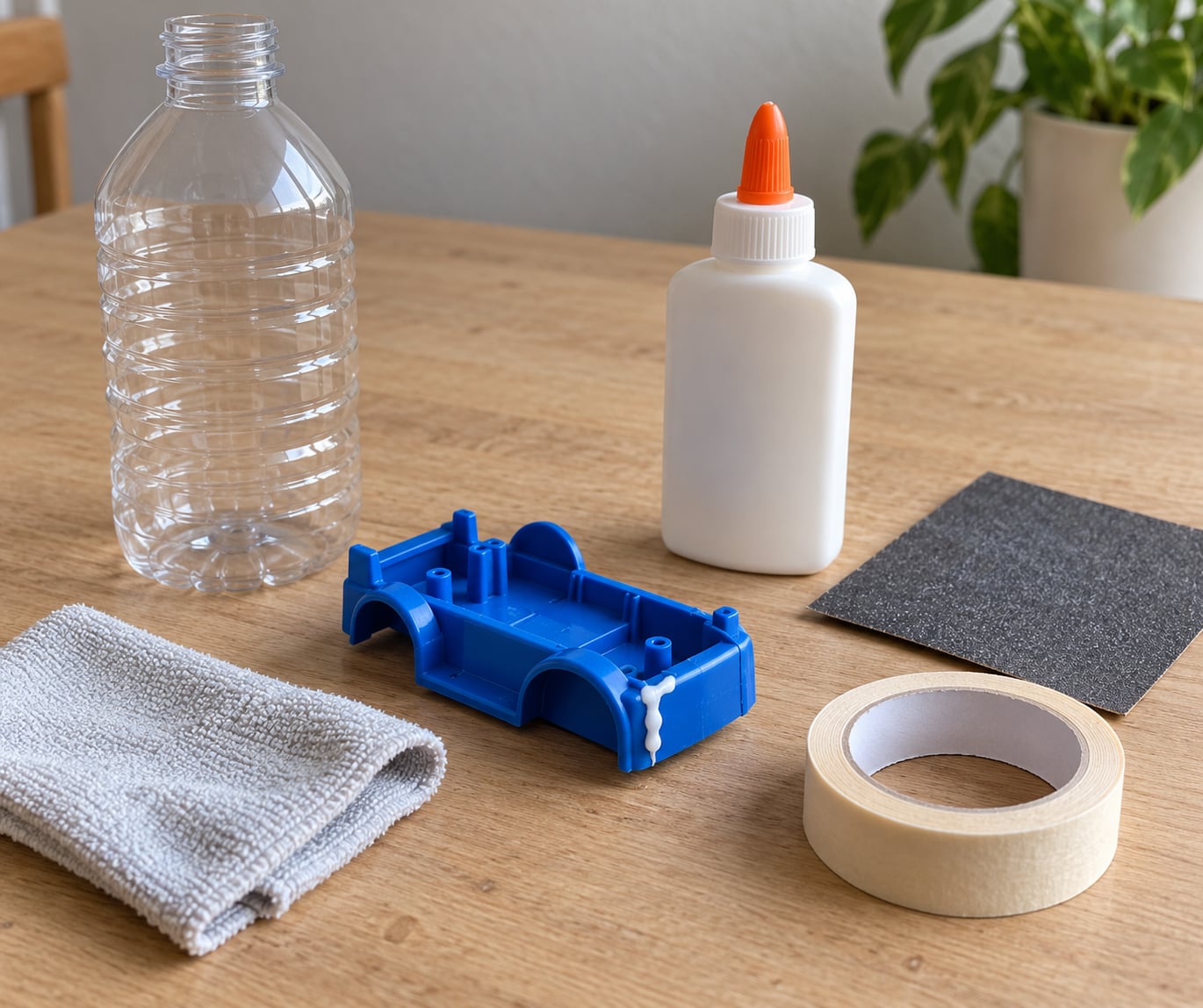
- Wash it. Warm water and dish soap, then rinse and dry fully with a clean cloth.
- Scuff lightly. 180 to 320 grit sandpaper, a few light strokes in a well-ventilated spot. You want a matte scuff, not gouges.
- Wipe again. A cloth dampened with isopropyl alcohol removes sanding dust and any oil film. Let it dry fully.
- Test a drop. A small drop should flatten and soak in. If it beads into a ball, stop and change adhesive.
- Apply a thin coat to one surface only, press the pieces together and clamp or tape them.
- Wait for full cure. Surface dry in a few hours, full strength in about 24 hours.
Keep the glue thin. A thick line of PVA skins over first and holds like glue on the outside of a sandwich.
What Makes Plastic a Difficult Surface for Glue?
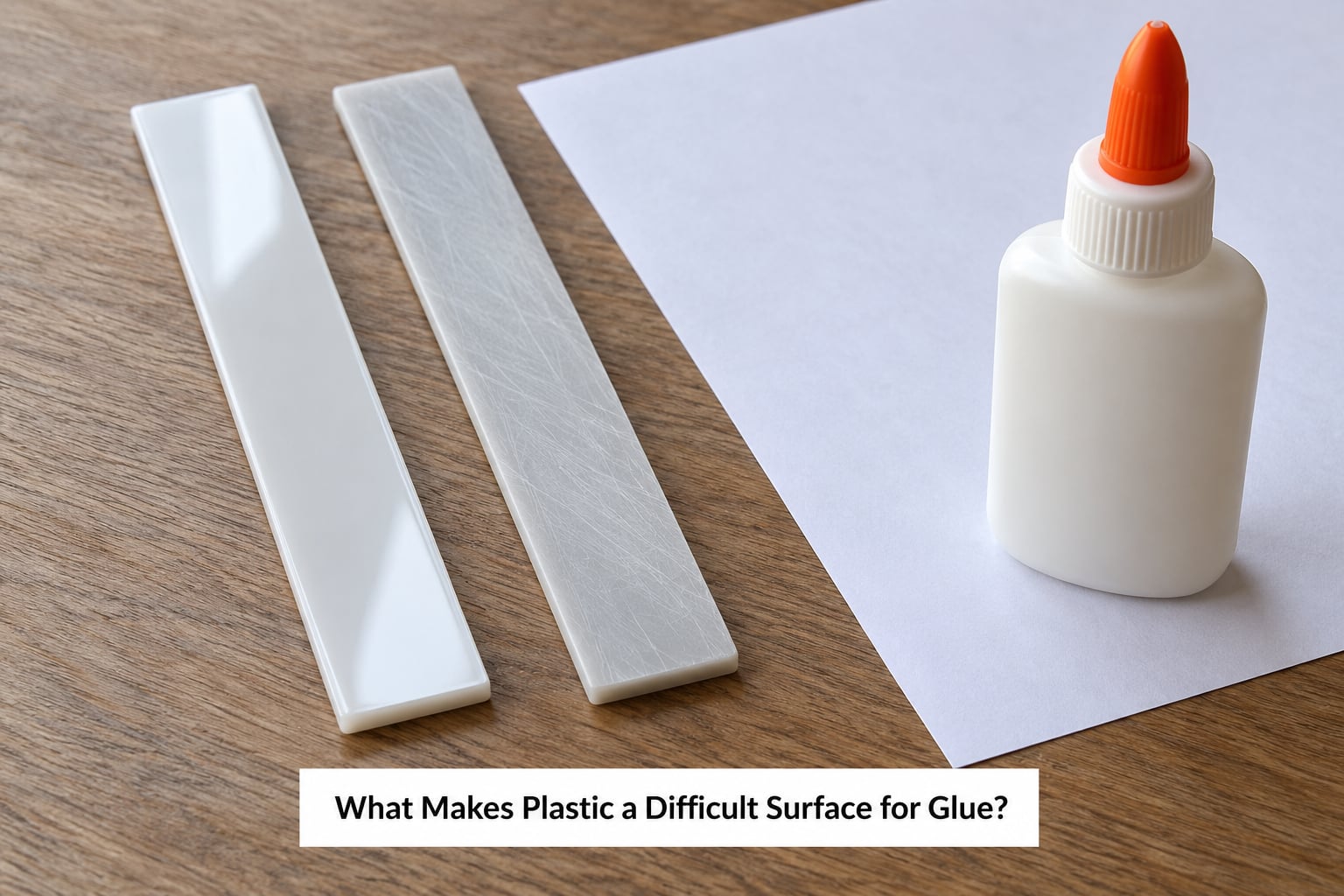
Four things work against you, and they stack up.
Smooth surface. Injection-moulded parts come out polished. There are no pores for the glue to sink into and nothing to physically key into.
Low surface energy. In plain terms, surface energy is how inviting a surface is to a liquid. Water on wax beads up because wax is low-energy; water on glass spreads because glass is high-energy. PE and PP are among the lowest-energy solids you can hold in your hand, and that single fact is the reason school glue beads on a plastic bottle cap.
Repelled moisture. PVA carries its adhesive in water. On plastic the water has nothing to wet, so the droplet keeps its shape and the glue never spreads into a thin continuous film.
Movement. Thin plastic flexes. Every flex opens the bond line, and a joint under constant tension eventually peels apart. Wide overlap areas help far more than extra glue.
One honest warning, because this advice is repeated everywhere online and it is wrong on its own: sanding by itself does not fix PE or PP. You scratch it, expose fresh plastic underneath, and that new surface is just as low-energy as the old one. Abrasion helps on higher-energy plastics. On polyolefins you need something that chemically raises surface energy, such as a polyolefin primer.
Can You Glue Plastic with White School Glue?
Yes, on the right plastic. PVA handles polystyrene, acrylic, ABS, PVC and polycarbonate reliably, and those show up in model kits, storage boxes, acrylic sheets and craft blanks. It also works when you have scored the surface deliberately, cutting a crosshatch with a sharp blade or poking a grid of tiny holes, which gives the glue something to key into.
It is unreliable on untreated polyethylene and polypropylene. That covers nearly all single-use bottles, tubs, jugs, straws and packaging, plus PE-lined items and anything with a slick coating. On those, white glue is the wrong tool regardless of technique, except as a decorative hold-down under tape.
White glue also needs a porous partner. Bonding plastic to cardboard or wood works reasonably well because the glue soaks into the other material and grips hard. Plastic to plastic is where it disappoints most often, which is why craft projects built entirely from plastic tend to fail even when every step looks correct.
Which Adhesive Works Best for Plastic?
Match the adhesive to the plastic and to who is using it.
Plastic cement (solvent-based). PVC and ABS are the intended targets. The solvent softens both surfaces and they fuse as it evaporates. Strong and permanent, and it stings the eyes, so it is an adult job with ventilation.
Cyanoacrylate, sold as super glue. Fast, rigid, and excellent on acrylic, ABS and most model plastics. It hits the same wall on PE and PP unless a primer is used first, and users regularly assume it is a universal plastic adhesive when it is not. It bonds skin almost instantly, so keep it away from children.
Epoxy formulated for plastics. A tough, gap-filling joint with good gap tolerance. Standard hobby epoxy often disappoints on polyolefins, so check that the label claims polyethylene and polypropylene.
Polyolefin primer plus acrylic adhesive. This is the reliable route for PE and PP. The primer chemically treats the surface, then the acrylic glue takes hold. It is the fix hobby modellers reach for when nothing else works.
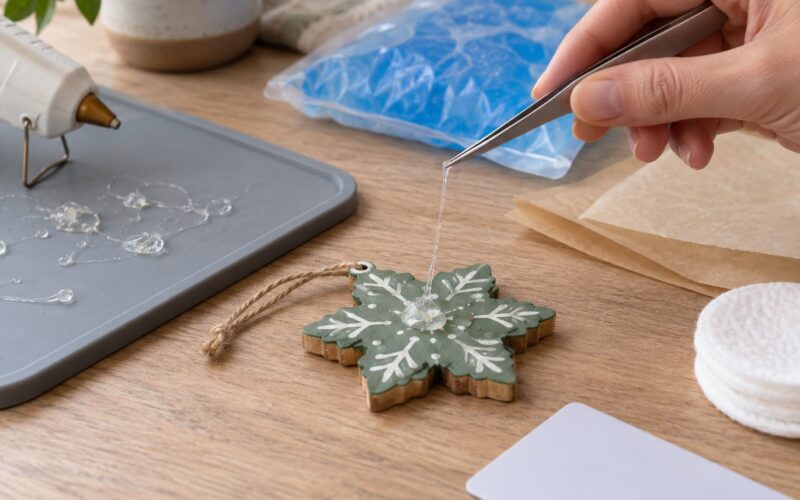
Hot glue. Convenient and low-mess, and it does grip plastic a little better than PVA because it is molten and penetrates scratches. It peels off a smooth flexible piece under load, so think of it as a temporary hold rather than a repair.
Contact adhesive and double-sided tape. Contact cement gives a flexible, peelable joint on many plastics and needs no clamping. Fabric tape and hook-and-loop loops handle storage bins and toys that open and close, because they let the piece flex.
How to Prepare Plastic Before Gluing
Preparation is where most of the success comes from. Rushing it is the single most common reason a glued plastic joint fails.
- Wash with warm soapy water and rinse. This removes fingerprints, dust and surface grime.
- Degrease. Isopropyl alcohol on a lint-free cloth, on a well-ventilated surface and away from any flame.
- Rinse if you used alcohol, then dry completely with a clean cloth and let it air out. Bonding over trapped solvent weakens the joint.
- Scuff lightly where the plastic type allows it. Cross-hatch scoring also works on pieces that will not take sanding.
- Remove the dust you just made. Brush it off and wipe once more, because sanding dust left in the joint is a weak layer exactly where the bond should be.
- Dry-fit the pieces before any glue goes on. Check they meet with no gap. Gaps are the second most common cause of a failed plastic bond, after using the wrong adhesive.
- Prime if needed. On PE and PP, apply polyolefin primer, let it dry as directed, then apply the adhesive within the working time.
How to Glue Plastic Without Making a Mess
Less glue, better results. Apply a thin even coat to one face only, lay the second piece on and press it into place with your fingers, then clamp, tape or weight it.
Work over a sheet of paper or a tray. Squeeze-out along the joint is normal, so wipe it with a damp cloth while it is still soft rather than after it cures.
Do not twist or test the joint as it dries. Movement during the set is what turns a decent bond into a gap you can flick open. Give it 24 hours before you load it, flex it, or hand it to a child who will immediately pull on it.
Troubleshooting a Weak Plastic Bond
Match what you see to what caused it.
| Symptom | Real cause | Fix |
|---|---|---|
| Peels off cleanly, no residue | Nothing wetted the surface, or the wrong glue family for that plastic | Clean and scuff, then switch to an adhesive matched to the resin code |
| Slides off when handled | Glue beaded up on a low-energy surface | Use a polyolefin primer or a plastic-specific adhesive |
| Still soft or tacky after a day | Too thick a layer, a cold or humid room, or trapped solvent in the joint | Thinner coat, better airflow, a full 24 hours |
| Bonds, then splits later | Joint flexes, or pieces were clamped unevenly | Increase overlap area and stiffen the joint |
| Weak, chalky-looking joint | Oil or mold release agent left on the plastic | Wash, degrease with alcohol, then re-glue |
| Only one side took | Glue applied to a dusty or greasy face | Prep both surfaces immediately before gluing |
Safety Tips for Children’s Plastic Crafts
Solvent cements, cyanoacrylates and many epoxies should be handled by an adult in a ventilated room. If the room smells strongly when you open the container, that is a signal to move the work somewhere else.
Keep all adhesives out of reach of children and pets, and watch for skin contact. Cyanoacrylate bonds to fingers almost instantly, and contact cement can burn. Follow the label’s cure time before handling, and keep uncured glue off worktops where it can be sanded or transferred to skin.
Check toy safety rules before repairing anything a child plays with, and never use solvent-based products on a surface that touches food or goes near a child’s mouth. For classroom projects, plan on white glue on friendly plastics, fabric tape, or a hot-glue gun operated by an adult. The simplest safe alternative for plastic-to-cardboard builds is glue plus a generous wrap of paper tape across the joint.
Frequently Asked Questions
Why does school glue not stick to plastic?
School glue is a water-based PVA adhesive, and most plastics are non-polar with very low surface energy. The glue beads up instead of spreading across the surface, so it never makes enough contact to hold. Paper and wood work because they are porous and polar. Polyethylene and polypropylene are the worst offenders. Washing, lightly scuffing and degreasing the plastic helps on some types, but polyolefins really need a primer or a different adhesive family.
Should I sand plastic before gluing it?
Yes on higher-energy plastics such as PVC, polystyrene, acrylic and ABS, where a light scuff gives the glue something to key into. Use fine grit and just enough to take the shine off. On polyethylene and polypropylene, sanding alone does not help, because the fresh plastic underneath is just as low-energy as the surface you started with. Those need a polyolefin primer or a heat-fusion method instead of abrasion.
What is the best glue for plastic toys?
For polystyrene, acrylic, ABS and PVC toys, white school glue works well and is the safest option for children. For polypropylene parts, such as many snap-fit toy bodies and lids, you need a polyolefin primer followed by an acrylic adhesive, or a two-part epoxy that explicitly claims polypropylene bonding. Check the resin code stamped on the toy first, since it decides which category you are dealing with.
How long does glue need to dry on plastic?
White glue feels dry on plastic in a few hours, but that is only a surface skin. Full bond strength takes about 24 hours, and joints that flex or carry weight should be left undisturbed for that long. Solvent cements and epoxies follow their own cure times on the label, and those matter more than the drying time of any PVA glue.
What can I use instead of strong glue for a child’s craft?
Fabric tape or hook-and-loop loops hold plastic parts together and let them flex without cracking the joint. Double-sided tape works on scored or primed surfaces. Hot glue gives a quick hold on plastic better than white glue does, though an adult should run the gun. Wrapping the joint in wide paper tape over a thin coat of white glue is the least messy option of all and needs no special products.
What to Do First
Start by naming the plastic. Turn the piece over and find the resin code, or check whether it is a common bottle or tub, and that single step answers why does school glue not stick to plastic far more accurately than any amount of glue. Then wash it with soapy water, degrease with alcohol, dry it fully, and put one small drop of glue on a hidden spot to see if it soaks in or beads up.
If the drop spreads, you are in business with a light scuff and a 24-hour cure. If it beads, stop adding school glue and choose an adhesive family matched to the plastic. More glue never solves this one; it just gives you a bigger thing to peel off.