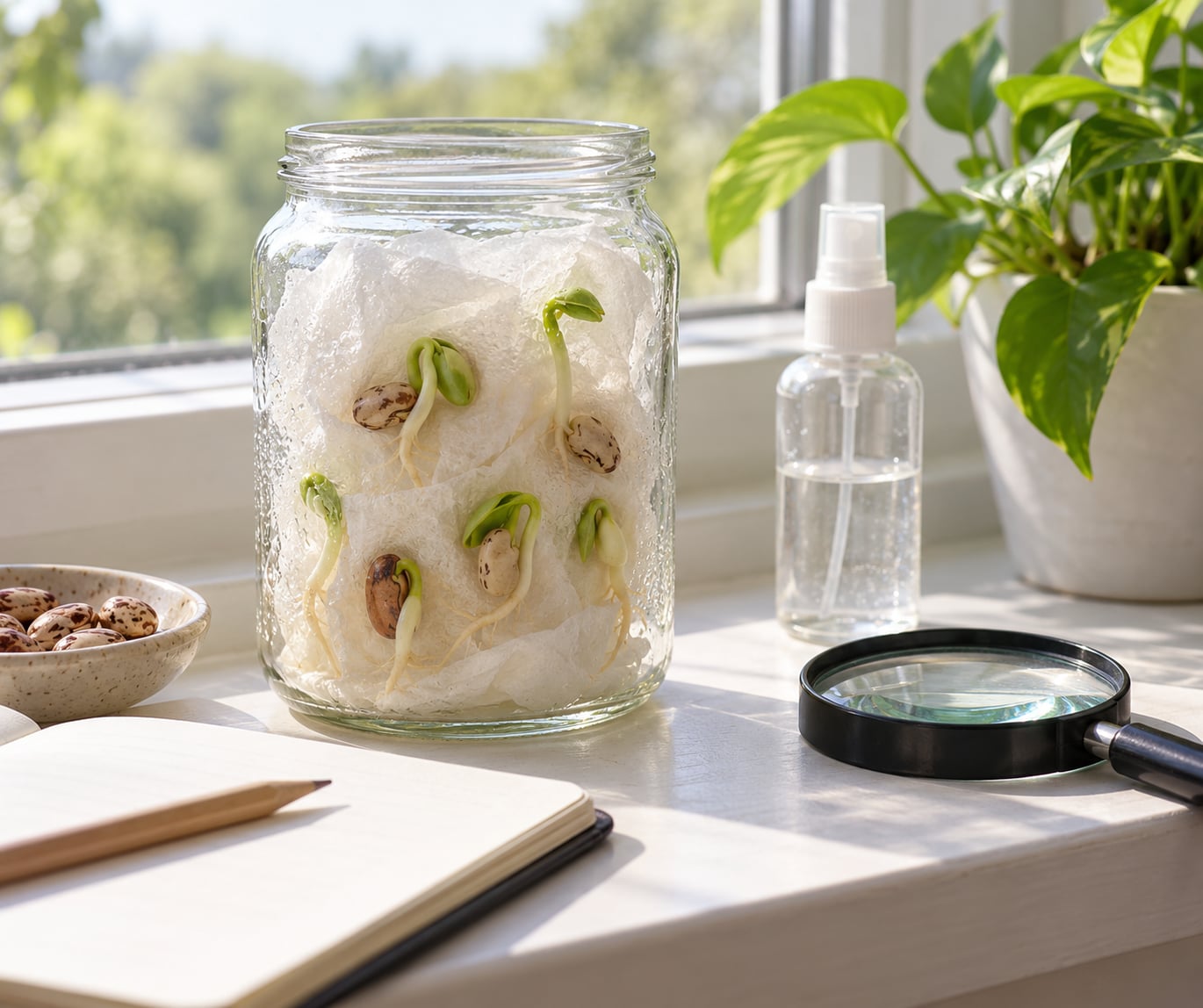
To grow beans in a jar with kids, line a clear glass jar with damp paper towels, tuck 5 to 8 dry beans against the wet side, and set the jar on a bright windowsill. That is the whole setup. Most beans show a root within two or three days and a green shoot by day five, and the whole jar costs about as much as a bag of dried beans.
It works because a bean seed already carries everything a baby plant needs inside it: food stored in two thick seed leaves, and a plan for what to build first. Add water and warmth and it starts executing that plan, one visible step at a time, right where your child can see it through the glass.
I have run this activity with kids from preschool through about age ten, and the thing that makes or breaks it is a setup that stays wet. A paper towel that dries out overnight kills the batch faster than anything else, so keep a spray bottle next to the jar.
Table of Contents
- 1What You Need
- 2How to Grow Beans in a Jar with Kids: Step-by-Step
- 3How to grow beans in a jar with kids: Prepare the jar
- 4How to grow beans in a jar with kids: Add the beans
- 5How to grow beans in a jar with kids: Water and place the jar
- 6How to grow beans in a jar with kids: Observe the changes
- 7How to grow beans in a jar with kids: Keep the experiment going
- 8Common Mistakes
- 9Frequently Asked Questions
- 10What kind of beans can children grow in a jar?
- 11Do beans need to be soaked before growing in a jar?
- 12How long does it take for beans to sprout in a jar?
- 13Why are my beans not growing?
- 14Can I grow beans in a jar without cotton?
- 15Is it safe for children to handle moldy beans during this activity?
- 16Conclusion
What You Need
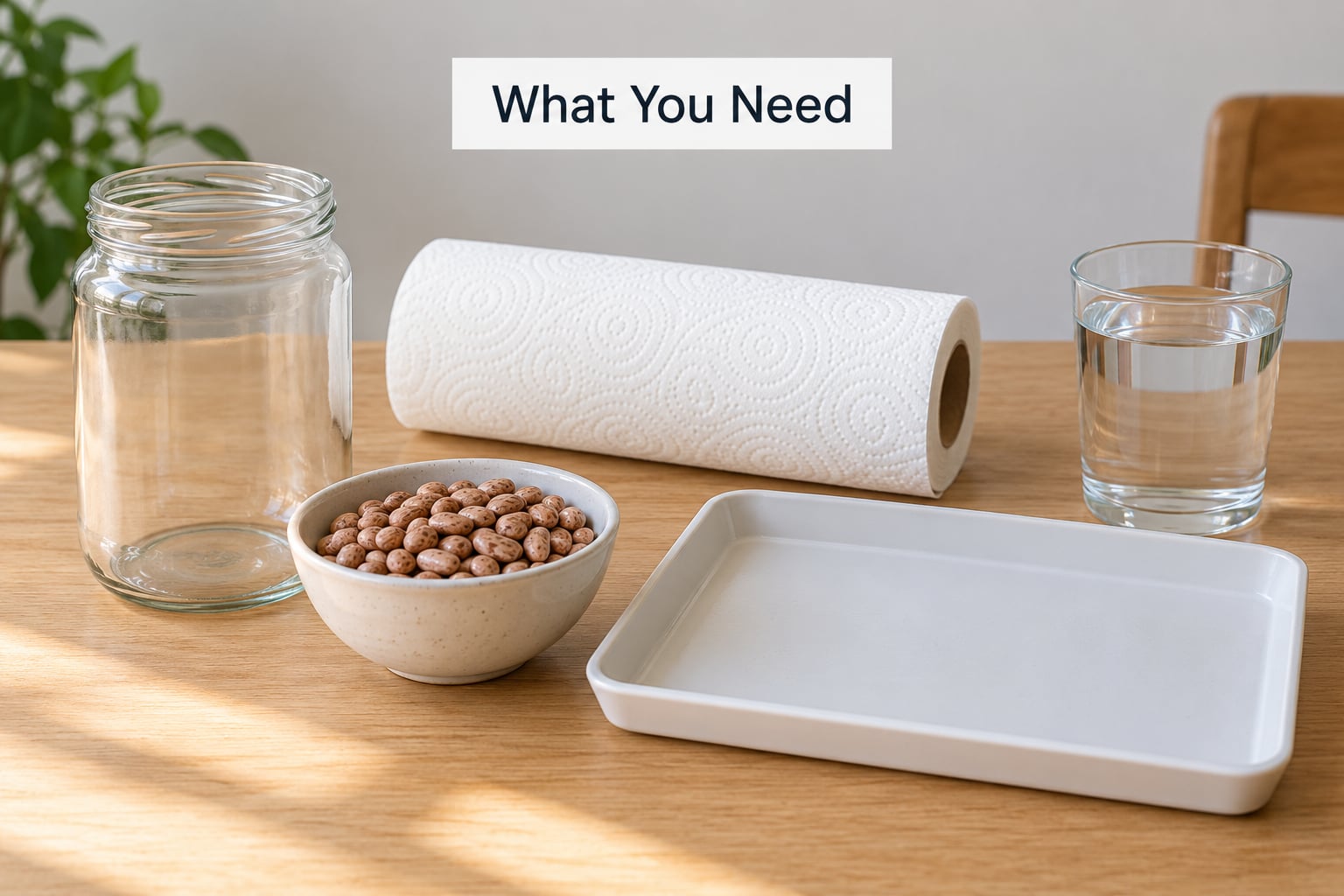
The core list is short enough to gather in two minutes.
- A clear jar. A mason jar, a pickle jar, or any glass container with straight sides and a wide mouth. Straight sides matter more than size, because you want to see the roots against a flat surface.
- Dried beans. Pinto, kidney, black, lima, navy, or mung beans from the pantry all work. Mung beans sprout fastest; lima beans are big and slow but easy for small hands to handle.
- Paper towels or cotton wool. Both hold moisture well. Paper towels are free and easy to find, cotton wool holds more water for longer.
- Water and a spray bottle. A mister beats pouring, because pouring is how jars end up flooded.
- A shallow tray or plate. To catch drips and keep the jar from sitting in water.
- A magnifier and a notebook. Optional, but this is the part that turns a fun activity into actual observation practice.
If you want to skip the jar entirely, a zip-top bag with a damp towel pressed against one side does the same job and shows root structure beautifully. Children tend to notice condensation on the bag and ask what it is, which is a free lesson about the water cycle.
How to Grow Beans in a Jar with Kids: Step-by-Step
How to grow beans in a jar with kids: Prepare the jar
Fold a paper towel into a rectangle roughly the height of the jar, roll it up loosely, and press it against the inside wall. Dampen it until it is wet but not dripping, then smooth it flat so there is no gap behind it.
That flat wet surface is what the beans will press against. Leave the far side of the jar empty and keep roughly a third of the jar uncovered at the top so air can move. If you are using cotton wool, pull it apart first, because a solid plug of cotton leaves no room for roots to travel.
How to grow beans in a jar with kids: Add the beans
Press 5 to 8 beans into the damp towel, spacing them so none touch. About two centimetres apart is enough for clear viewing without crowding.
Overcrowding is the most common mistake in this experiment. Beans that touch each other trap moisture between them, mold starts quickly, and roots tangle into one shape that tells you nothing. If you want more beans, use a second jar and compare them later.
Soaking first is optional but speeds things up noticeably. Eight hours or overnight in cool water gets the seed coat soft, and mung beans germinate roughly a day sooner afterward. Dry beans also work fine, they just take a little longer to get going.
How to grow beans in a jar with kids: Water and place the jar
Pour off any water that collected in the bottom of the jar. Beans should sit against a damp towel, never submerged. Standing water cuts off oxygen and rots the seed in a couple of days.
Set the jar where it gets bright indirect light, like a windowsill that never gets direct afternoon sun. Direct sun heats the glass and cooks the seeds.
Aim the beans toward the window, then leave the jar alone. Every turn resets the shoot’s direction and you get a stem that bends instead of one that grows straight.
How to grow beans in a jar with kids: Observe the changes
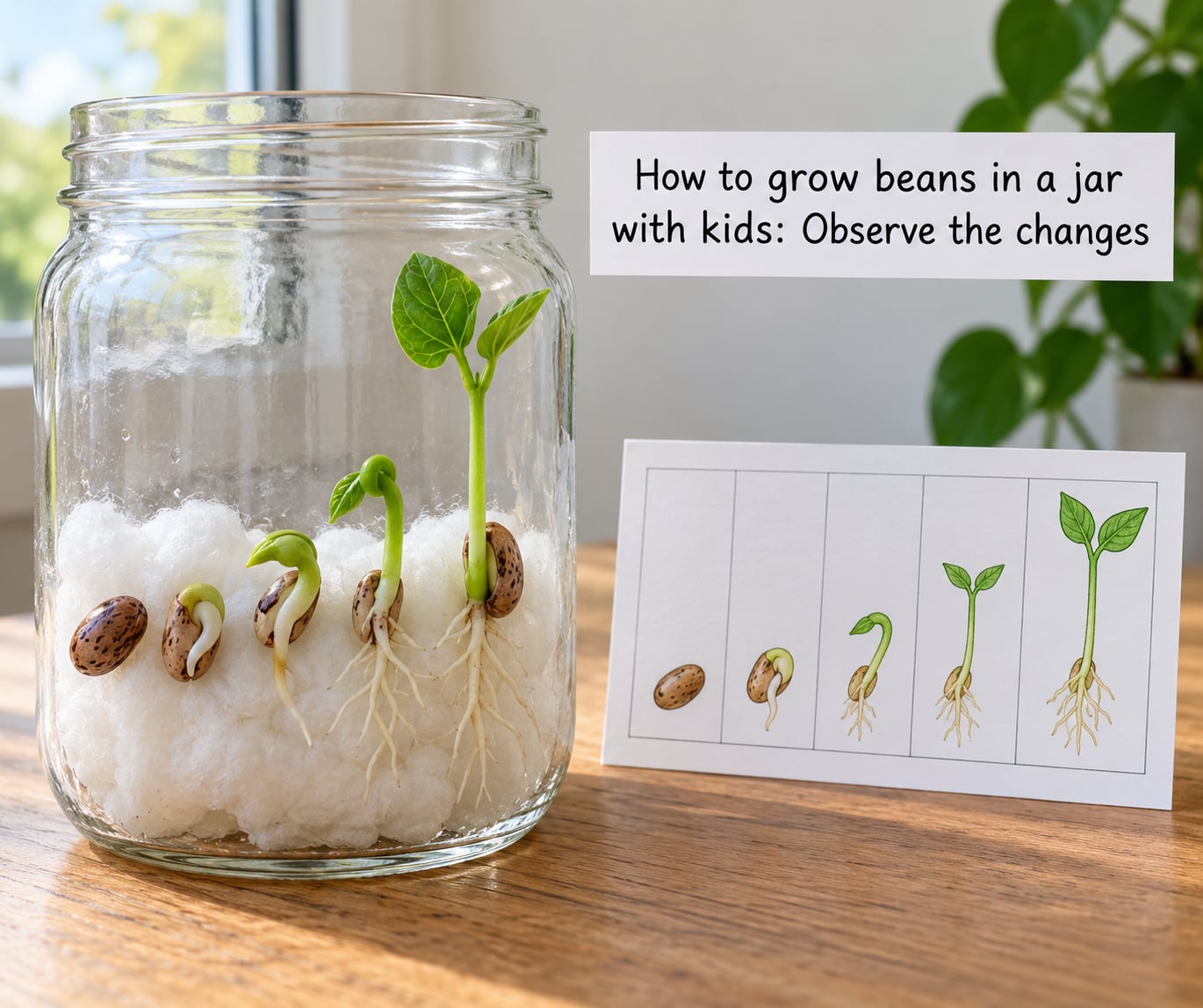
Make the daily check a short ritual, about two minutes, with the same three questions: what changed, how many changed, and what do you think happens next?
What you should see, day by day:
- Days 1 to 2: Beans swell and look slightly shinier than when they went in. Nothing else yet. This is normal and it is where most adults quit too early.
- Days 3 to 4: A tiny white root tip, the radicle, pushes out and starts turning downward or curling around. Growth under the towel continues even when you cannot see it.
- Days 5 to 7: The root lengthens and branches, and a pale stem pushes upward. The seed coat splits and hangs on like a hat.
- Days 8 to 10: The stem straightens, hooks at the top, and the two seed leaves unfold. Leaves mean the plant is now making its own food.
- Days 11 to 14: First true leaves appear, looking different from the round seed leaves. With good light the stem turns sturdy green rather than pale and stretched.
Have kids measure the longest root with a ruler and write it down, plus a quick sketch. The drawing matters more than the accuracy. It gives them a record to look back on when the plant stops looking like it is doing anything.
How to grow beans in a jar with kids: Keep the experiment going
Lift out the towel layer, mist it, and press it back against the glass every day or two. If the towel feels dry or the beans look shriveled, add water now.
Once roots reach the bottom of the jar, growth usually stalls. Paper towel systems run about two weeks before the plant needs real soil, so plan the transplant for around day 14 or when you see the first true leaves. Gently slide the bean away from the towel, loosen the roots, and plant it an inch deep in potting mix.
For older kids, run two jars side by side: one on the windowsill, one in a dark cupboard. The jar in the dark produces pale yellow shoots, which is phototropism made visible. Then move it into the light and watch it green up and bend toward the window over the next few days.
Common Mistakes
The paper towel dried out. The most frequent cause of total failure. Mist daily, and if the kids are not around to do it, move the jar somewhere you will see it on the way to the kettle.
Beans are sitting in water. Tip out anything pooled at the bottom. Roots need moisture around them and air above them, not a bath.
Too many beans in one jar. More is not better here. Crowding causes mold and tangled roots, and the experiment gets harder to read.
Mold appeared. Fuzzy white or green growth, or a sour smell, means the setup was too wet or too crowded. Discard the beans, wash the jar with hot soapy water, and start again with fewer seeds and a fresher towel.
Sprouts are pale and stretched. That is a light problem, not a water problem. Move the jar to brighter indirect light and it will green up within a couple of days.
Nothing happened after a week. Old dried beans often lose viability. Test a handful first in damp paper towel on a plate, and if several fail to swell overnight, get a fresh bag.
Kids lost interest. Switch to mung beans, which show results sooner, and put the jar somewhere visible. An experiment nobody looks at gets abandoned by day four.
Frequently Asked Questions
What kind of beans can children grow in a jar?
Any dried bean works, and the pantry is usually the best source. Mung beans sprout fastest, often within two days, which keeps young children engaged. Pinto, kidney, black, and navy beans are reliable and show clear root growth. Lima beans are slower but large enough for small hands to handle. Avoid beans that have been salted, seasoned, or canned.
Do beans need to be soaked before growing in a jar?
No, dry beans germinate fine on a damp paper towel. Soaking them in cool water for eight hours or overnight softens the seed coat and usually shaves about a day off the waiting, especially with mung beans. Skip soaking if you want the clearest view of what the seed looks like on day one, since soaked beans swell and split before they root.
How long does it take for beans to sprout in a jar?
Most beans show a visible root in three to four days and a green shoot by day five to seven. Mung beans can move faster, sometimes within 48 hours. Lima and navy beans are slower and may take a week before the radicle appears. Growth then continues for another week or so, until true leaves show and the plant is ready for soil.
Why are my beans not growing?
Three things account for most stalled jars. The paper towel dried out, so nothing had moisture. The beans sat in standing water, so the seed rotted from lack of oxygen. Or the beans are old and no longer viable. Check the towel first, then make sure nothing is pooled at the bottom, and finally test a few beans from the bag in damp paper on a plate.
Can I grow beans in a jar without cotton?
Yes, and most people get better results without it. A rolled damp paper towel works well and is cheaper. Cotton wool holds a lot of water, which is useful but can drown the seeds if the jar drains badly. A damp towel in a zip-top bag pressed flat against one side is another reliable option, and it shows the root system especially well.
Is it safe for children to handle moldy beans during this activity?
Adults should remove moldy beans and any towel that has gone soft or smells sour, then wash the jar in hot soapy water before reusing it. Kids should not handle moldy seeds, and nothing grown in this setup should be eaten, since grocery beans are not treated as food-grade seed. Wash hands afterward and keep the discarded material out of reach of pets and small children.
Conclusion
Start tonight with five or six dried beans, one jar, and a paper towel you have already dampened. Put it on a windowsill and agree on a daily two-minute check, then write down the date beside each observation.
When the jar is at its messiest around day four and nothing seems to be happening, that is the interesting part. Talk about what the seed is doing even when you cannot see it, then compare the jar to whatever is on fire that week. By day seven you will have something green, something with roots, and a child who has watched a plant decide what to build first.